Life in the brine of Lunenburg, Germany: unveiling microorganisms associated with Zechstein salt deposits
Katharina Runzheimer, Laura Schwab, Denise Engel, Christoph Schaudinn, Michael Laue, Katarína Rebrošová, Kristina Beblo-Vranesevic, Muhaiminatul Azizah, Stefan Leuko

TL;DR
This study explores microbial life in a highly salty brine from Lunenburg, Germany, revealing diverse halophilic microorganisms and their adaptations, which could inform astrobiological research.
Contribution
The study provides the first characterization of microbial life in Lunenburg brine, including novel and uncultivated microorganisms and their adaptations to extreme salinity.
Findings
The brine contains halophilic microorganisms like sulfate-reducing bacteria, haloarchaea, and uncultivated groups such as Nanohaloarchaeota and Patescibacteria.
Isolates from Haloarcula and Halorubrum showed adaptations like bacterioruberin, polyhydroxyalkanoates, and unique structural features for extreme conditions.
The brine's microbial community exhibits distinct osmotic adaptation strategies and low proteome isoelectric points.
Abstract
The presence of hypersaline brines on other planets and moons in the inner and outer Solar System has been well established. Hence, any theory of life on other planets must consider microorganisms adapted to high salt concentrations. The hypersaline brine from Lunenburg (Germany) with 302.25 g L−1 NaCl, originating from the remnants of the Zechstein Sea, has long been utilized to harvest salt, but potential microbial life in the brine had never been investigated. We employed cultivation-based and -independent methods to characterize the microbial diversity, while also analyzing environmental parameters. Specifically, we performed V1/V2 and V3/V4 amplicon sequencing of environmental DNA and conducted haloarchaeal-focused cultivation and enrichments. Furthermore, we conducted whole-genome sequencing and analysis, Raman spectroscopy, electron and fluorescence microscopy, and compatible…
Genes, proteins, chemicals, diseases, species, mutations and cell lines named across the full text — each resolved to its canonical identifier and authoritative record.
Click any figure to enlarge with its caption.
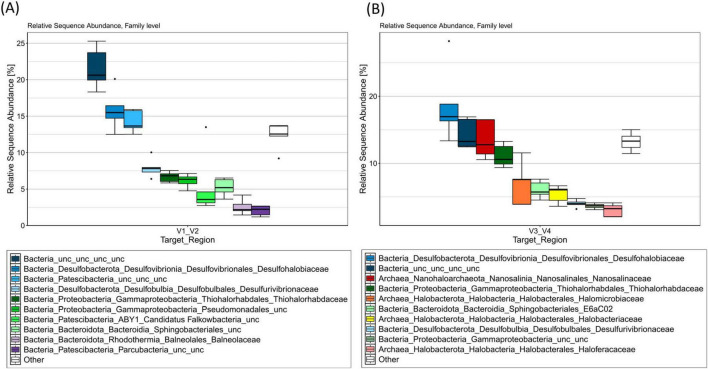 Figure 1
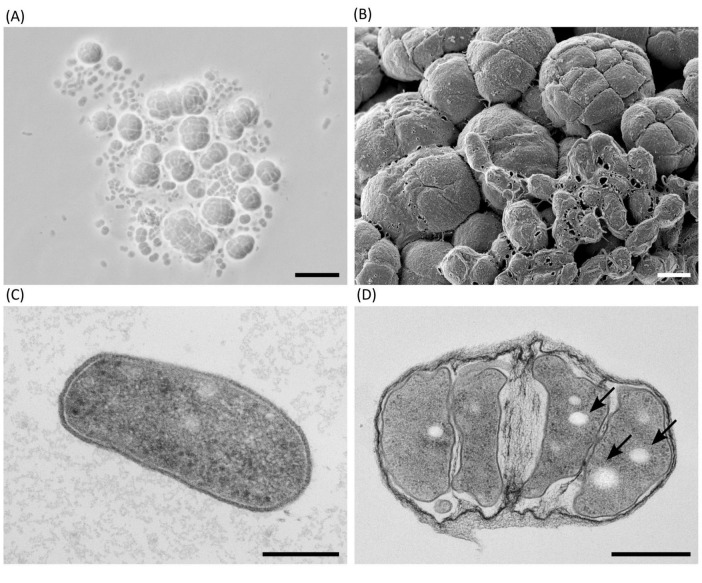 Figure 2
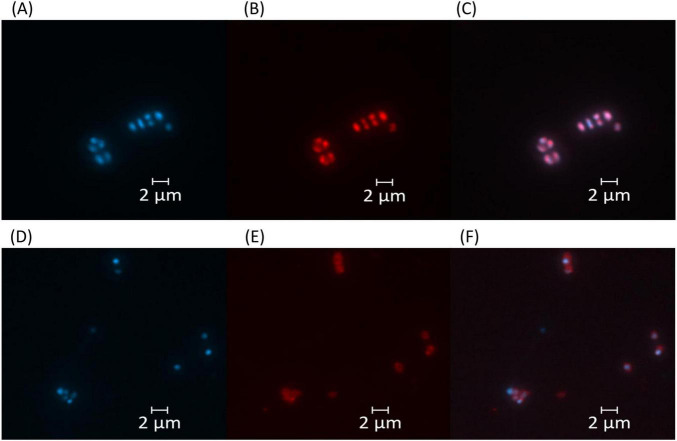 Figure 3
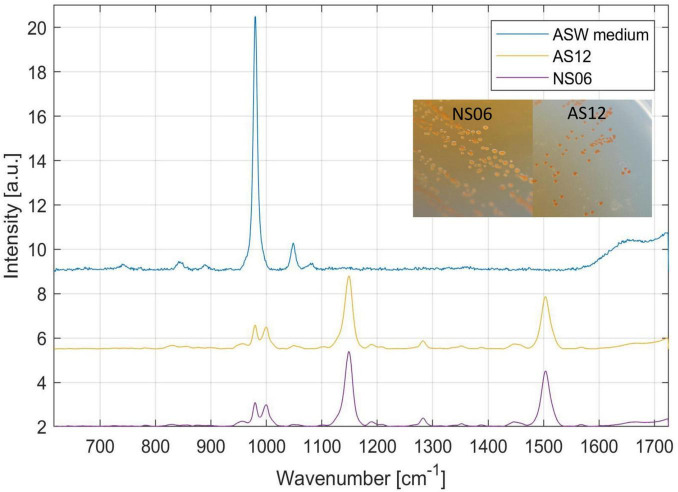 Figure 4
Peer Reviews
No public reviews on file for this paper yet. If you reviewed it on a platform where reviews are public (OpenReview, ICLR, NeurIPS, ICML), you can paste yours below so the community can read it here.
Videos
No videos yet. Explain this paper in a talk, walkthrough, or lecture? Add one.
Taxonomy
TopicsPlanetary Science and Exploration · Origins and Evolution of Life · Polar Research and Ecology