Fab N-Glycosylation in IgG: Implications in Physiological and Pathological Immune Regulation
Shuqi Chen, Feiyuan Yu, Binliang Huang, Ganbo Liang, Jieyi Xu, Yuning Lin, Qian Xu

TL;DR
This paper reviews how Fab N-glycosylation in IgG affects immune regulation in health and disease, highlighting its structural diversity and functional roles.
Contribution
The paper provides a comprehensive review of Fab N-glycosylation's role in immune regulation, comparing it to IgG4 and discussing its implications in disease.
Findings
Fab N-glycosylation modulates antibody stability, half-life, and antigen-binding activity.
It plays roles in autoimmune diseases, pregnancy-induced tolerance, and tumor immune evasion.
Structural complexity and site variability hinder understanding of its functional impacts.
Abstract
Compared with classical Fc N-glycosylation, Fab N-glycosylation displays site heterogeneity and structural diversity. It contributes to immune regulation by modulating antibody stability, half-life, and antigen-binding activity, as well as by mediating blocking antibody effects. This review highlights the expression patterns and potential mechanisms of Fab N-glycosylated IgG in autoimmune diseases, pregnancy-induced immune tolerance, and tumor immune evasion, and discusses its structural and functional similarities to IgG4. Although Fab N-glycosylation plays an important role in both physiological and pathological conditions, the complexity of its glycan structures and variability in glycosylation sites hinder a precise understanding of its functional impacts. Clarifying these aspects is expected to emerge as a major focus in glycomics and antibody engineering research.
Genes, proteins, chemicals, diseases, species, mutations and cell lines named across the full text — each resolved to its canonical identifier and authoritative record.
Click any figure to enlarge with its caption.
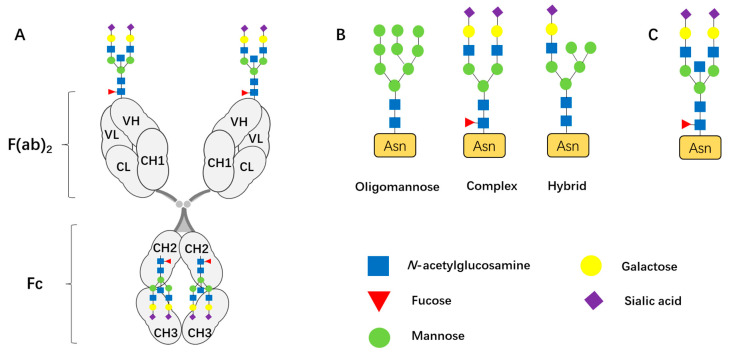 Figure 1
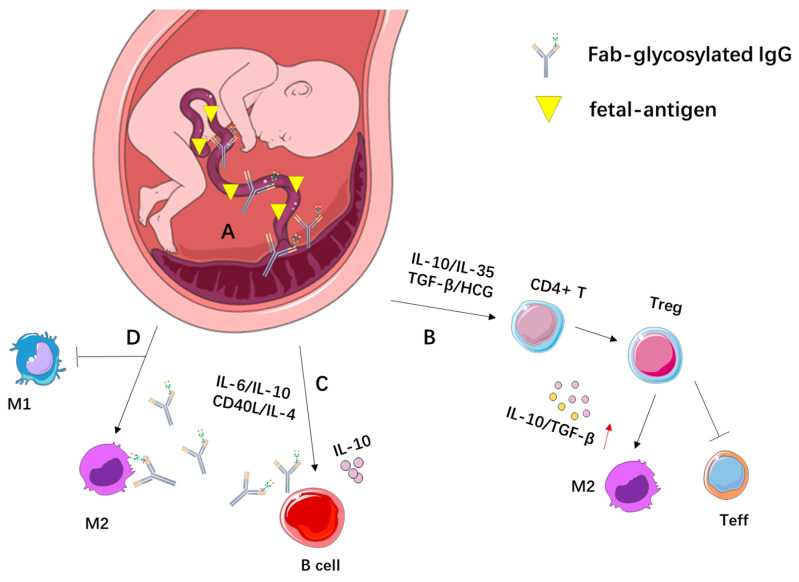 Figure 2
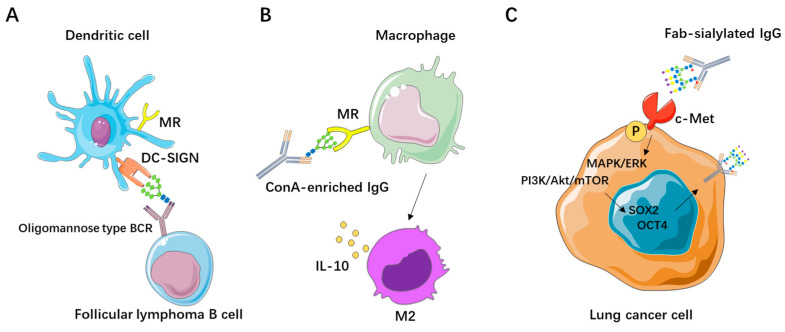 Figure 3
Peer Reviews
No public reviews on file for this paper yet. If you reviewed it on a platform where reviews are public (OpenReview, ICLR, NeurIPS, ICML), you can paste yours below so the community can read it here.
Videos
No videos yet. Explain this paper in a talk, walkthrough, or lecture? Add one.
Taxonomy
TopicsMonoclonal and Polyclonal Antibodies Research · Glycosylation and Glycoproteins Research · Galectins and Cancer Biology