Dedicated Bifurcation Stents vs. Regular Drug-Eluting Stents in Coronary Bifurcation Treatment: A Systematic Review and Meta-Analysis of 1-Year and 4-Year Outcomes, Including Left Main and Non-Left Main Subgroup Comparisons
Jacek Bil, Adam Kern, Aneta I. Gziut-Rudkowska, Jarosław Zalewski, Krystian Bojko, Robert J. Gil

TL;DR
This study compares dedicated bifurcation stents and regular drug-eluting stents in coronary treatments, finding similar safety and effectiveness over one and four years.
Contribution
The study provides a meta-analysis comparing dedicated bifurcation stents and drug-eluting stents in coronary bifurcation treatment outcomes.
Findings
Dedicated bifurcation stents showed similar 1-year outcomes to drug-eluting stents in death, MI, and TLR.
Outcomes remained comparable at 4 years with no significant differences in left main or non-left main subgroups.
No excess late stent thrombosis was observed with dedicated bifurcation stents.
Abstract
Background: Dedicated bifurcation stents (DBS) were developed to overcome the limitations of conventional drug-eluting stents (DES) in percutaneous coronary intervention (PCI) for bifurcation lesions, but their clinical benefit remains uncertain. Methods: We conducted a systematic review and meta-analysis of randomized trials comparing DBS with contemporary DES in bifurcation PCI. Primary outcomes included all-cause death, myocardial infarction (MI), and target lesion revascularization (TLR) at 1 and 4 years. Subgroup analyses were performed for left main (LM) and non-LM bifurcations. Results: Ten trials involving approximately 2500 patients were analyzed. At 1 year, DBS and DES demonstrated similar rates of all-cause death (RR 1.12, 95% CI 0.81–1.55), MI (RR 0.80, 95% CI 0.38–1.69), and TLR (RR 1.23, 95% CI 0.79–1.90). At 4 years, results remained consistent: all-cause death (RR 1.10,…
Genes, proteins, chemicals, diseases, species, mutations and cell lines named across the full text — each resolved to its canonical identifier and authoritative record.
Click any figure to enlarge with its caption.
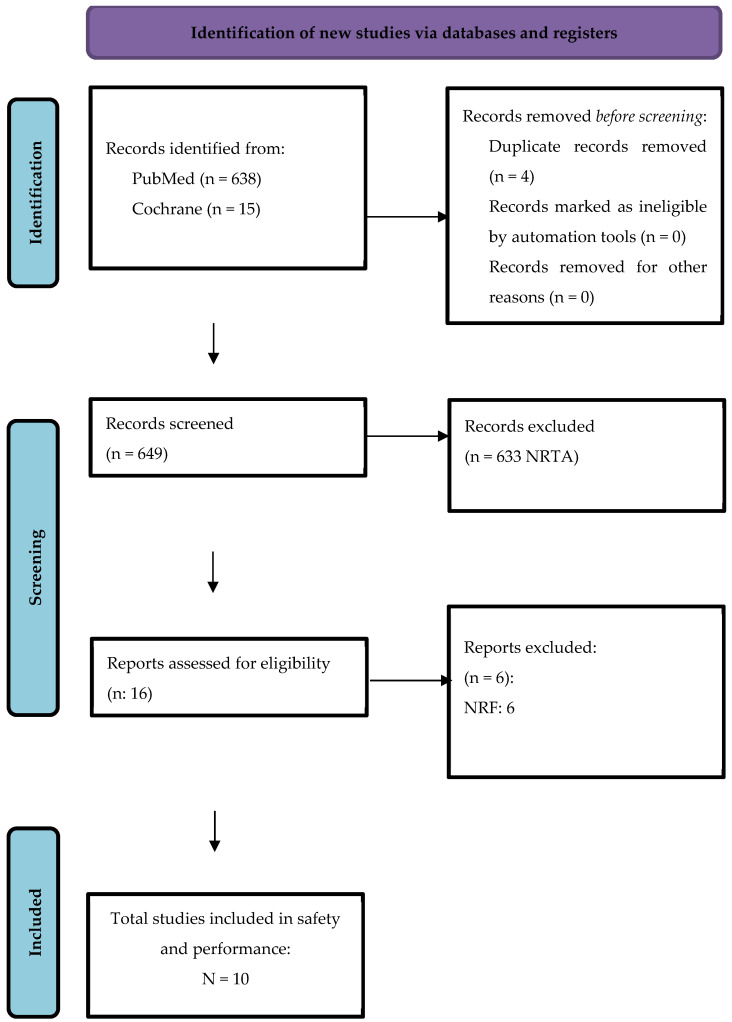 Figure 1
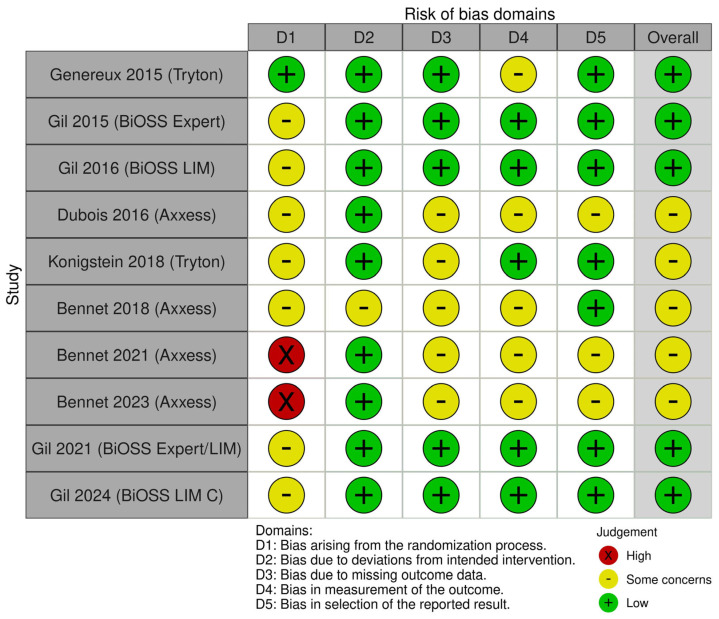 Figure 2
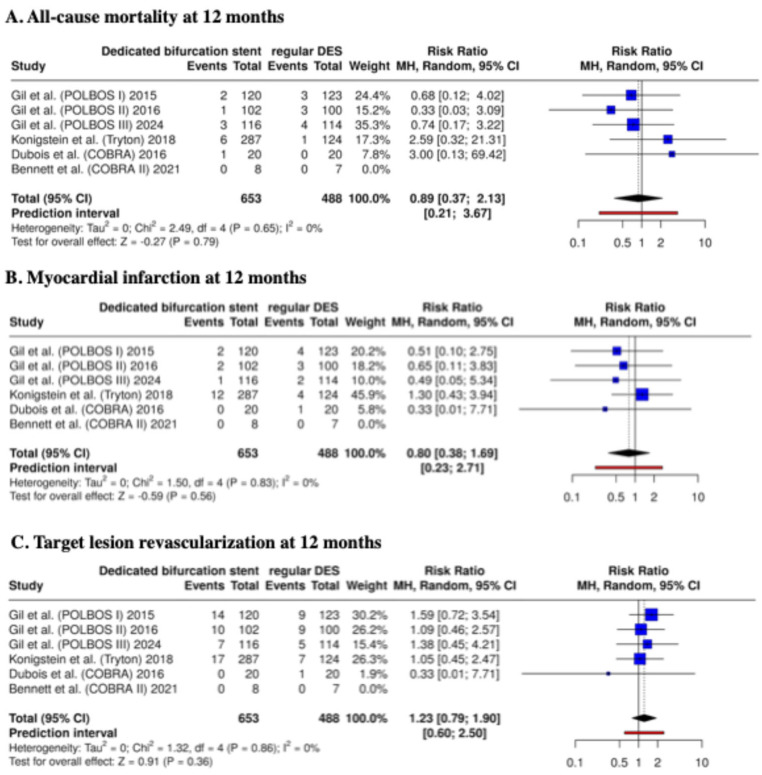 Figure 3
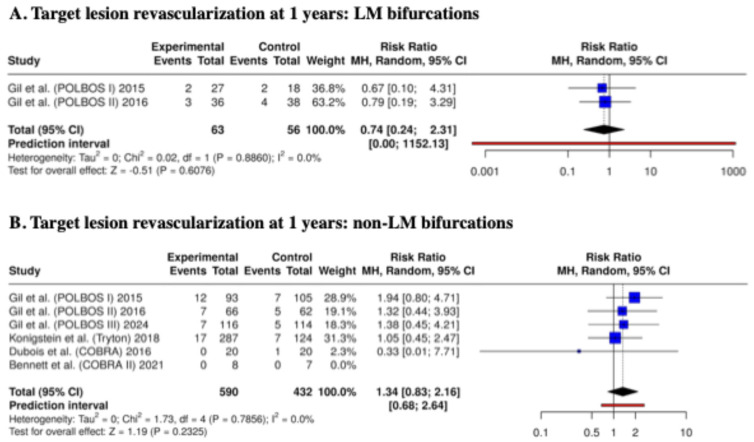 Figure 4
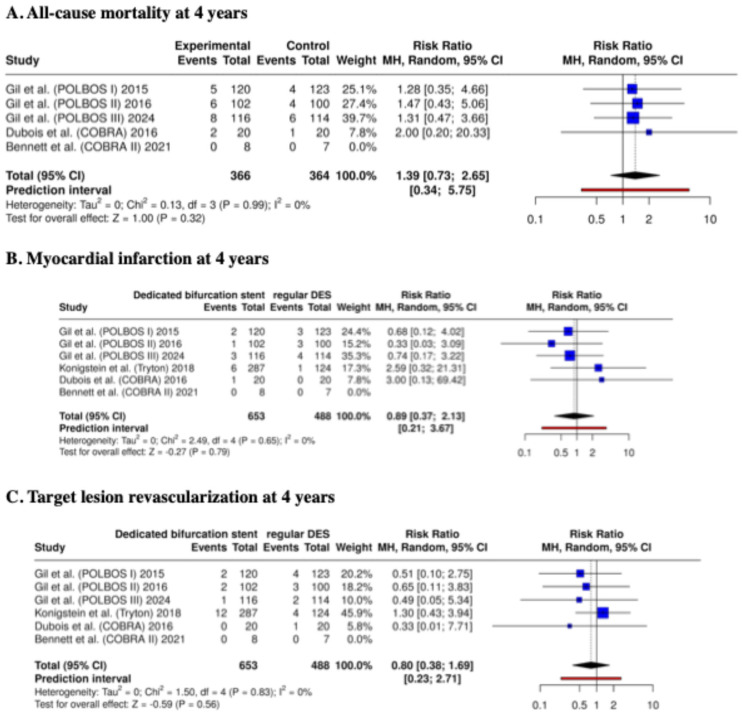 Figure 5
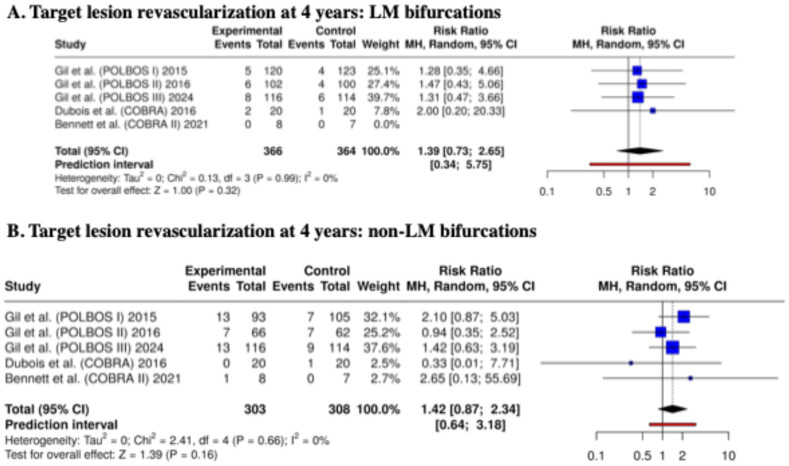 Figure 6
Peer Reviews
No public reviews on file for this paper yet. If you reviewed it on a platform where reviews are public (OpenReview, ICLR, NeurIPS, ICML), you can paste yours below so the community can read it here.
Videos
No videos yet. Explain this paper in a talk, walkthrough, or lecture? Add one.
Taxonomy
TopicsCoronary Interventions and Diagnostics · Cardiac Imaging and Diagnostics · Coronary Artery Anomalies