Characterization of a Genetic Variant in BARD1 in Subjects Undergoing Germline Testing for Hereditary Tumors
Elena Marino, Elena Belloni, Matteo Dal Molin, Monica Marabelli, Aliana Guerrieri-Gonzaga, Cristina Zanzottera, Sara Mannucci, Mariarosaria Calvello, Francesca Fava, Irene Feroce, Bernardo Bonanni, Loris Bernard, Massimo Barberis, Pier Giuseppe Pelicci, Francesco Bertolini

TL;DR
This study examines a genetic variant in BARD1 among patients tested for hereditary cancer, finding it occurs more frequently than expected and challenges current reference genome assumptions.
Contribution
The study identifies a novel dinucleotide substitution in BARD1 and highlights its potential clinical relevance despite being classified as benign.
Findings
17.28% of patients were heterozygous for the BARD1 c.1518_1519delinsCA variant.
Strong linkage was observed between c.1518T>C and c.1519G>A, suggesting a dinucleotide substitution.
Allele frequencies at c.1518 and c.1519 challenge current reference genome expectations.
Abstract
Hereditary breast and ovarian cancer (HBOC) syndrome accounts for 5–10% of all breast and ovarian cancers, with BRCA1 and BRCA2 pathogenic variants being the most common genetic alterations. However, additional genes such as BARD1, whose protein product interacts with BRCA1 via its N-terminal RING domain, have been implicated as low-penetrance contributors to cancer risk. This study aimed to investigate the frequency and distribution of the BARD1 variant c.1518_1519delinsCA (p.Val507Met) in a cohort of 920 patients undergoing genetic testing for hereditary cancer predisposition. Next Generation Sequencing (NGS) was performed using a 28-gene panel, and allelic frequencies of BARD1 were analyzed. Among 920 patients, 159 (17.28%) were pure heterozygous for the c.1518_1519delinsCA variant. Notably, c.1519G>A was never observed without c.1518T>C, suggesting a strong linkage between the two…
Genes, proteins, chemicals, diseases, species, mutations and cell lines named across the full text — each resolved to its canonical identifier and authoritative record.
Click any figure to enlarge with its caption.
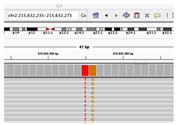 Figure 1
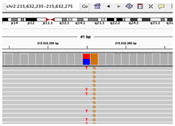 Figure 2
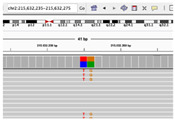 Figure 3
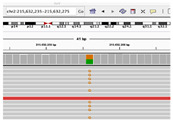 Figure 4
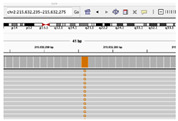 Figure 5
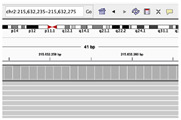 Figure 6
Peer Reviews
No public reviews on file for this paper yet. If you reviewed it on a platform where reviews are public (OpenReview, ICLR, NeurIPS, ICML), you can paste yours below so the community can read it here.
Videos
No videos yet. Explain this paper in a talk, walkthrough, or lecture? Add one.
Taxonomy
TopicsBRCA gene mutations in cancer · PARP inhibition in cancer therapy · DNA Repair Mechanisms