Heterogeneity in English as a Foreign Language: Skills Among Norwegian 6th Graders with Dyslexia—The Impact of Language Comprehension and Processing Profiles
Turid Magnhild Helland, Randi Kaasa, Wenche Andersen Helland

TL;DR
This study explores how Norwegian 6th graders with dyslexia perform in English as a foreign language, finding significant differences based on language comprehension and processing profiles.
Contribution
The study identifies two distinct subgroups of students with dyslexia based on comprehension and processing profiles, revealing different patterns in EFL performance.
Findings
Students with dyslexia who had higher comprehension (dys+) performed similarly to controls in several EFL tests.
Students with lower comprehension (dys−) scored significantly lower than controls and dys+ in most EFL domains.
Spelling scores were higher for controls and dys+ compared to dys−, suggesting visual processing issues in the latter.
Abstract
Background: English as a first foreign language (EFL) is often difficult for students with dyslexia. This study maps a broad range of EFL verbal and literacy skills in 6th graders with dyslexia compared to a control group. Methods: Participants were 127 controls (CON) and 60 students with dyslexia (DYS), split into dys+ and dys− by their comprehension scores. They were tested with “The English 2 Dyslexia Test” containing seven subtests within three domains: Sentences, Pragmatics, and Literacy. The data were analysed in Part 1: domains and groups, and in Part 2: linguistic skills and spelling by groups. Results: Part 1. CON scored better than DYS on all tests. However, the differences between the two subgroups, dys+ and dys−, were larger than expected. Dys+ scored in line with CON on several tests, while dys− scored below CON on all tests and lower than dys+ on all except for spelling.…
Genes, proteins, chemicals, diseases, species, mutations and cell lines named across the full text — each resolved to its canonical identifier and authoritative record.
Click any figure to enlarge with its caption.
 Figure 1
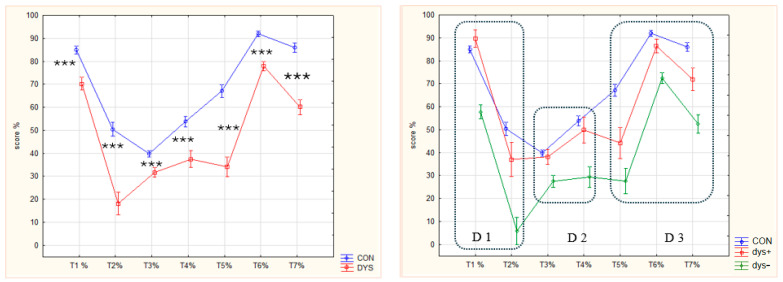 Figure 2
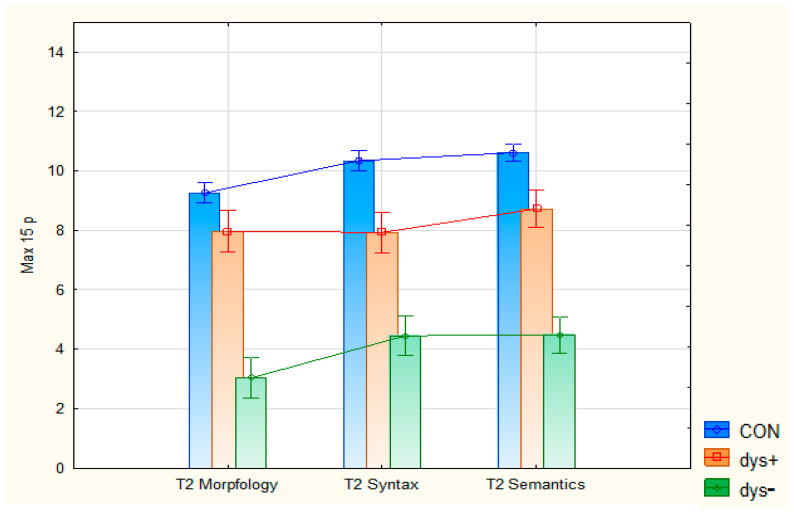 Figure 3
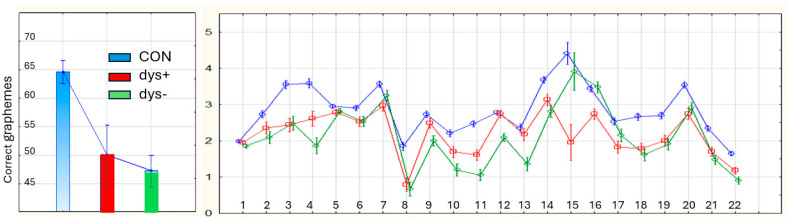 Figure 4
Peer Reviews
No public reviews on file for this paper yet. If you reviewed it on a platform where reviews are public (OpenReview, ICLR, NeurIPS, ICML), you can paste yours below so the community can read it here.
Videos
No videos yet. Explain this paper in a talk, walkthrough, or lecture? Add one.
Taxonomy
TopicsReading and Literacy Development · Writing and Handwriting Education · Neuroscience, Education and Cognitive Function