Combined Effects of Diazoxide and Moderate-Intensity Exercise on the Restoration of Redox Balance Post-Fatigue in Fast- and Slow-Twitch Skeletal Muscles of Hypertensive Rats
Estefanía Bravo-Sánchez, César J. Nolasco-Ruiz, Sarai Sánchez-Duarte, Mariana Gómez-Barroso, Manuel Alejandro Vargas-Vargas, Christian Cortés-Rojo, Salvador Manzo-Ávalos, Elizabeth Sánchez-Duarte, Alain Raimundo Rodríguez-Orozco, Alfredo Saavedra-Molina, Rocío Montoya-Pérez

TL;DR
This study shows that combining diazoxide and moderate exercise helps reduce muscle damage from oxidative stress in hypertensive rats, with different benefits for fast- and slow-twitch muscles.
Contribution
The study introduces a combined therapeutic strategy using diazoxide and exercise to address hypertension-induced muscle dysfunction.
Findings
Hypertension increased oxidants and reduced antioxidant defenses in both fast- and slow-twitch muscles.
The combination of diazoxide and exercise showed the most robust improvement in redox balance.
Fast-twitch muscles responded better to exercise alone, while slow-twitch muscles benefited more from the combined treatment.
Abstract
Muscle fatigue is linked to redox imbalance and worsens under hypertension due to oxidative stress. This study tested whether diazoxide and moderate exercise could protect skeletal muscles in hypertensive rats after a fatigue protocol. Hypertension increased oxidants and reduced antioxidant defenses. Both interventions, when used alone or in combination, improved antioxidant activity and reduced oxidant levels. The combined treatment showed the most potent effect, with muscle-specific differences: fast-twitch fibers responded better to exercise, while slow-twitch fibers benefited more from the combined approach. These findings demonstrate how this strategy could inform new treatments for hypertension-induced muscle dysfunction. Muscle fatigue, defined as a decline in force generation, is closely linked to redox imbalance—a condition exacerbated by oxidative stress in hypertension. This…
Genes, proteins, chemicals, diseases, species, mutations and cell lines named across the full text — each resolved to its canonical identifier and authoritative record.
Click any figure to enlarge with its caption.
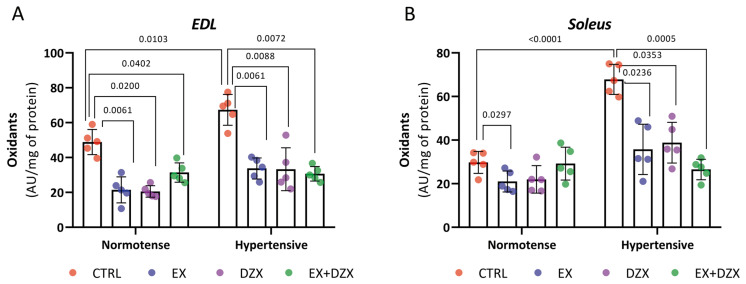 Figure 1
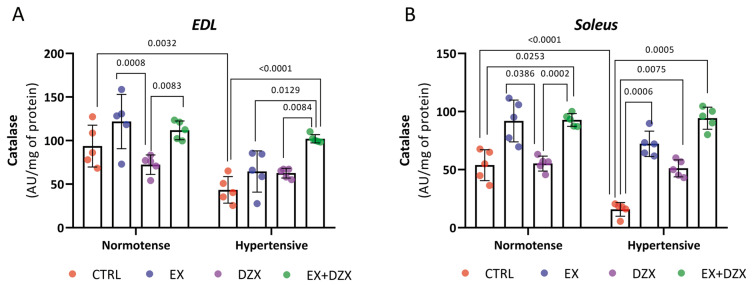 Figure 2
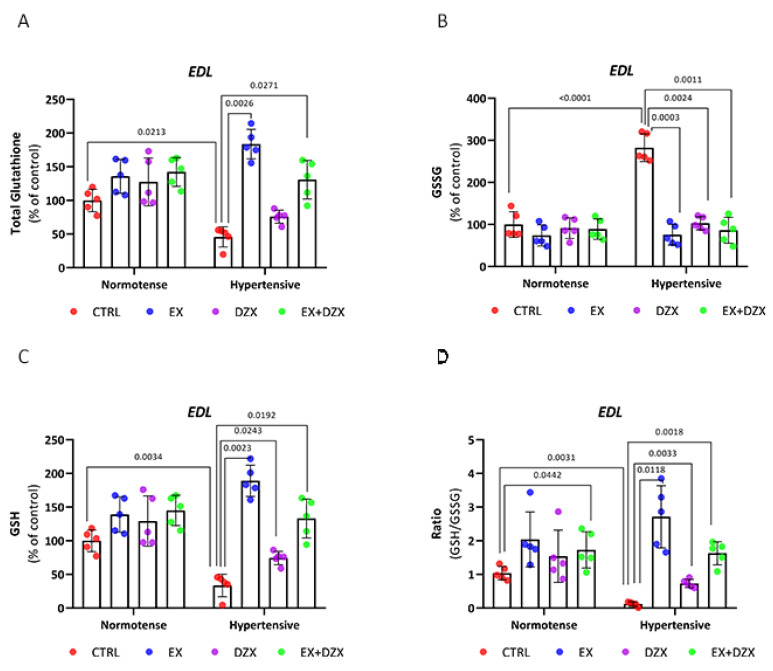 Figure 3
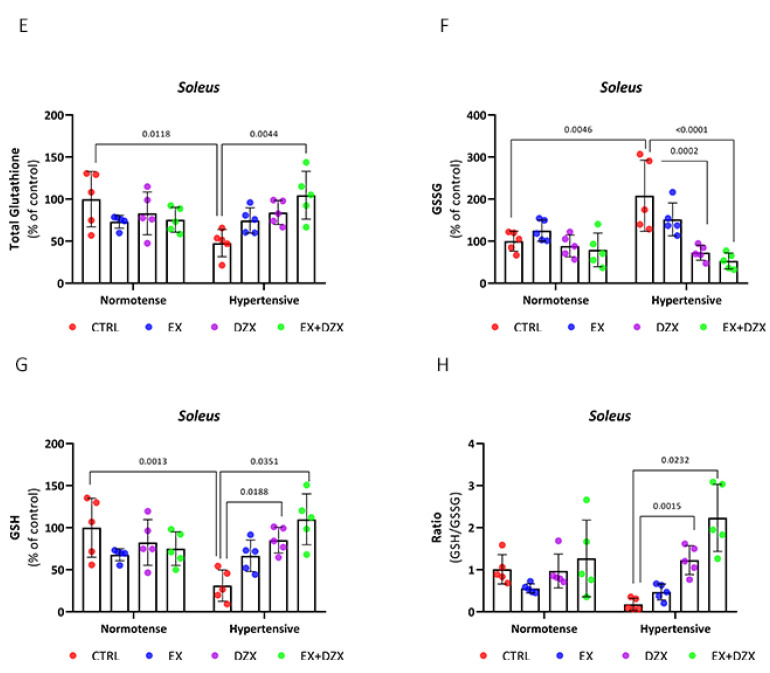 Figure 4
Peer Reviews
No public reviews on file for this paper yet. If you reviewed it on a platform where reviews are public (OpenReview, ICLR, NeurIPS, ICML), you can paste yours below so the community can read it here.
Videos
No videos yet. Explain this paper in a talk, walkthrough, or lecture? Add one.
Taxonomy
TopicsExercise and Physiological Responses · Cardiovascular and exercise physiology · Nitric Oxide and Endothelin Effects