Novel Murine Model of Atherosclerosis Progression Induced by a Modified Paigen Diet
María del Rosario Álvarez-Valadez, Alejandrina Rodríguez-Hernández, Felipa Andrade-Urzúa, Saraí Limón-Miranda, Adriana Ceballos-Gutiérrez, Jorge Agustín Velasco-Gutiérrez, Armando Gamboa-Domínguez, Adolfo Virgen-Ortiz, Enrique Sánchez-Pastor

TL;DR
This study develops a new rat model of atherosclerosis using a modified Paigen diet to better understand disease progression.
Contribution
A novel, stable rat model for studying atherosclerosis progression is introduced using a modified Paigen diet.
Findings
Athero 3 rats showed mild lesions at day 30 and severe lesions at day 60, indicating disease progression.
Diet-dependent changes in blood pressure, heart rate, and lipid profiles were observed in the model.
The Athero 3 diet successfully induced atherosclerosis progression suitable for further study.
Abstract
Background/Objectives: To better understand the mechanisms involved in atherosclerosis, different models have been developed, but these fail when studying the progression of this disease. The purpose of this study was to standardize a new model of atherosclerosis progression in rats using Paigen-type modified atherogenic diet. Methods: The design included a control group (n = 16) and 64 rats with atherogenic Paigen-type diet subdivided into four subgroups with different doses (Athero 1, Athero 2, Athero 3, and Athero 4). The atherogenic diet was supplemented orally in sequential stages: 1) Hypervitaminic (1.5 mL/kg/day for 12 days) and 2) Hyperlipidic (48 days ad libitum). Blood pressure, heart rate, aortic histopathology, inflammatory biomarkers, and biochemical lipid and liver profiles were measured in all groups on days 30 and 60. Results: All Athero 1 rats were sacrificed due to a…
Genes, proteins, chemicals, diseases, species, mutations and cell lines named across the full text — each resolved to its canonical identifier and authoritative record.
Click any figure to enlarge with its caption.
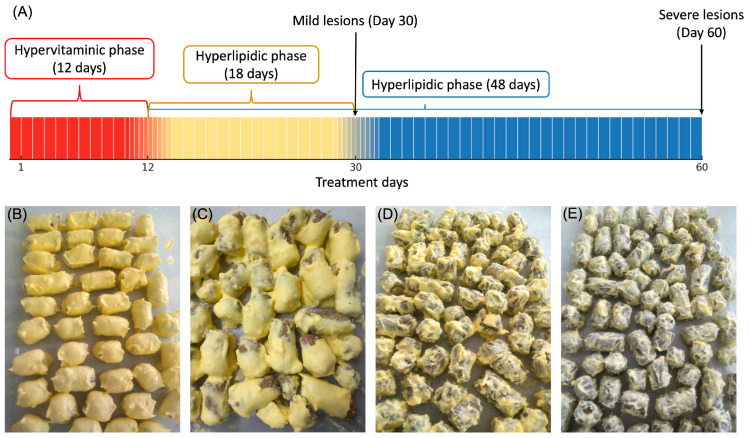 Figure 1
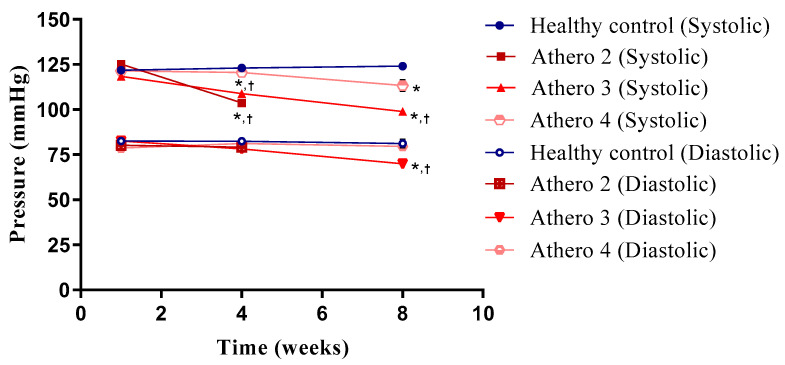 Figure 2
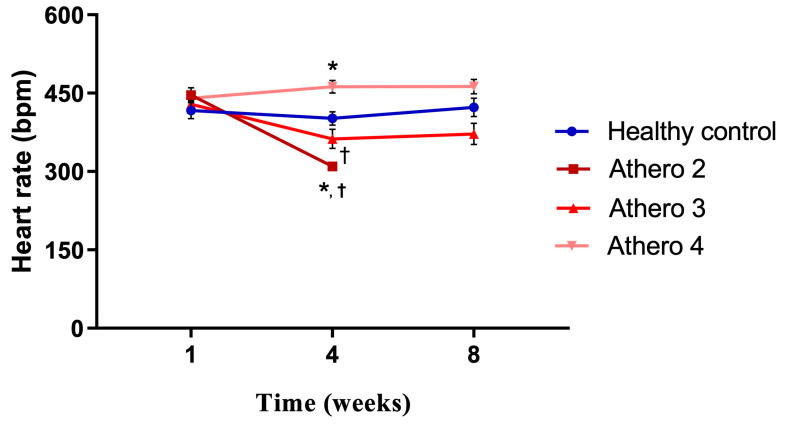 Figure 3
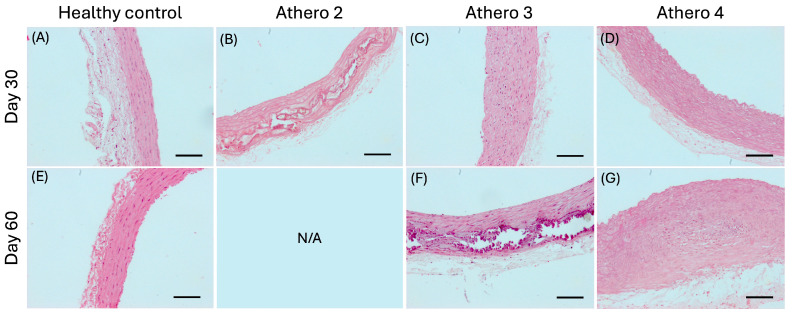 Figure 4
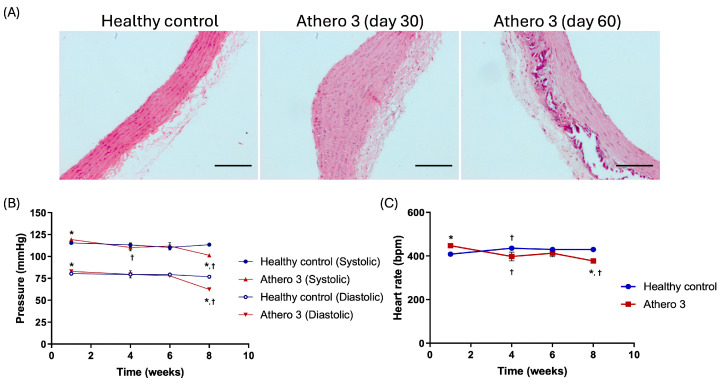 Figure 5
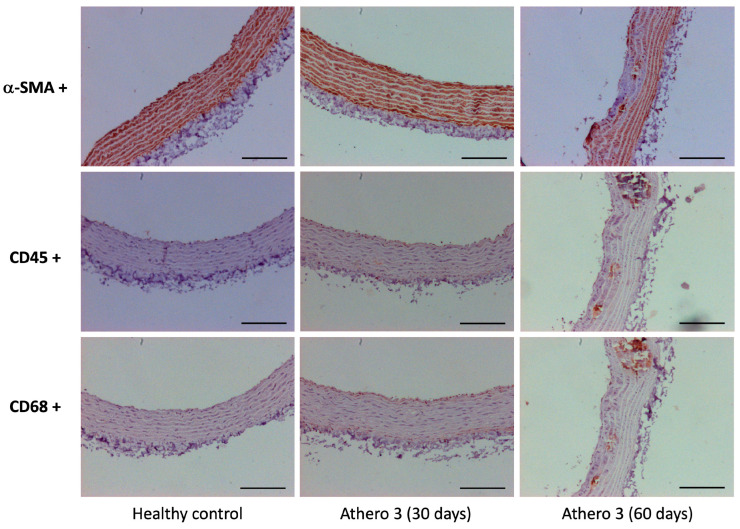 Figure 6
Peer Reviews
No public reviews on file for this paper yet. If you reviewed it on a platform where reviews are public (OpenReview, ICLR, NeurIPS, ICML), you can paste yours below so the community can read it here.
Videos
No videos yet. Explain this paper in a talk, walkthrough, or lecture? Add one.
Taxonomy
TopicsGinger and Zingiberaceae research · Diet, Metabolism, and Disease · Cholesterol and Lipid Metabolism