Prematurity and Epigenetic Regulation of SLC6A4: Longitudinal Insights from Birth to the First Month of Life
Aline de Araújo Brasil, Leo Travassos Vieira Milone, Paulo Victor Barbosa Eleutério dos Santos, Stephanie Cristina Alves de Oliveira Saide, Vitor Barreto Paravidino, Georgia Chalfun, Letícia Santiago da Silva Ferreira, Mariana Berquó Carneiro Ferreira

TL;DR
This study shows that preterm infants have distinct DNA methylation patterns in the SLC6A4 gene compared to full-term infants, which may affect their neurodevelopment and stress adaptation.
Contribution
The study provides longitudinal insights into SLC6A4 methylation differences in preterm and term neonates, linking epigenetic regulation to early-life stress and neurodevelopment.
Findings
Preterm infants showed higher methylation at CpGs 12 and 13 at birth compared to full-term infants.
Methylation patterns in preterm infants remained stable over time, while full-term infants showed increasing methylation at certain CpG sites.
Extremely preterm infants exhibited the highest methylation levels across all three time points.
Abstract
Background/Objectives: Prematurity is a significant global health concern, often associated with neurodevelopmental challenges. Solute Carrier Family 6 Member 4 (SLC6A4), the gene encoding the serotonin transporter, a key component in serotonin reuptake in the synaptic cleft, plays a key role in stress response and neurodevelopment. Epigenetic regulation of stress-related genes, such as SLC6A4, influences neonatal stress adaptation and developmental outcomes. This study aimed to quantify and compare DNA methylation levels at 13 CpG sites in the promoter region of the SLC6A4 gene between preterm and term neonates at three time points. Methods: A cohort of 46 preterm infants and a cohort of 49 full-term infants were analyzed. Blood samples collected at birth (D0), the fifth day (D5), and the thirtieth day (D30) were used to analyze DNA methylation, using bisulfite conversion and…
Genes, proteins, chemicals, diseases, species, mutations and cell lines named across the full text — each resolved to its canonical identifier and authoritative record.
Click any figure to enlarge with its caption.
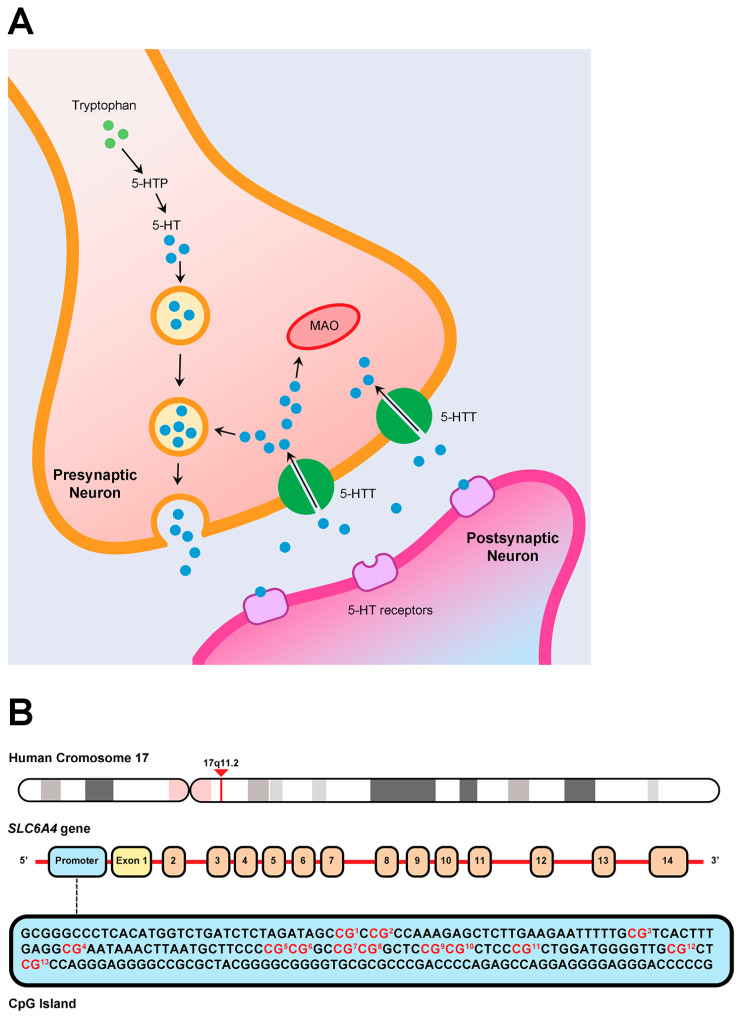 Figure 1
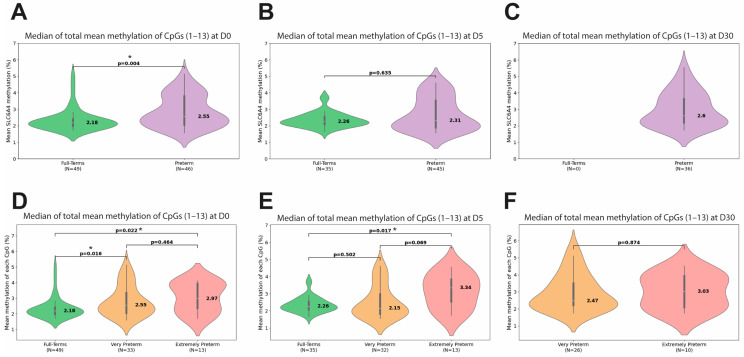 Figure 2
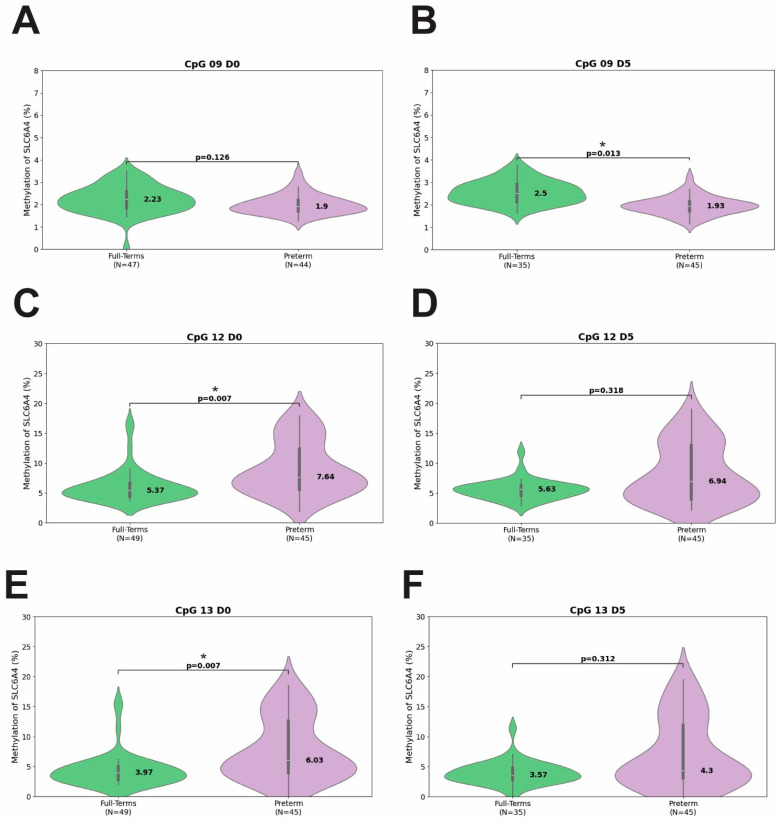 Figure 3
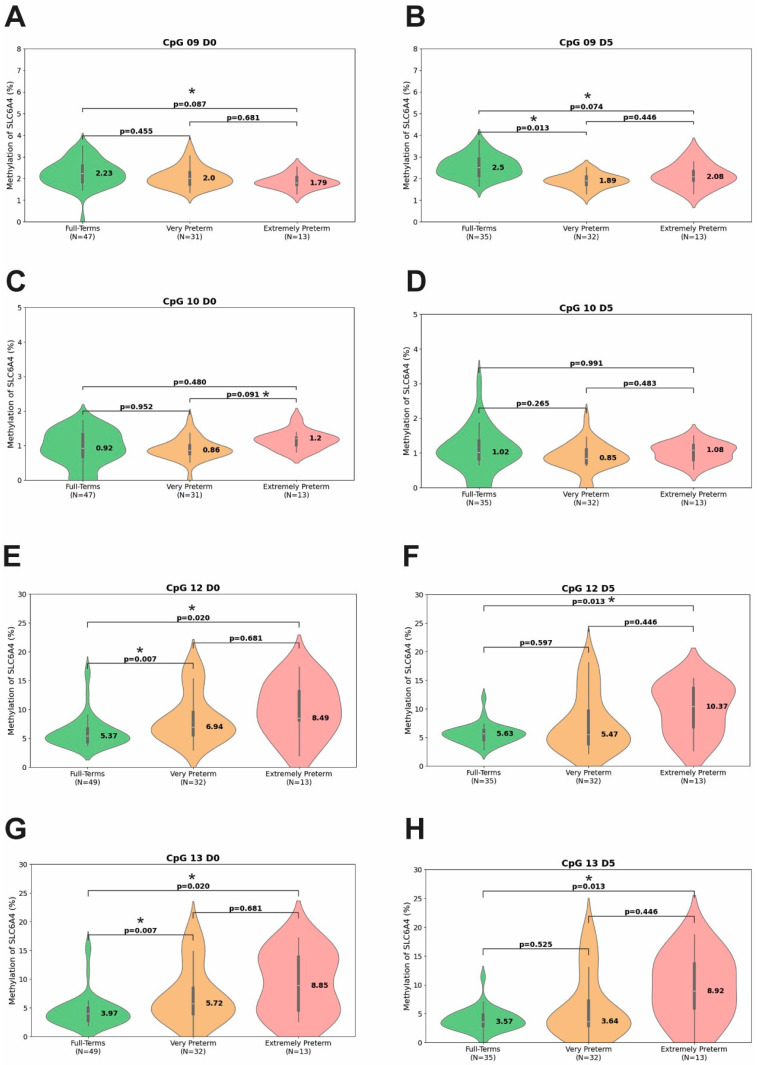 Figure 4
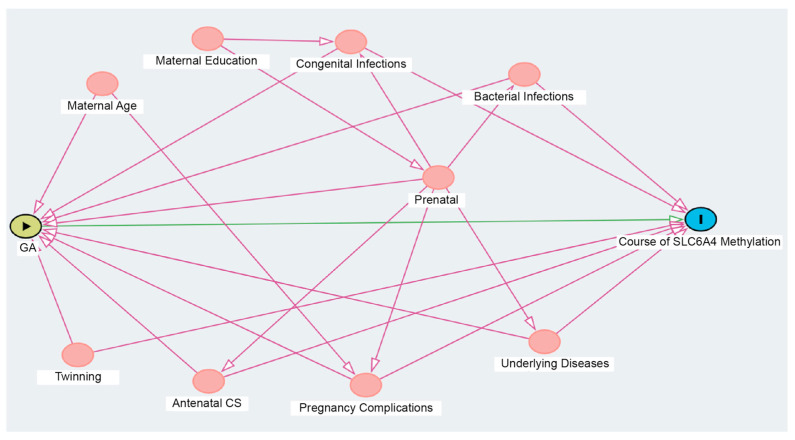 Figure 5
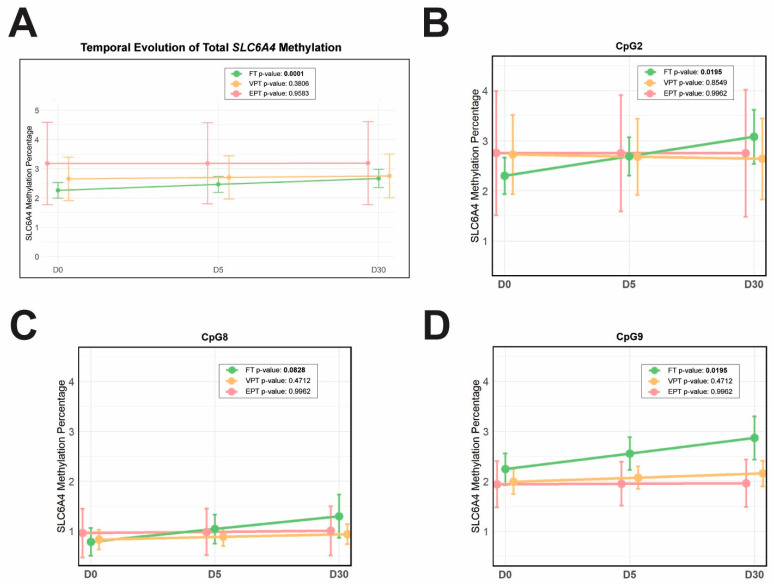 Figure 6
Peer Reviews
No public reviews on file for this paper yet. If you reviewed it on a platform where reviews are public (OpenReview, ICLR, NeurIPS, ICML), you can paste yours below so the community can read it here.
Videos
No videos yet. Explain this paper in a talk, walkthrough, or lecture? Add one.
Taxonomy
TopicsInfant Development and Preterm Care · Prenatal Substance Exposure Effects · Infant Health and Development