Are Ecosystem Services Replaceable by Technology Yet? Bio-Inspired Technologies for Ecosystem Services: Challenges and Opportunities
Shoshanah Jacobs, Jindong Zhang, Emily Wolf, Elizabeth Porter, Shelby J. Bohn, Adam Maxwell Sparks, Marjan Eggermont, Mindi Summers, Claudia I. Rivera Cárdenas, Heather Clitheroe, Daniel Gillis, M. Alex Smith, Karina Benessaiah, Andria Jones, Adam Davies, Michael Helms

TL;DR
This paper explores whether technology can replace ecosystem services, finding that while some functions can be mimicked, many essential and cultural aspects of ecosystems remain beyond technological reach.
Contribution
The paper introduces a comprehensive framework of 22 ecosystem services and evaluates bio-inspired technologies' capacity to replace or support them using AI-assisted analysis of 68,000 publications.
Findings
Bio-inspired technologies engage with 20 of 22 ecosystem services but focus heavily on five tractable functions.
Foundational services like pollination and soil formation are largely absent from technological efforts.
Only 3% of technologies aim to support existing systems, with most focused on enhancement or replacement.
Abstract
As ecological collapse accelerates under the pressures of anthropogenic climate change, adaptation strategies increasingly include technological proxies for nature’s functions. But can ecosystem services (ES) be meaningfully replaced by technology? Revisiting this urgent question first posed by Fitter (2013), we assess the extent to which bio-inspired design—particularly biomimetics—has advanced the capacity to support, enhance, or replace natural ES. We convened an interdisciplinary team to synthesize and refine a comprehensive list of 22 ecosystem services, integrating often-overlooked cultural and relational dimensions. Using this framework, we conducted a large-scale analysis of over 68,000 peer-reviewed publications from the biomimetics and bio-inspired design literature between 2004 and 2025, applying AI-assisted classification to evaluate whether, and how, these technologies map…
Genes, proteins, chemicals, diseases, species, mutations and cell lines named across the full text — each resolved to its canonical identifier and authoritative record.
Click any figure to enlarge with its caption.
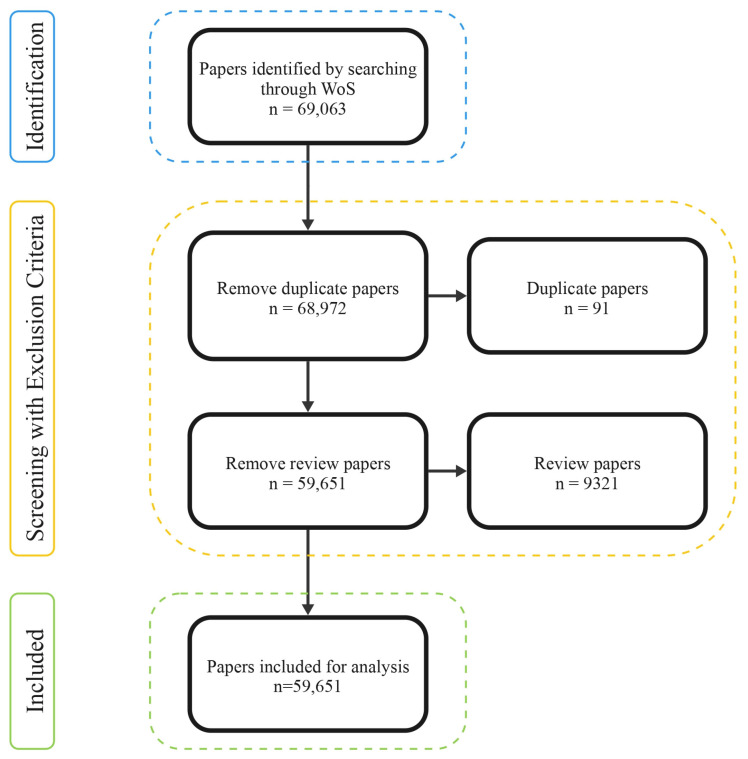 Figure 1
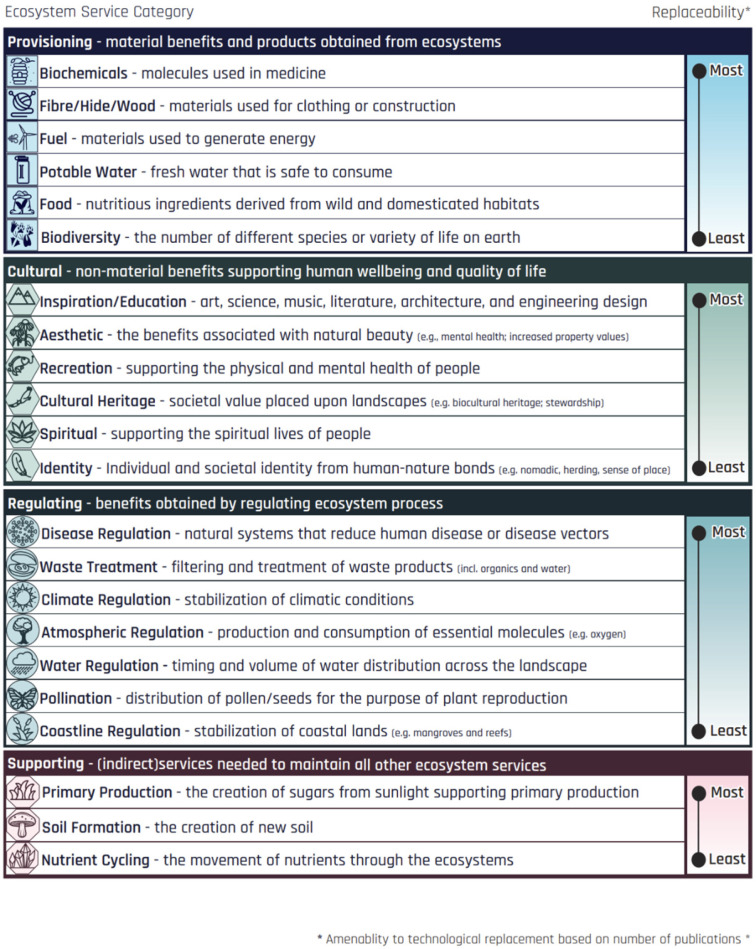 Figure 2
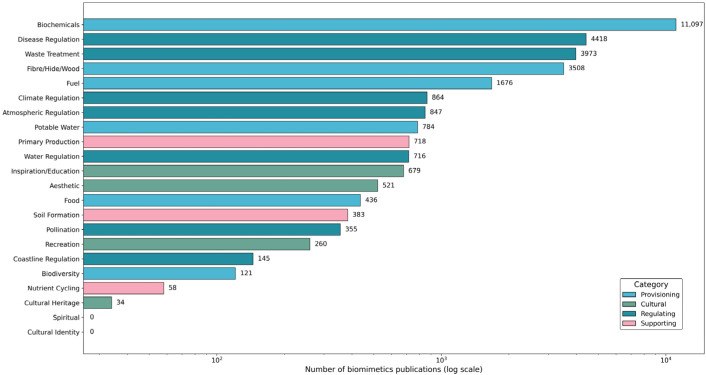 Figure 3
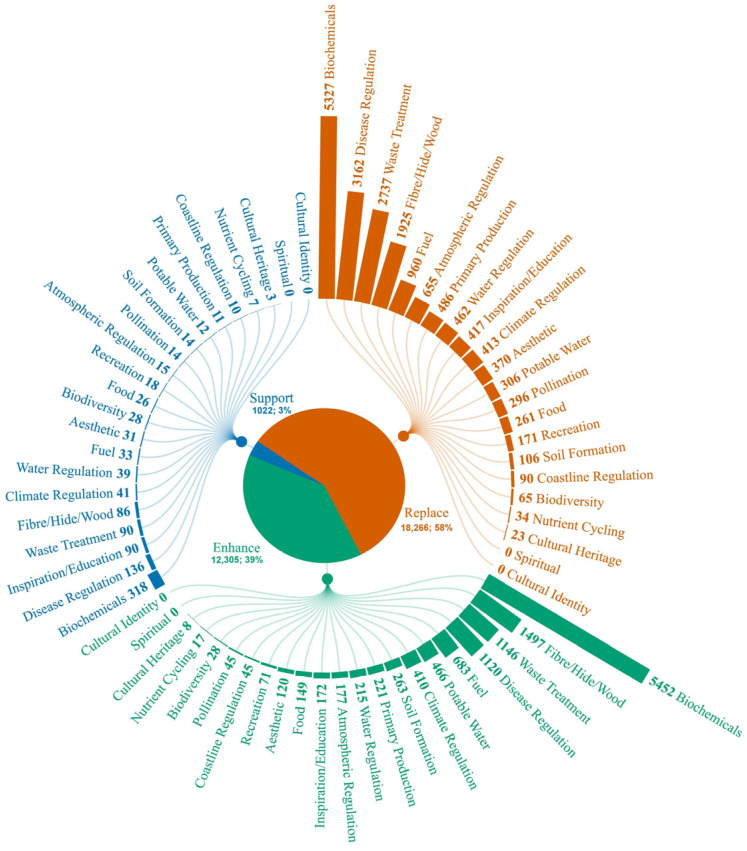 Figure 4
Peer Reviews
No public reviews on file for this paper yet. If you reviewed it on a platform where reviews are public (OpenReview, ICLR, NeurIPS, ICML), you can paste yours below so the community can read it here.
Videos
No videos yet. Explain this paper in a talk, walkthrough, or lecture? Add one.
Taxonomy
TopicsUrban Green Space and Health · Land Use and Ecosystem Services · Environmental Philosophy and Ethics