A Novel Unsupervised You Only Listen Once (YOLO) Machine Learning Platform for Automatic Detection and Characterization of Prominent Bowel Sounds Towards Precision Medicine
Gayathri Yerrapragada, Jieun Lee, Mohammad Naveed Shariff, Poonguzhali Elangovan, Keerthy Gopalakrishnan, Avneet Kaur, Divyanshi Sood, Swetha Rapolu, Jay Gohri, Gianeshwaree Alias Rachna Panjwani, Rabiah Aslam Ansari, Jahnavi Mikkilineni, Naghmeh Asadimanesh

TL;DR
This study introduces a new machine learning platform to automatically detect and classify bowel sounds using acoustic analysis, offering a non-invasive tool for gastrointestinal monitoring.
Contribution
A novel unsupervised YOLO-based machine learning platform for real-time, annotation-free detection and characterization of bowel sounds.
Findings
K-Means clustering identified five distinct acoustic patterns in bowel sounds with high cluster quality metrics.
Temporal modeling revealed unique dwell times and transition dynamics between different bowel sound states.
The method shows potential for clinical applications in conditions like postoperative ileus and inflammatory bowel disease.
Abstract
Phonoenterography (PEG) offers a non-invasive and radiation-free technique to assess gastrointestinal activity through acoustic signal analysis. In this feasibility study, 110 high-resolution PEG recordings (44.1 kHz, 16-bit) were acquired from eight healthy individuals, yielding 6314 prominent bowel sound (PBS) segments through automated segmentation. Each event was characterized using a 279-feature acoustic profile comprising Mel-frequency cepstral coefficients (MFCCs), their first-order derivatives (Δ-MFCCs), and six global spectral parameters. After normalization and dimensionality reduction with PCA and UMAP (cosine distance, 35 neighbors, minimum distance = 0.01), five clustering strategies were evaluated. K-Means (k = 5) achieved the most favorable balance between cluster quality (silhouette = 0.60; Calinski–Harabasz = 19,165; Davies–Bouldin = 0.68) and interpretability,…
Genes, proteins, chemicals, diseases, species, mutations and cell lines named across the full text — each resolved to its canonical identifier and authoritative record.
Click any figure to enlarge with its caption.
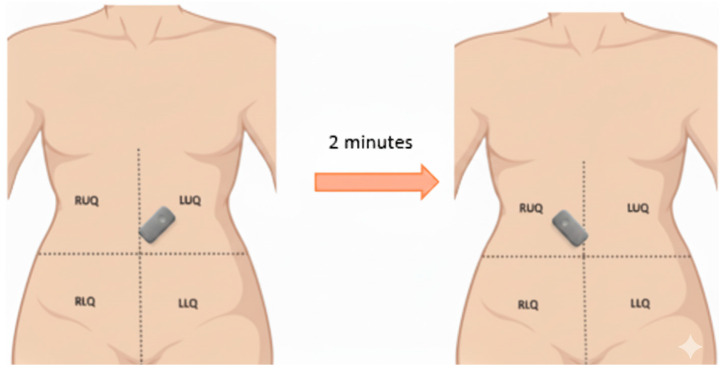 Figure 1
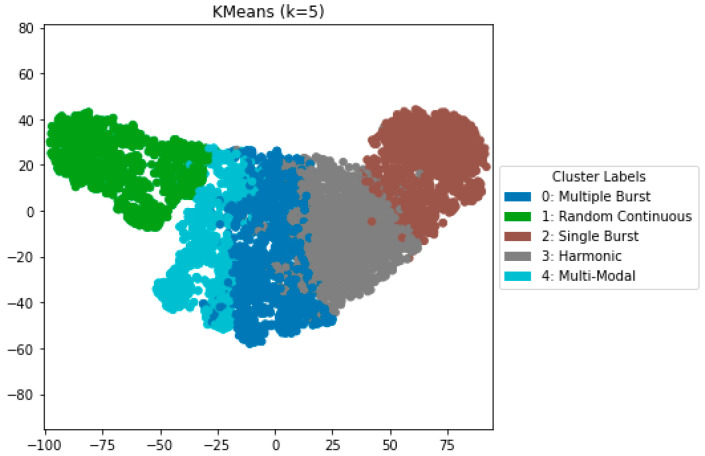 Figure 2
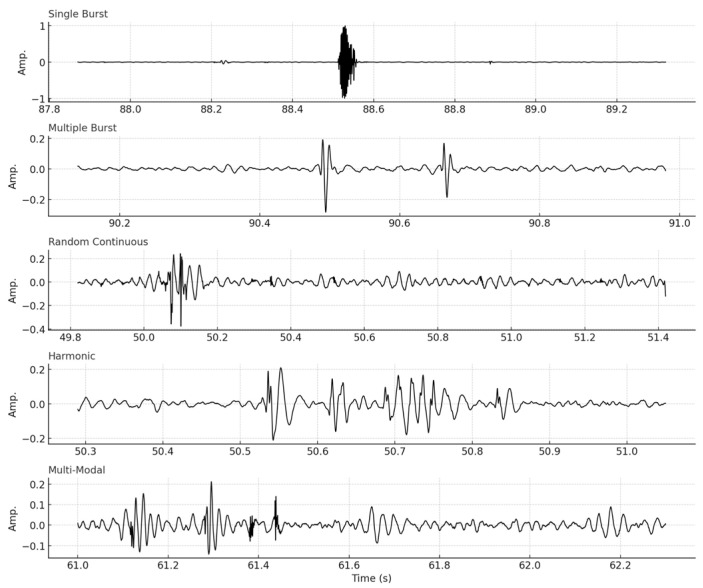 Figure 3
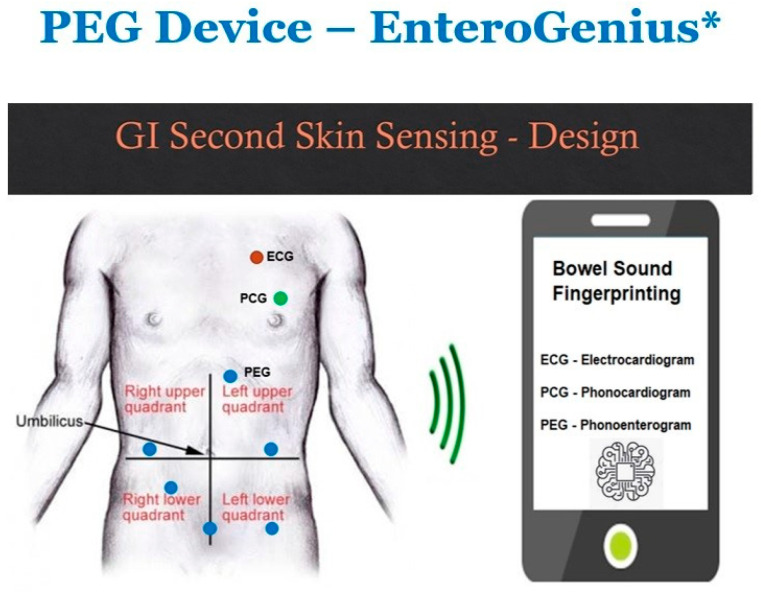 Figure 4
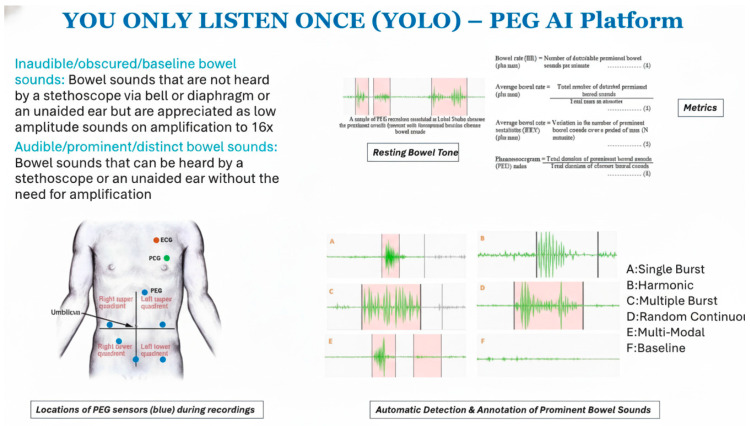 Figure 5
Peer Reviews
No public reviews on file for this paper yet. If you reviewed it on a platform where reviews are public (OpenReview, ICLR, NeurIPS, ICML), you can paste yours below so the community can read it here.
Videos
No videos yet. Explain this paper in a talk, walkthrough, or lecture? Add one.
Taxonomy
TopicsPhonocardiography and Auscultation Techniques · Music Therapy and Health · Gastrointestinal motility and disorders