Mechanistic and Kinetic Insights into the Acylation Reaction of Hepatitis C Virus NS3/NS4A Serine Protease with NS4B/5A Substrate
José Ángel Martínez-González, Nuria Salazar-Sanchez, María Larriva-Hormigos, Rodrigo Martínez, Miguel González

TL;DR
This study reveals the acylation mechanism of the HCV protease with its natural substrate, showing it is a concerted process without a tetrahedral intermediate.
Contribution
The study challenges the traditional two-step acylation mechanism by showing a concerted process in HCV protease.
Findings
The acylation reaction follows a concerted mechanism without an intermediate step.
The proposed tetrahedral intermediate in serine protease acylation does not occur here.
The kinetic isotope effect is 1.3, and tunneling plays an intermediate role in the reaction.
Abstract
Reaction mechanisms and rate constants of the acylation reaction of the hepatitis C virus (HCV) NS3/NS4A serine protease with the NS4B/5A natural substrate were studied using SCC-DFTB/MM (self-consistent charge density functional tight binding/molecular mechanics) and EA-VTST/MT (ensemble-averaged variational transition state theory/multidimensional tunneling) methods, considering the isotope effect (H/D). This reaction is crucial in the HCV life cycle. The reaction follows an essentially concerted mechanism. Although two elementary steps are involved, no intermediate step has been found between them. Thus, the proposed general two-step serine protease acylation mechanism, which includes a tetrahedral intermediate, does not occur here. This finding aligns with our studies on another natural substrate (NS5A/5B), indicating a greater variety in mechanism than previously expected.…
Genes, proteins, chemicals, diseases, species, mutations and cell lines named across the full text — each resolved to its canonical identifier and authoritative record.
Click any figure to enlarge with its caption.
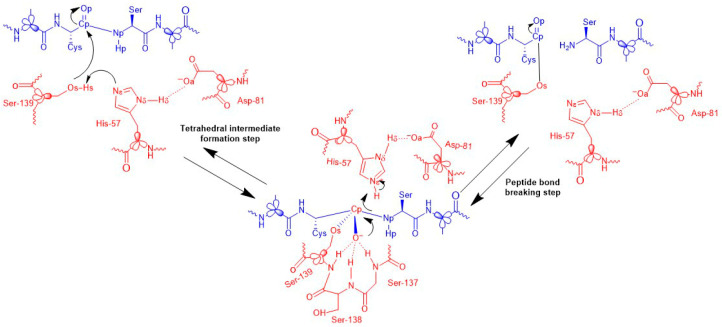 Figure 1
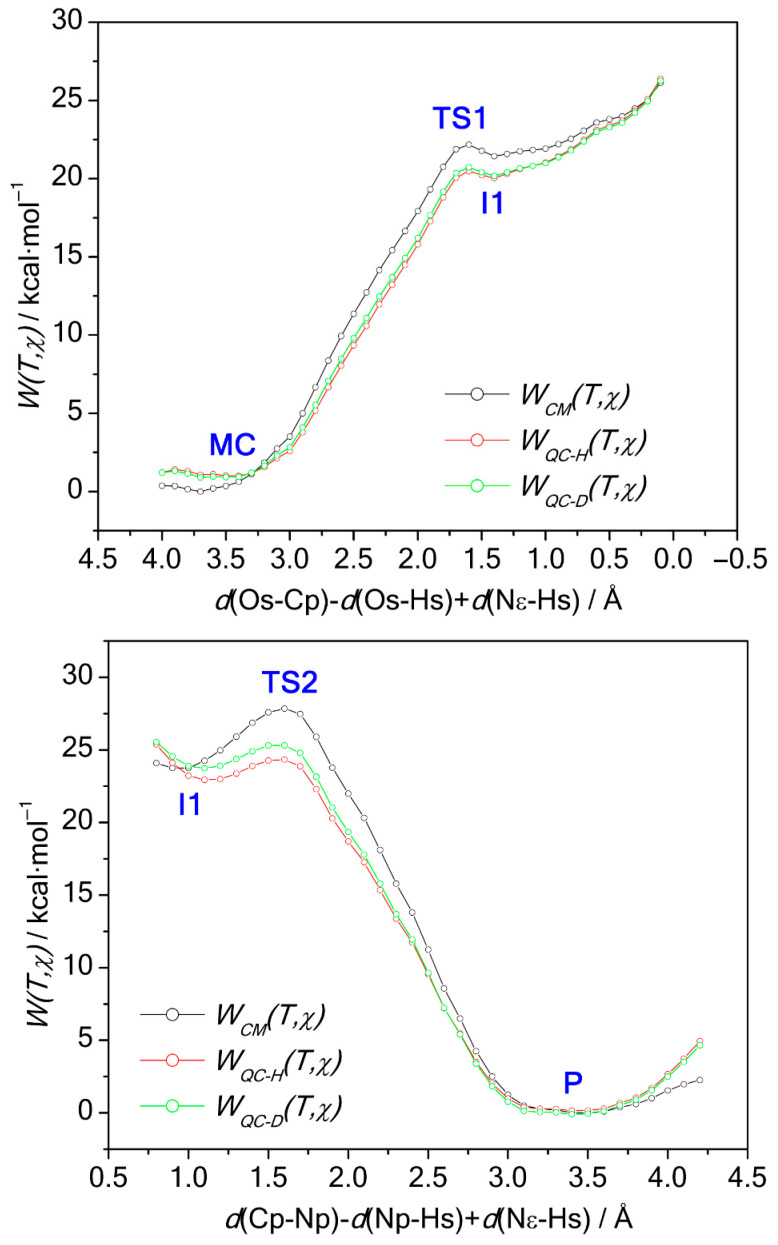 Figure 2
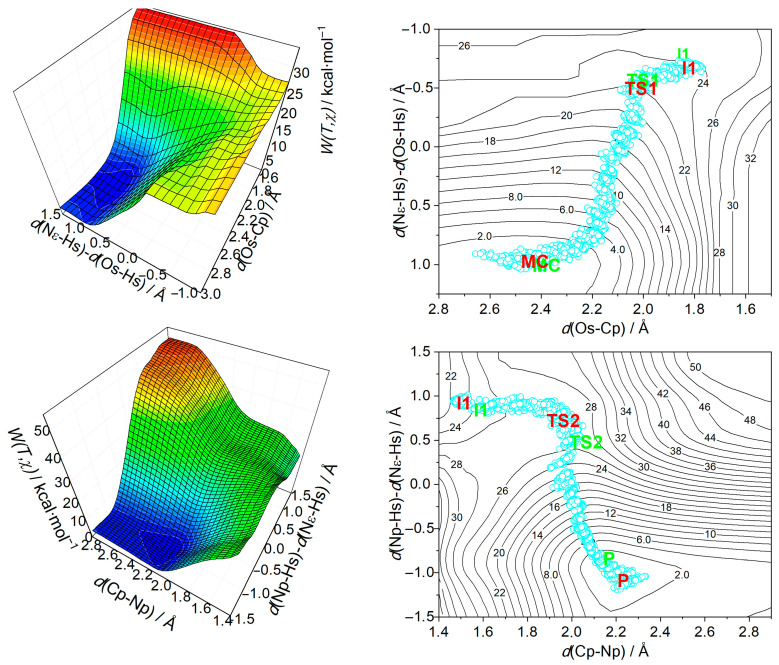 Figure 3
Peer Reviews
No public reviews on file for this paper yet. If you reviewed it on a platform where reviews are public (OpenReview, ICLR, NeurIPS, ICML), you can paste yours below so the community can read it here.
Videos
No videos yet. Explain this paper in a talk, walkthrough, or lecture? Add one.
Taxonomy
TopicsHepatitis C virus research · HIV/AIDS drug development and treatment · Click Chemistry and Applications