Less Severe Inflammation in Cyclic GMP–AMP Synthase (cGAS)-Deficient Mice with Rabies, Impact of Mitochondrial Injury, and Gut–Brain Axis
Pannatat Areekul, Thansita Bhunyakarnjanarat, Sakolwan Suebnuson, Kollawat Somsri, Somchanok Trakultritrung, Kris Taveethavornsawat, Tewin Tencomnao, Siwaporn Boonyasuppayakorn, Asada Leelahavanichkul

TL;DR
Mice lacking the cGAS protein showed less severe brain inflammation from rabies, possibly due to reduced mitochondrial damage and altered gut microbiome.
Contribution
This study reveals that cGAS deficiency reduces rabies-induced inflammation via mitochondrial protection and gut-brain axis effects.
Findings
cGAS-deficient mice had less severe brain inflammation and lower viral burden in the hippocampus compared to wild-type mice.
Rabies-induced mitochondrial damage and cGAS activation were more pronounced in wild-type macrophages than in cGAS-deficient ones.
Fecal Proteobacteria levels were higher in infected wild-type mice, suggesting gut dysbiosis linked to rabies.
Abstract
Rabies is a deadly viral disease that attacks the central nervous system and causes death once symptoms appear. Despite being an RNA virus, rabies might be associated with the cytosolic DNA receptor, partly through mitochondrial DNA damage. Here, rabies in cGAS-deficient (cGAS-/-) mice was less severe than wild-type (WT) mice at 7 days post-infection, as indicated by viral burdens in hippocampus, blood–brain barrier defect, and inflammatory gene expression. Serum proinflammatory cytokines and gut permeability defect (FITC-dextran assay) in rabies-infected mice of both mouse strains were similar despite different fecal microbiome patterns. In parallel, cGAS-/- macrophages demonstrated less severe mitochondrial damage (MitoSox, mitochondrial DNA, and extracellular flux analysis) than WT cells after 24 h of incubation with rabies. Further studies on mitochondrial injury and the gut–brain…
Genes, proteins, chemicals, diseases, species, mutations and cell lines named across the full text — each resolved to its canonical identifier and authoritative record.
Click any figure to enlarge with its caption.
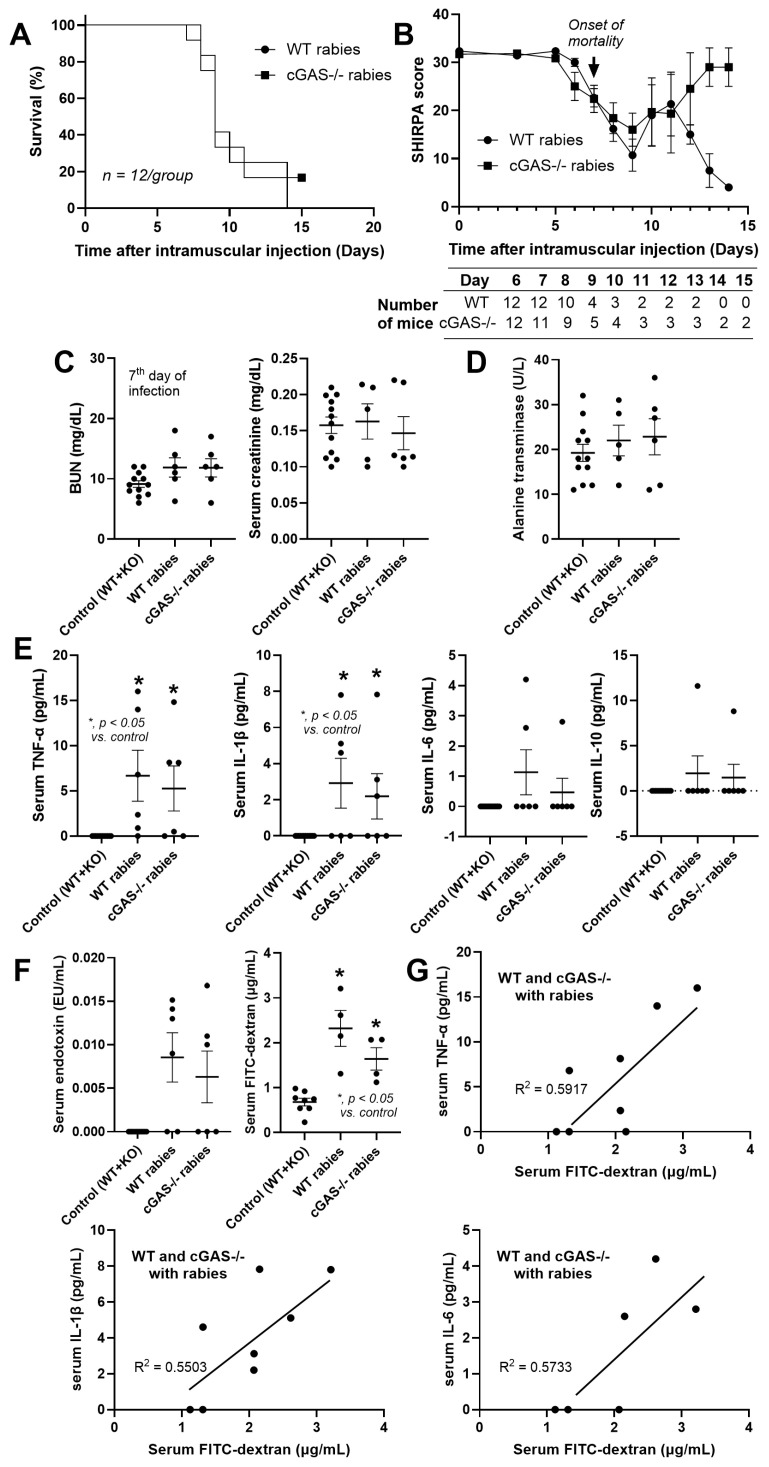 Figure 1
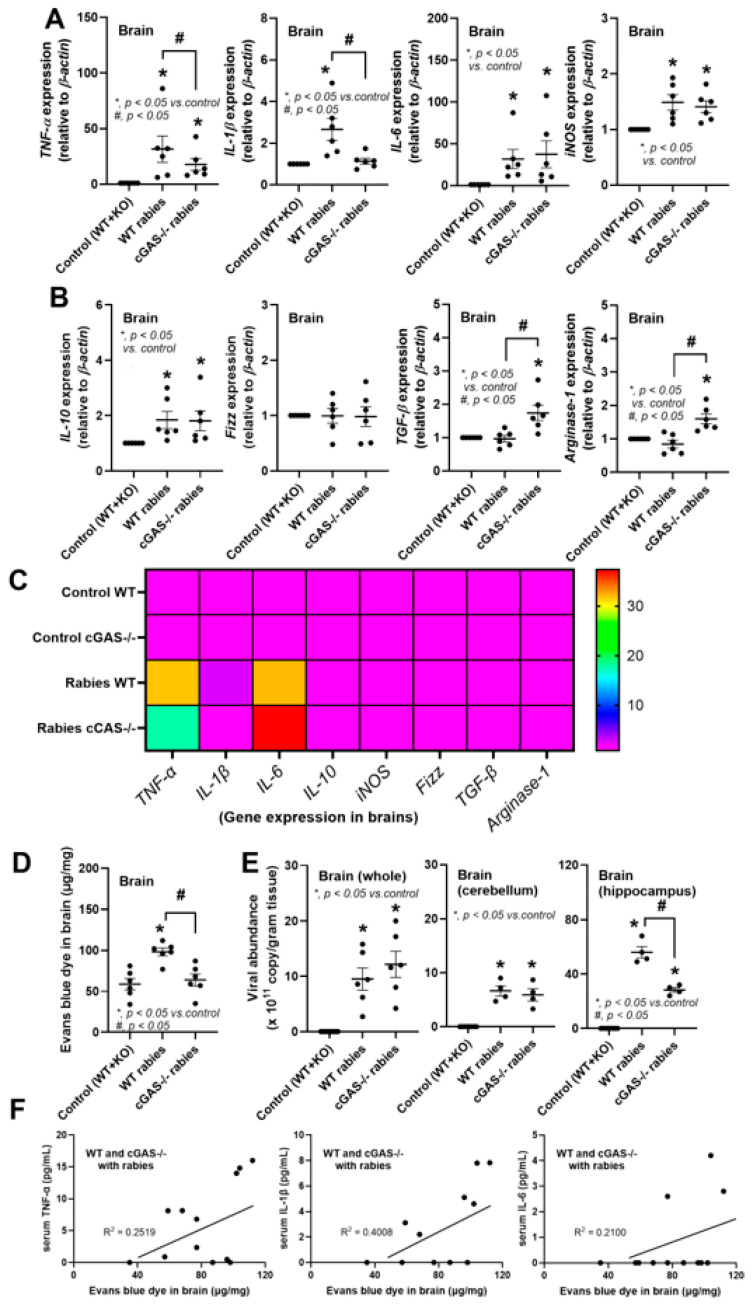 Figure 2
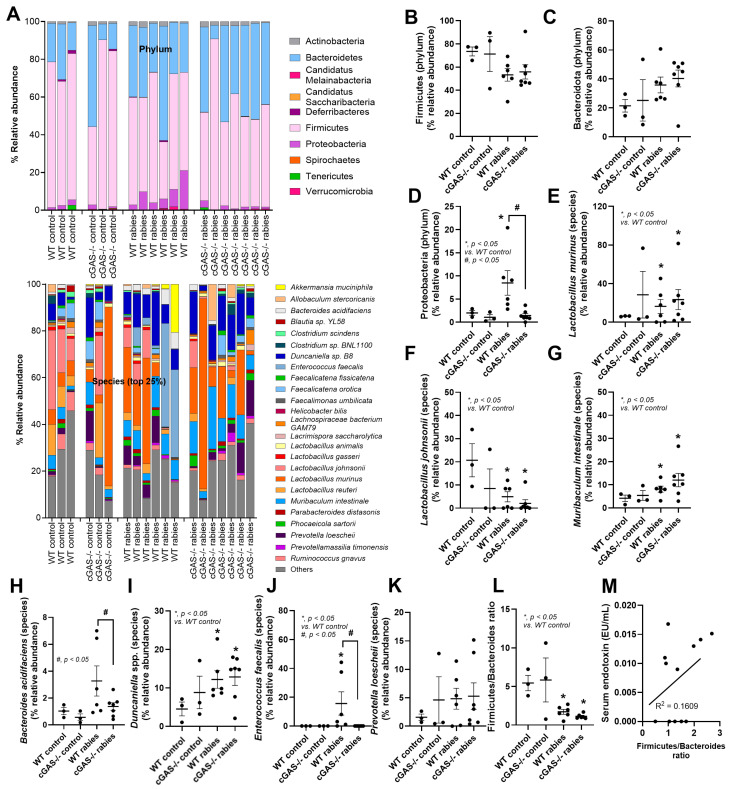 Figure 3
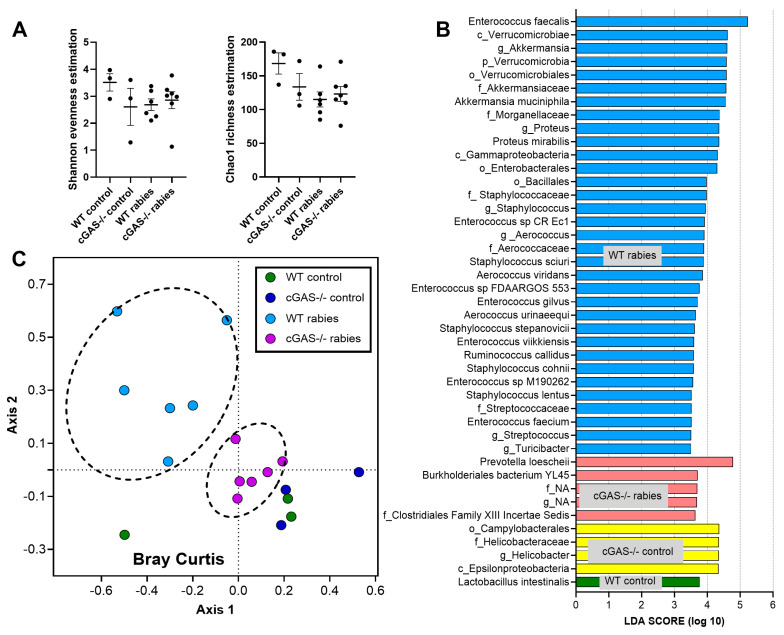 Figure 4
 Figure 5
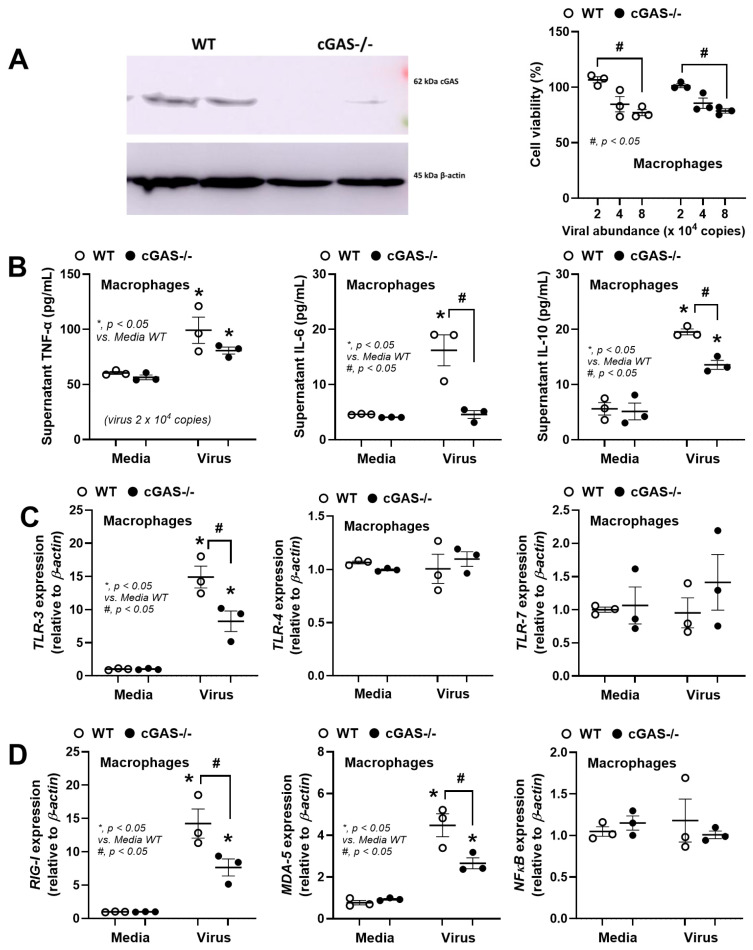 Figure 6
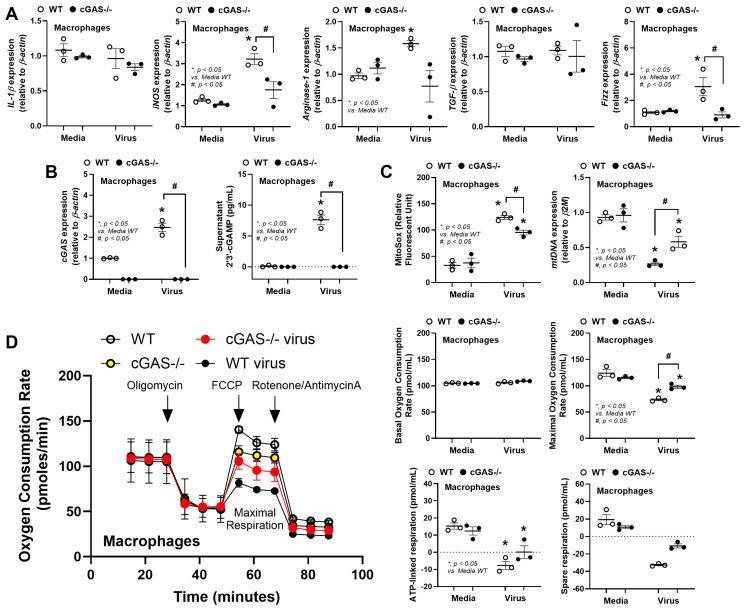 Figure 7
Peer Reviews
No public reviews on file for this paper yet. If you reviewed it on a platform where reviews are public (OpenReview, ICLR, NeurIPS, ICML), you can paste yours below so the community can read it here.
Videos
No videos yet. Explain this paper in a talk, walkthrough, or lecture? Add one.
Taxonomy
Topicsinterferon and immune responses · Autophagy in Disease and Therapy · Immune cells in cancer