ERP Biomarkers of Auditory–Visual Distraction in Aging and Cognitive Impairment
Valentina Gumenyuk, Oleg Korzyukov, Sheridan M. Parker, Daniel L. Murman, Nicholas R. Miller, Matthew Rizzo

TL;DR
This study identifies brain activity patterns linked to distraction in aging and cognitive diseases like Alzheimer's, which could help detect early signs of cognitive decline.
Contribution
The study introduces ERP biomarkers of auditory-visual distraction as potential early indicators of cognitive impairment and aging.
Findings
Older adults showed increased N1-enhancement and reduced P3a and RON amplitudes, indicating age-related distraction susceptibility.
MCI and AD patients exhibited further ERP abnormalities, suggesting impaired attention orientation and reorientation.
Reduced P3a amplitude and delayed RON correlated with executive dysfunction and memory deficits.
Abstract
Background/Objectives: Distraction is a form of impaired selective attention that becomes more pronounced with normal aging and in pathological conditions such as mild cognitive impairment (MCI) and Alzheimer’s disease (AD). Event-related potentials (ERPs) provide sensitive, time-resolved measures of neural mechanisms underlying distractibility. This study aimed to identify age- and disease-related ERP signatures of auditory–visual distraction as potential functional biomarkers for cognitive decline. Methods: Forty-six participants were enrolled, including young controls (Y), healthy older controls (O), individuals with MCI, and individuals with AD. Participants performed cross-modal interference tasks in which irrelevant auditory distracting sounds were paired with a relevant visual discriminating task. The distraction potential was quantified as the difference between ERP responses to…
Genes, proteins, chemicals, diseases, species, mutations and cell lines named across the full text — each resolved to its canonical identifier and authoritative record.
Click any figure to enlarge with its caption.
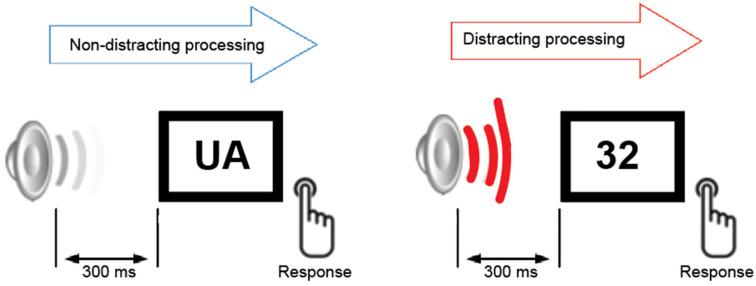 Figure 1
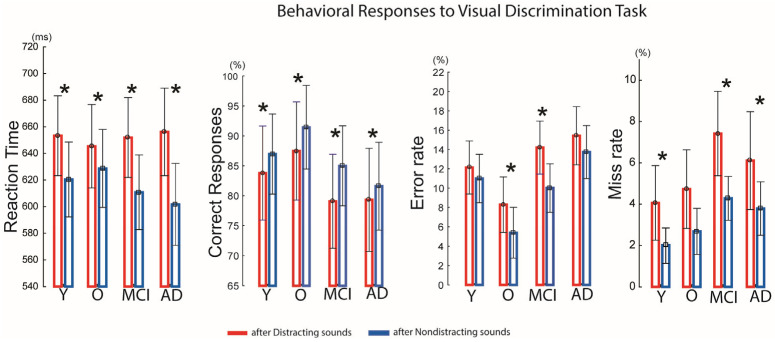 Figure 2
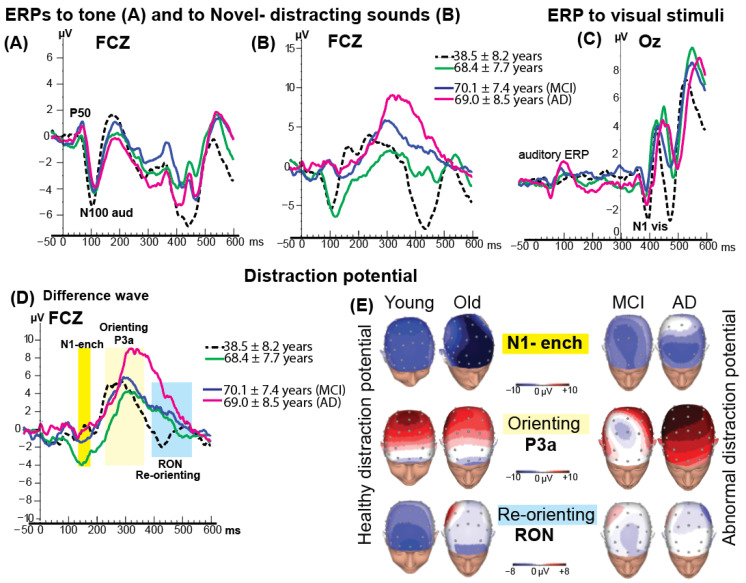 Figure 3
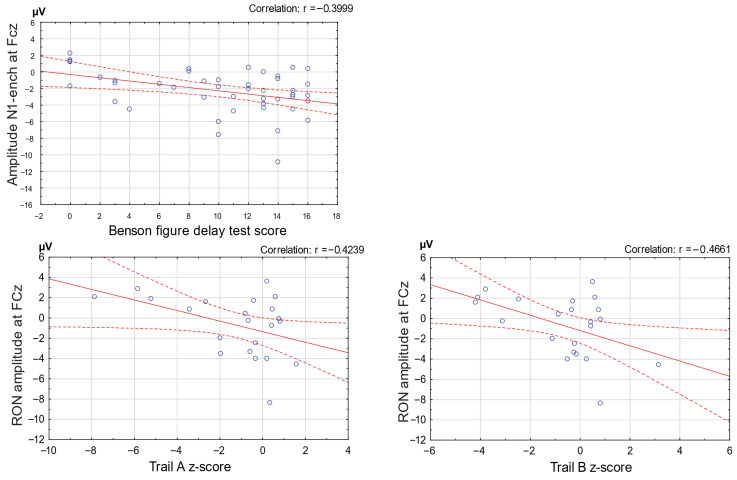 Figure 4
Peer Reviews
No public reviews on file for this paper yet. If you reviewed it on a platform where reviews are public (OpenReview, ICLR, NeurIPS, ICML), you can paste yours below so the community can read it here.
Videos
No videos yet. Explain this paper in a talk, walkthrough, or lecture? Add one.
Taxonomy
TopicsCognitive Functions and Memory · Neuroscience and Music Perception · Memory and Neural Mechanisms