The Variation in Practice of the Living Donor Kidney Transplant Pathway in the UK: Results of a National Survey
Katie Nightingale, Josh Stephenson, Rajesh Sivaprakasam, Tim Brown, Nicholas Inston, Ahmed Hamsho, Rommel Ravanan, Michael Nicholson, Argiris Asderakis, Sarah Browne, James Hunter, Lorna P. Marson, Katie L. Connor, Mortimer Kelleher, Andrew Sutherland, William Norton

TL;DR
A survey of UK transplant centers reveals significant variation in living donor kidney transplant practices, suggesting standardization could improve efficiency and increase donations.
Contribution
The study provides the first national survey of living donor kidney transplant pathways in the UK, identifying key areas of practice variation.
Findings
Marked variation exists in donor acceptance criteria, evaluation timelines, and follow-up duration across UK transplant centers.
Most centers use laparoscopic techniques, with hand-assisted transperitoneal nephrectomy being the most common approach.
Standardizing key processes could streamline donor pathways and improve donor experiences.
Abstract
Living donor kidney transplantation (LDKT) accounts for 35% of kidney transplants in the UK. The Organ Donation and Transplantation 2030 initiative underscores the necessity to enhance LDKT rates to meet growing demand. There is limited data on national variations in live donor workup pathways from initial referral to long-term follow-up. We conducted an online survey across all 23 UK transplant centres performing LDKT, covering the entire living donor pathway. We aimed to explore and highlight practice variation and identify opportunities for improvement. Responses were received from 21 centres (91.3%). Marked variation was identified in donor acceptance criteria, including age limits, body mass index thresholds, and donor evaluation timelines (6–36 weeks). Differences were also noted in multidisciplinary team processes, kidney laterality decisions, and perioperative enhanced recovery…
Genes, proteins, chemicals, diseases, species, mutations and cell lines named across the full text — each resolved to its canonical identifier and authoritative record.
Click any figure to enlarge with its caption.
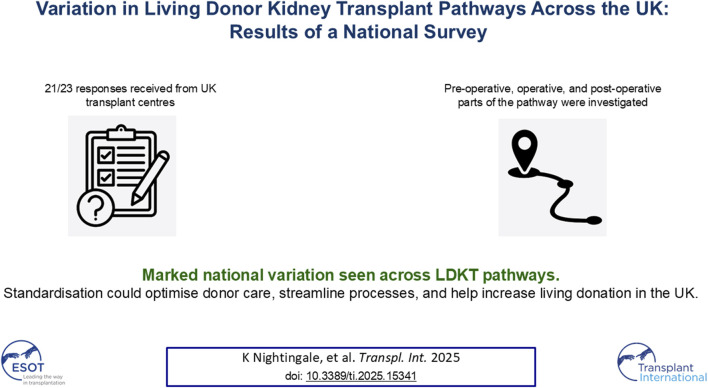 Figure 1
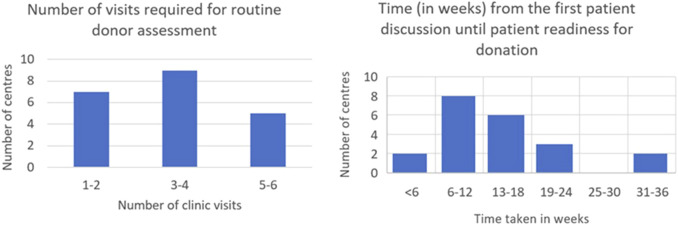 Figure 2
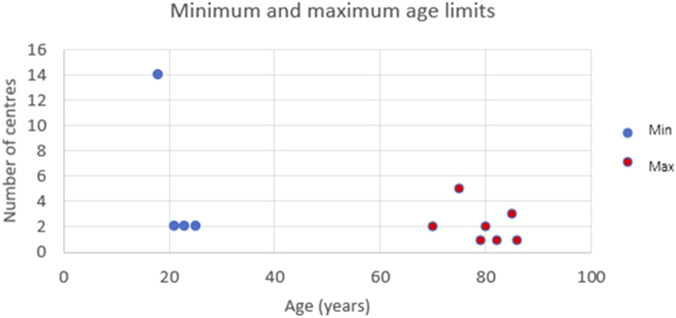 Figure 3
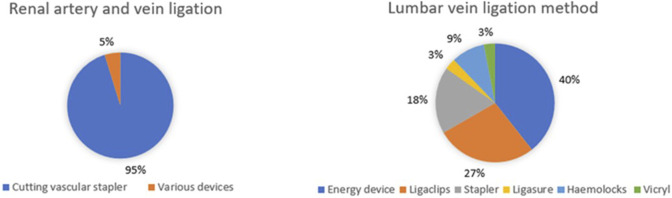 Figure 4
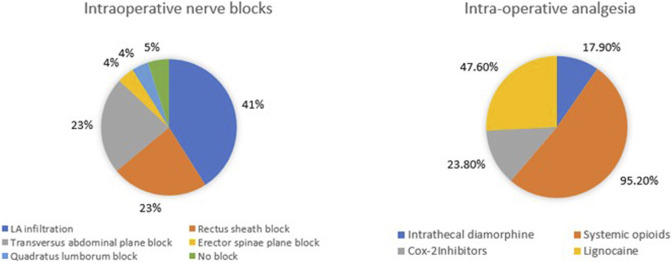 Figure 5
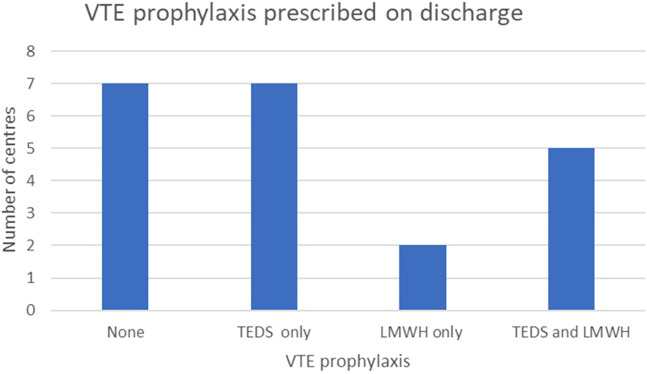 Figure 6
Peer Reviews
No public reviews on file for this paper yet. If you reviewed it on a platform where reviews are public (OpenReview, ICLR, NeurIPS, ICML), you can paste yours below so the community can read it here.
Videos
No videos yet. Explain this paper in a talk, walkthrough, or lecture? Add one.
Taxonomy
TopicsOrgan Donation and Transplantation · Renal Transplantation Outcomes and Treatments · Renal and Vascular Pathologies