Comparative Evaluation of Mutect2, Strelka2, and FreeBayes for Somatic SNV Detection in Synthetic and Clinical Whole-Exome Sequencing Data
Igor López-Cade, Alicia Gómez-Sanz, Adrián Sanvicente, Cristina Díaz-Tejeiro, Aránzazu Manzano, Pedro Pérez-Segura, Balázs Győrffy, Alberto Ocaña, Miguel de la Hoya, Vanesa García-Barberán

TL;DR
This study compares three tools for detecting genetic mutations in cancer, finding that each performs differently and suggesting that combining tools may improve results.
Contribution
The study provides a comparative evaluation of three somatic SNV detection tools using both synthetic and clinical data, emphasizing the benefits of ensemble approaches.
Findings
Mutect2 had the highest recall in synthetic data with ~99.9% precision and 63.1% recall.
FreeBayes detected the most variants in real samples, but only 5.1% of SNVs were shared across all three tools.
Ensemble approaches using SomaticSeq improved variant detection by leveraging stronger allelic signals.
Abstract
Somatic variant calling is a critical step in cancer genome analysis, but the performance of available tools can vary depending on their underlying algorithms and filtering strategies. We compared three widely used variant callers—Mutect2, Strelka2, and FreeBayes—for their performance in somatic single-nucleotide variant (SNV) detection using both synthetic and real whole-exome sequencing (WES) data. Synthetic data were generated by introducing 4709 SNVs into a variant-free BAM file, while real data consisted of tumor and matched normal WES samples from five ovarian cancer (OC) patients. All callers were run using the nf-core/sarek pipeline with default settings and appropriate filtering. In the synthetic dataset, all tools showed high precision (~99.9%), with Mutect2 achieving the highest recall (63.1%), followed by Strelka2 (46.3%) and FreeBayes (45.2%). In real samples, FreeBayes…
Genes, proteins, chemicals, diseases, species, mutations and cell lines named across the full text — each resolved to its canonical identifier and authoritative record.
Click any figure to enlarge with its caption.
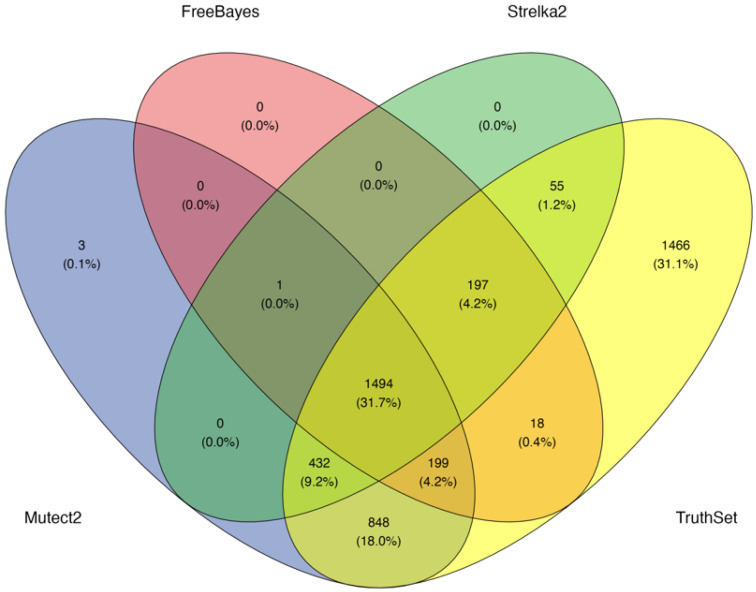 Figure 1
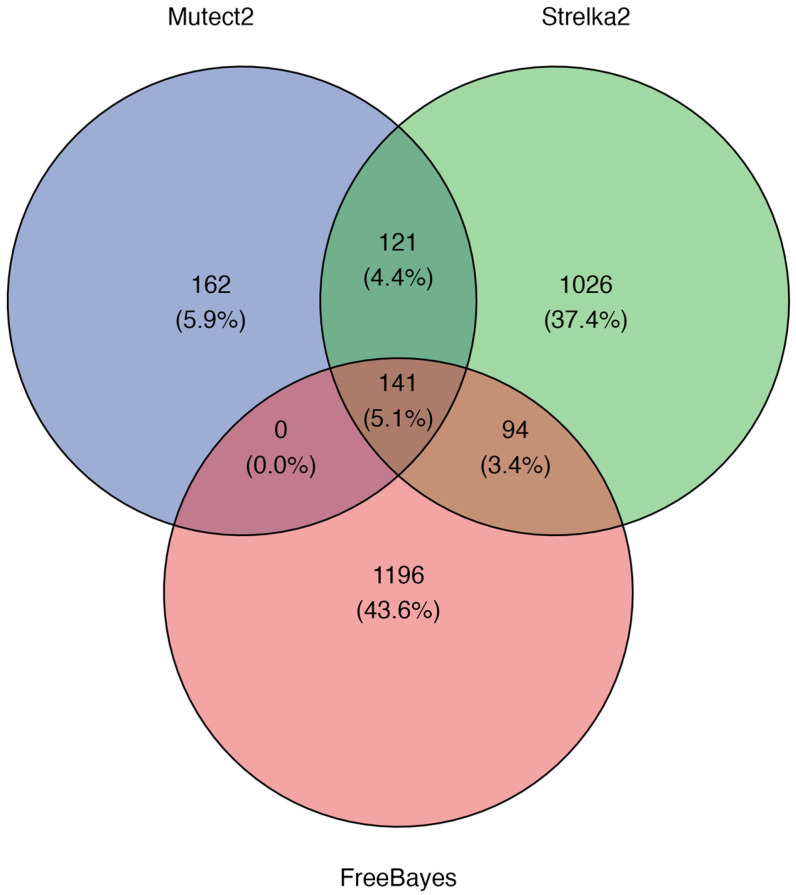 Figure 2
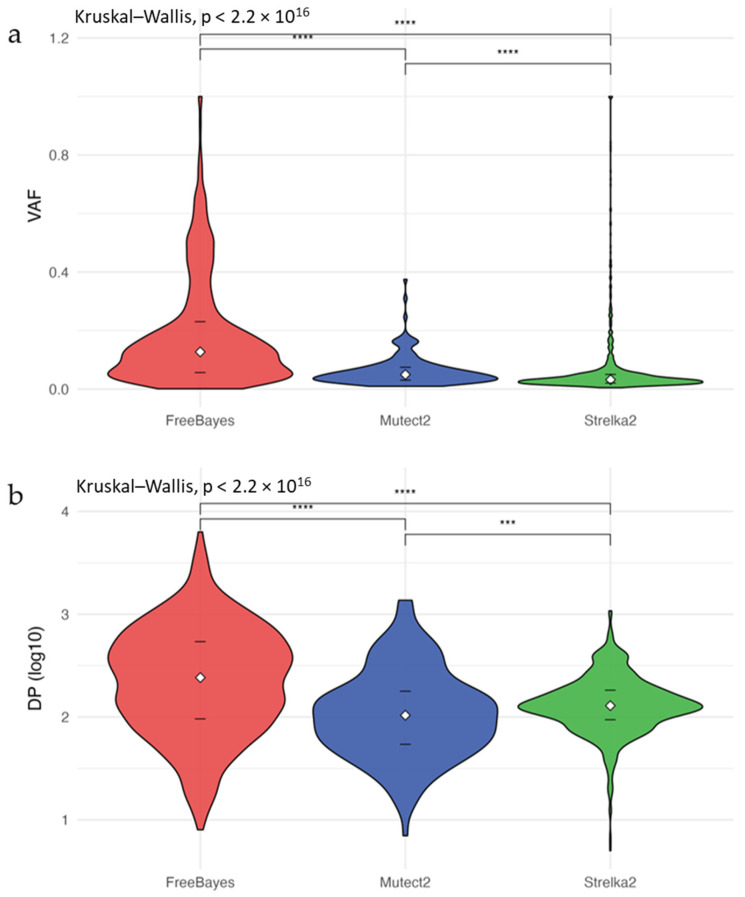 Figure 3
Peer Reviews
No public reviews on file for this paper yet. If you reviewed it on a platform where reviews are public (OpenReview, ICLR, NeurIPS, ICML), you can paste yours below so the community can read it here.
Videos
No videos yet. Explain this paper in a talk, walkthrough, or lecture? Add one.
Taxonomy
TopicsCancer Genomics and Diagnostics · Genetic Associations and Epidemiology · BRCA gene mutations in cancer