Screening and Validation of Functional Residues of the Antimicrobial Peptide PpRcys1
Ming Tao, Zixun Fei, Aobo Sun, Guangming Yu, Huaiyuan Ye, Huishao Shi, Wei Zhang, Junjian Wang

TL;DR
This study identifies key amino acid residues in the antimicrobial peptide PpRcys1 that are essential for its antibacterial activity against bacteria in aquaculture.
Contribution
The study identifies and validates the functional residues in PpRcys1 that are critical for its antibacterial activity and membrane interaction.
Findings
ARG40, LYS55, LYS90, and LYS93 are critical for PpRcys1's interaction with bacterial membranes.
Mutating these residues significantly reduced the peptide's antibacterial activity and membrane binding ability.
The loss of these residues prevented PpRcys1 from compromising bacterial membrane integrity.
Abstract
The excessive use of conventional antibiotics in aquaculture has created significant challenges, making it essential to explore and develop effective alternatives. Antimicrobial peptides (AMPs) have gained attention as potential therapeutic agents owing to their wide-ranging antibacterial effects and their ability to address pathogens resistant to conventional drugs. PpRcys1 is an antimicrobial peptide that mainly targets bacterial cell membranes, exhibiting a minimum inhibitory concentration of 8–32 μM. Its antibacterial activity should be further optimized. Before such optimization, however, it is crucial to identify the key amino acid residues that determine its functional activity. In this study, molecular dynamics simulations indicated that arginine 40 (ARG40), lysine 55 (LYS55), lysine 90 (LYS90), and lysine 93 (LYS93) play critical roles in the interaction between PpRcys1 and…
Genes, proteins, chemicals, diseases, species, mutations and cell lines named across the full text — each resolved to its canonical identifier and authoritative record.
Click any figure to enlarge with its caption.
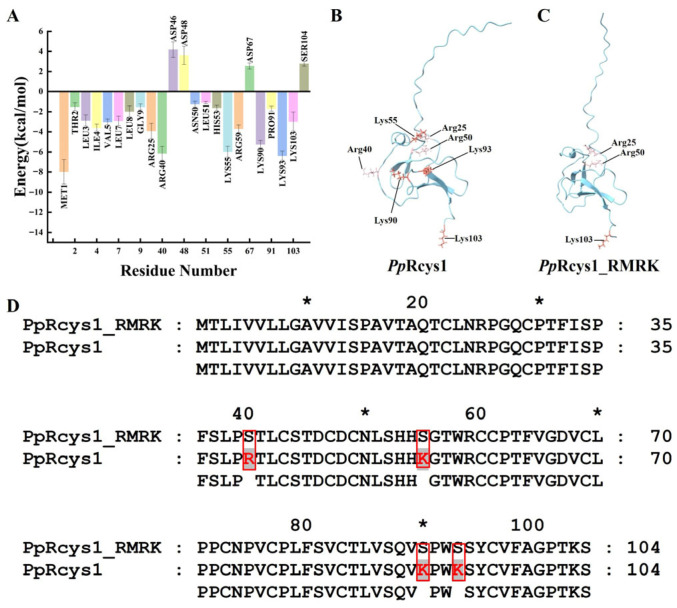 Figure 1
 Figure 2
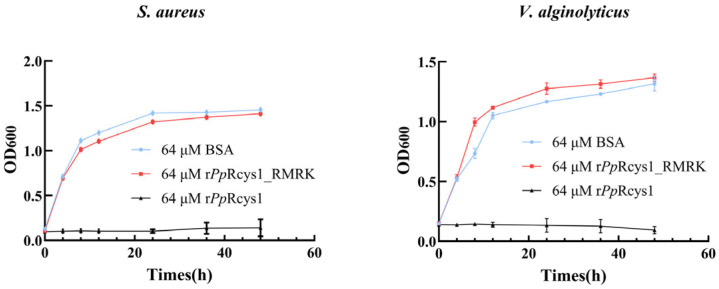 Figure 3
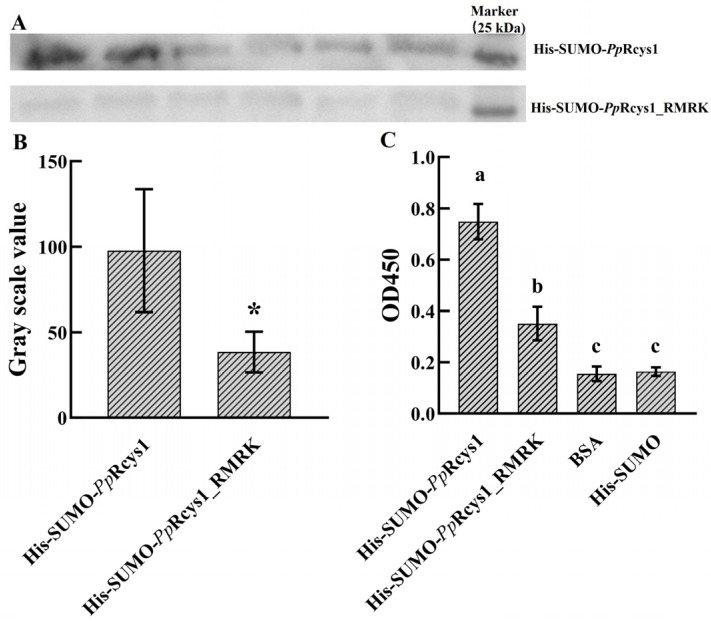 Figure 4
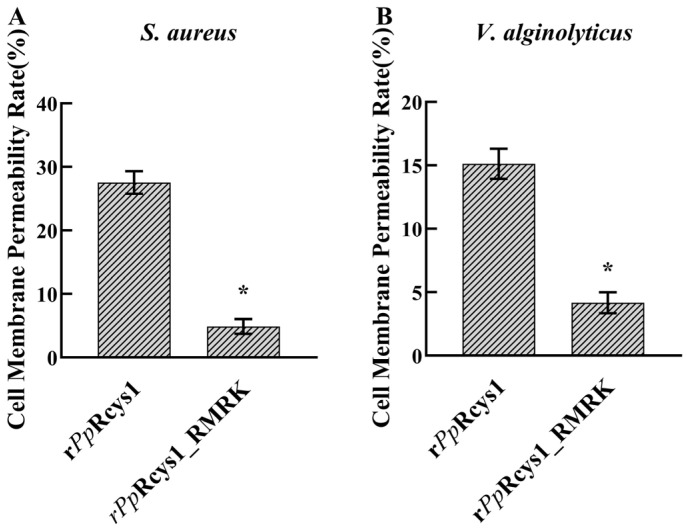 Figure 5
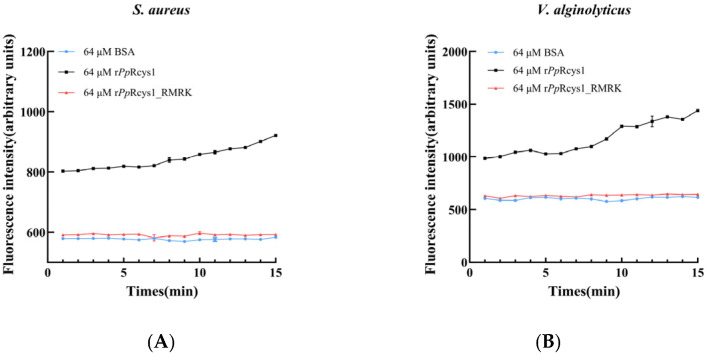 Figure 6
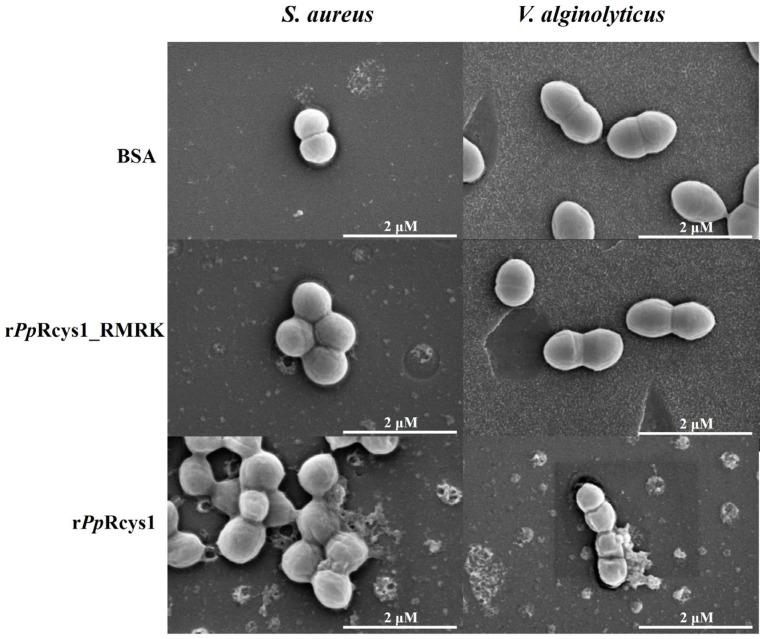 Figure 7
Peer Reviews
No public reviews on file for this paper yet. If you reviewed it on a platform where reviews are public (OpenReview, ICLR, NeurIPS, ICML), you can paste yours below so the community can read it here.
Videos
No videos yet. Explain this paper in a talk, walkthrough, or lecture? Add one.
Taxonomy
TopicsAntimicrobial Peptides and Activities · Protein Hydrolysis and Bioactive Peptides · Invertebrate Immune Response Mechanisms