Genome-Wide SNP Analysis Reveals the Unique Genetic Diversity Represented by Fat-Tailed Coarse-Wooled Sheep Breeds of Kazakhstan
Kairat Dossybayev, Makpal Amandykova, Daniya Ualiyeva, Tilek Kapassuly, Altynay Kozhakhmet, Elena Ciani, Bakytzhan Bekmanov, Rauan Amzeyev

TL;DR
This study uses genetic data to explore the diversity and relationships of three Kazakh sheep breeds, revealing their unique genetic makeup and importance for conservation and breeding.
Contribution
The study provides the first genome-wide SNP analysis of Kazakh fat-tailed coarse-wooled sheep breeds, highlighting their genetic diversity and distinctiveness.
Findings
The Edilbay breed shows the highest genetic diversity and forms a distinct genetic group.
Gene flow from Edilbay into other Kazakh populations suggests its role as a genetic source for regional breeds.
Kazakhstani sheep are closely related to Central Asian breeds but distinct from East Asian and European populations.
Abstract
Sheep farming is an important part of agriculture in Kazakhstan, especially fat-tailed breeds that are well adapted to the local environment. Namely, Kazakh fat-tailed coarse-wooled, Edilbay, and Gissar sheep breeds are valued for their ability to thrive in harsh pasture conditions, their early maturity, and production of high-quality meat, fat, and wool. Despite their economic and cultural importance, little is known about the genetic background of these animals. In this study, we analyzed genome-wide SNP data from 160 animals representing the three main local breeds to gain insights into their diversity and relationship with other sheep worldwide. Our aim was to explore what makes these breeds unique and how they have developed over time. Understanding their genetics is essential for improving breeding programs, protecting valuable traits, and ensuring the long-term sustainability of…
Genes, proteins, chemicals, diseases, species, mutations and cell lines named across the full text — each resolved to its canonical identifier and authoritative record.
Click any figure to enlarge with its caption.
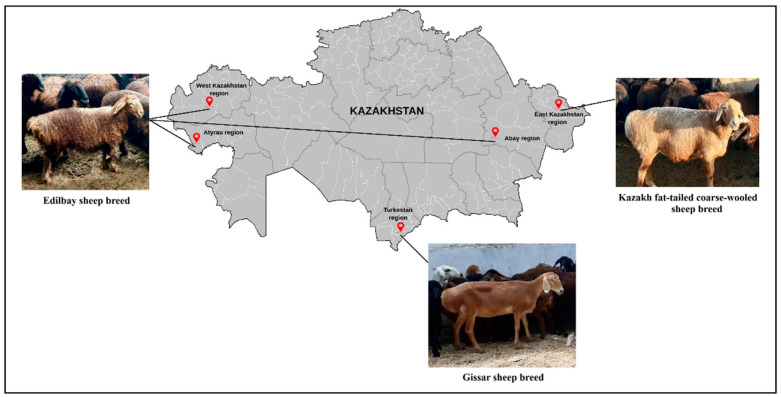 Figure 1
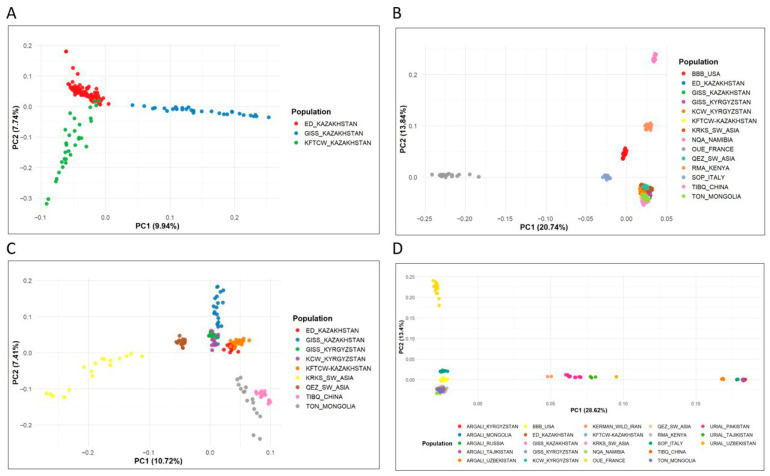 Figure 2
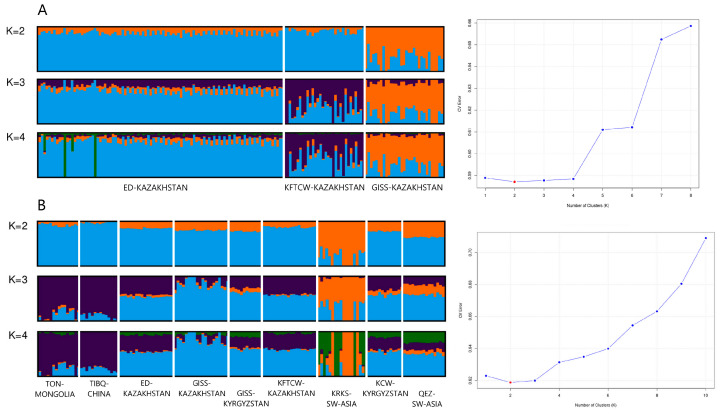 Figure 3
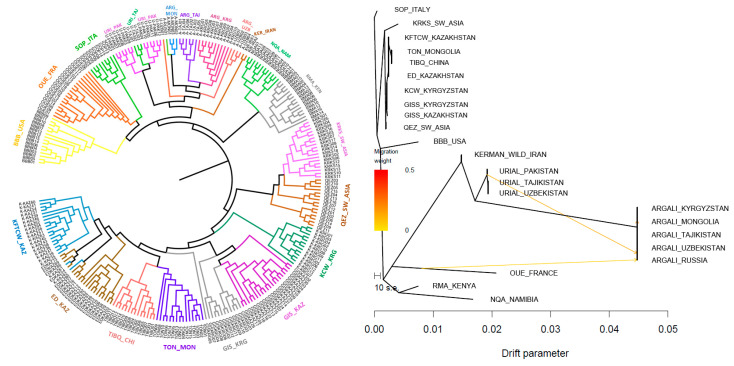 Figure 4
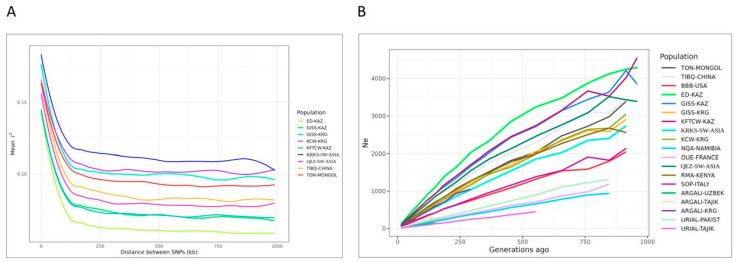 Figure 5
Peer Reviews
No public reviews on file for this paper yet. If you reviewed it on a platform where reviews are public (OpenReview, ICLR, NeurIPS, ICML), you can paste yours below so the community can read it here.
Videos
No videos yet. Explain this paper in a talk, walkthrough, or lecture? Add one.
Taxonomy
TopicsGenetic and phenotypic traits in livestock · Cancer-related molecular mechanisms research