Development of an Aptamer-Based Surface Plasmon Resonance Biosensor for Detecting Chloramphenicol in Milk
Minyu Qi, Ningqi Xia, Xiying Wang, Xiaofei Wang, Hao Chen, Diya Lv, Yan Cao

TL;DR
This paper describes the development of a biosensor using aptamers to detect chloramphenicol in milk, offering a promising tool for food safety.
Contribution
The novel contribution is the development of an aptamer-based SPR biosensor optimized for chloramphenicol detection in milk samples.
Findings
An aptamer-based SPR biosensor was successfully developed for detecting chloramphenicol.
Indirect immobilization on a CM5 chip provided optimal performance for the biosensor.
The biosensor demonstrated good specificity and potential for real-world food safety applications.
Abstract
Surface plasmon resonance (SPR) biosensors have been applied in various fields with the advantages of being label-free, having high specificity, having high sensitivity, and providing real-time monitoring. With the gradual improvement of SPR technology, SPR biosensors have been used for the detection of macromolecules such as proteins, peptides, and nucleic acids. Antibodies are generally used as the recognition component of SPR biosensors due to the high specificity of antibody–antigen binding. Recently, aptamers have become new choices instead of antibodies for their characteristic of high specificity with target molecules, high stability of chemical synthesis, convenience in storage, and ease of labeling. In this study, an aptamer-based SPR biosensor for chloramphenicol (CAP) detection was established through optimizing the conditions of CAP aptamer immobilization and analysis…
Genes, proteins, chemicals, diseases, species, mutations and cell lines named across the full text — each resolved to its canonical identifier and authoritative record.
Click any figure to enlarge with its caption.
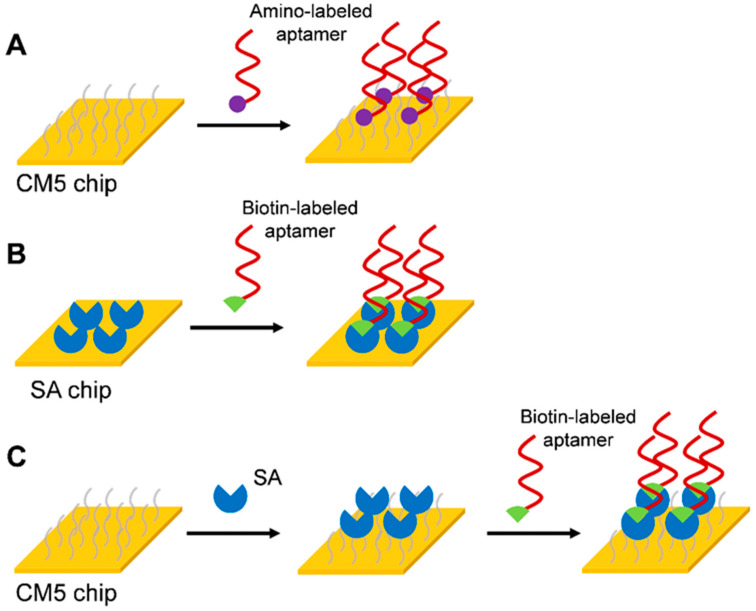 Figure 1
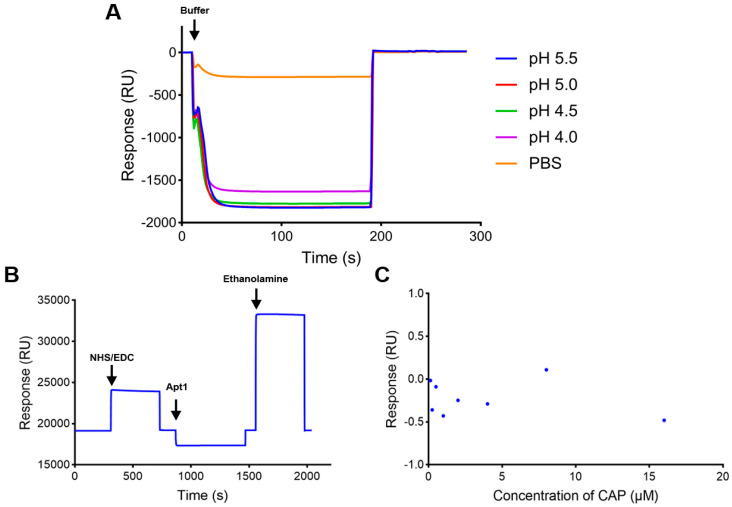 Figure 2
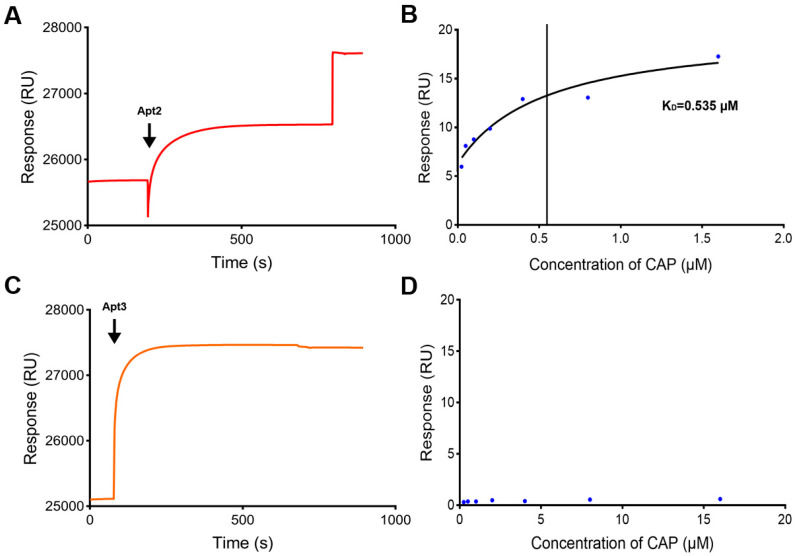 Figure 3
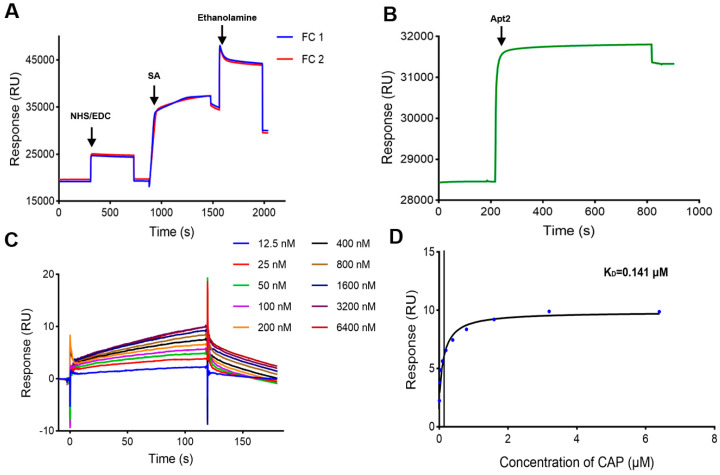 Figure 4
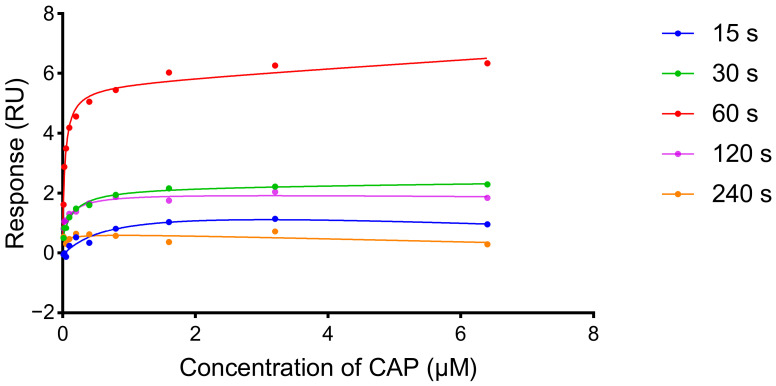 Figure 5
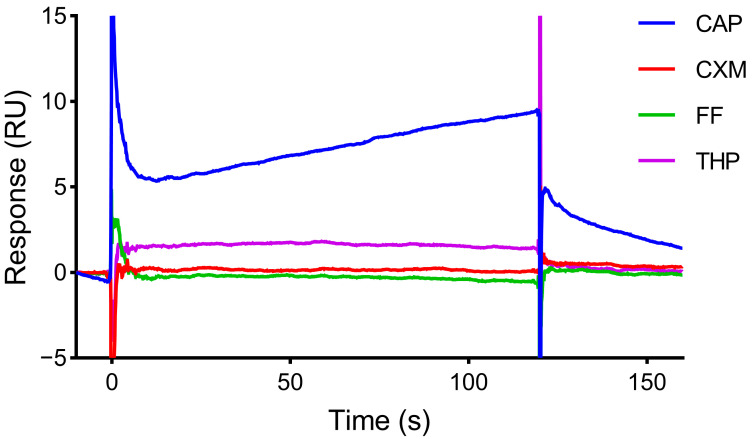 Figure 6
Peer Reviews
No public reviews on file for this paper yet. If you reviewed it on a platform where reviews are public (OpenReview, ICLR, NeurIPS, ICML), you can paste yours below so the community can read it here.
Videos
No videos yet. Explain this paper in a talk, walkthrough, or lecture? Add one.
Taxonomy
TopicsAdvanced biosensing and bioanalysis techniques · Biosensors and Analytical Detection · Electrochemical sensors and biosensors