Creativity and REsilience Through Arts, Technology and Emotions: A Pilot Study on the Feasibility and Validity of the CREATE Platform
Aristea I. Ladas, Christina Katsoridou, Triantafyllos Gravalas, Manousos A. Klados, Aikaterini S. Stravoravdi, Nikoleta Tsompanidou, Athina Fragkedaki, Evangeli Bista, Theodora Chorafa, Katarina Petrovic, Pinelopi Vlotinou, Anna Tsiakiri, Georgios Papazisis

TL;DR
The CREATE platform, combining art, technology, and cognitive training, shows potential in improving emotion regulation and dopamine activity, especially in individuals with good sleep.
Contribution
The study introduces a novel multi-modal platform integrating working memory training, art, and dopamine markers to enhance emotion regulation.
Findings
Working memory task performance correlated with better emotion regulation and cognitive reappraisal.
Post-training dopamine activity, measured via sEBR, improved in good sleepers after using the CREATE platform.
Creativity and emotional expression were linked to sleep quality based on sentiment analysis.
Abstract
Background/Objectives: Anxiety and depression are prevalent global health concerns, especially prominent in vulnerable groups such as older adults, individuals with chronic health conditions (e.g., neurodegeneration and cancer), and those from low socioeconomic backgrounds. Digital interventions, including computerized cognitive training (CCT), show promise in addressing emotional dysfunctions in a more accessible and cost-effective manner. The CREATE platform aims to enhance Emotion Regulation (ER) through targeted Working Memory (WM) training, aesthetic engagement, and creativity, while accounting for dopamine activity via spontaneous Eye Blink Rate (sEBR). The purpose of the present study is to evaluate the platform’s feasibility and validity through a single pilot trial. Methods: The study enrolled twenty-seven healthy adults (aged 21–44) who completed standardized self-report…
Genes, proteins, chemicals, diseases, species, mutations and cell lines named across the full text — each resolved to its canonical identifier and authoritative record.
Click any figure to enlarge with its caption.
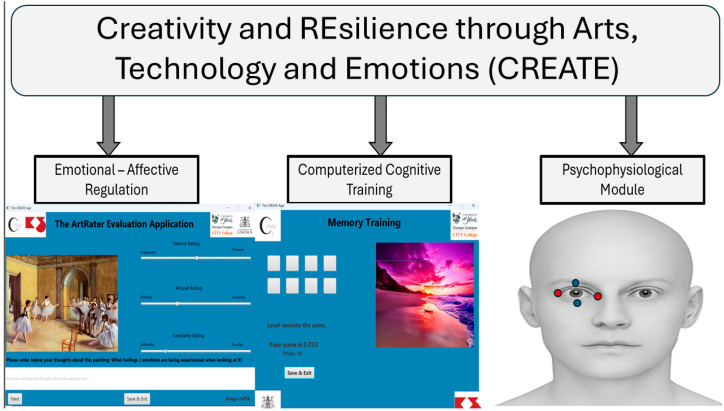 Figure 1
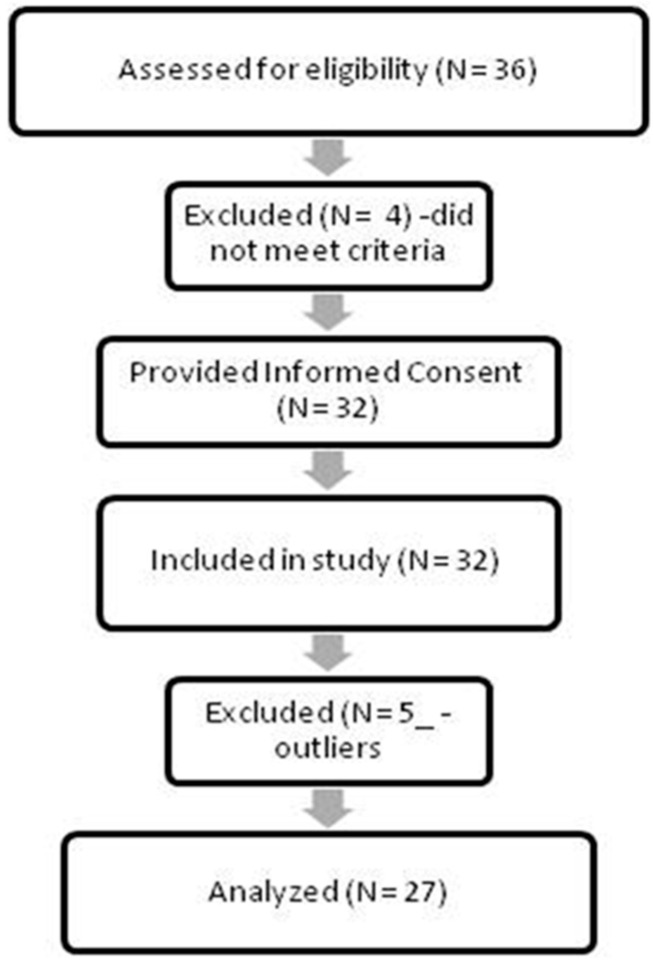 Figure 2
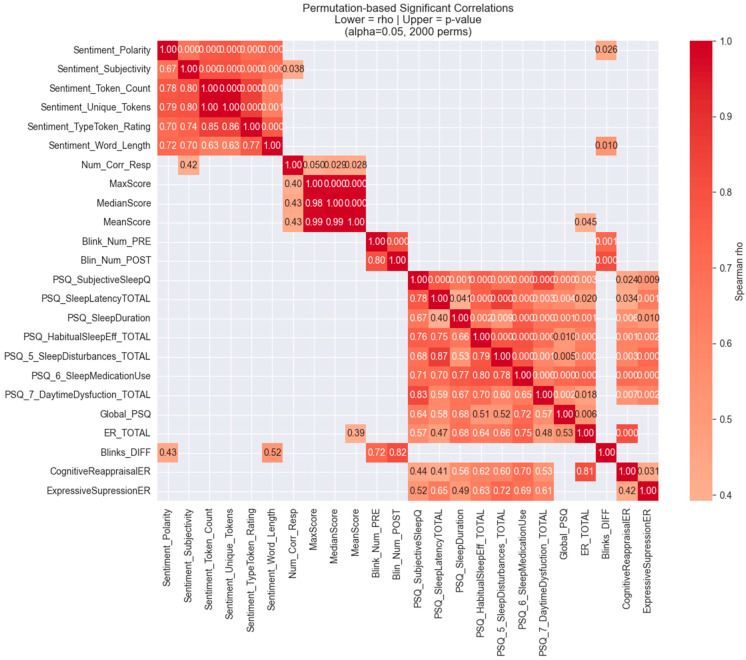 Figure 3
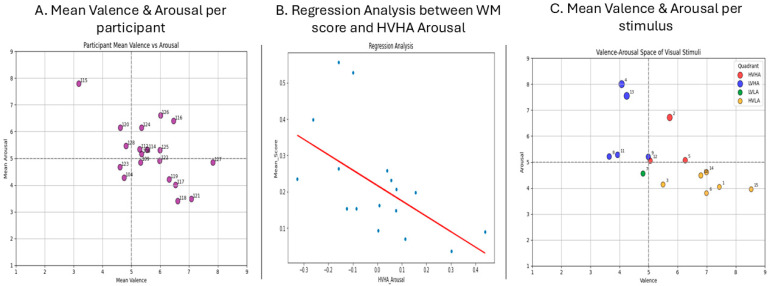 Figure 4
Peer Reviews
No public reviews on file for this paper yet. If you reviewed it on a platform where reviews are public (OpenReview, ICLR, NeurIPS, ICML), you can paste yours below so the community can read it here.
Videos
No videos yet. Explain this paper in a talk, walkthrough, or lecture? Add one.
Taxonomy
TopicsArt Therapy and Mental Health · Music Therapy and Health · Mental Health via Writing