Mitral Annular Disjunction and Arrhythmic Risk: Case Series and State of the Art
Marisa Varrenti, Eleonora Bonvicini, Leandro Fabrizio Milillo, Ilaria Garofani, Lorenzo Gigli, Matteo Baroni, Alberto Preda, Marco Carbonaro, Roberto Menè, Giulia Colombo, Antonio Frontera, Raffaele Falco, Federica Giordano, Sara Vargiu, Fabrizio Guarracini, Patrizia Pedrotti

TL;DR
This paper explores how mitral annular disjunction (MAD) increases arrhythmic risk and highlights the importance of comprehensive diagnosis and genetic evaluation in managing MAD patients.
Contribution
The study introduces a case series of MAD patients with ICD implantation and emphasizes the need for genetic evaluation alongside imaging.
Findings
Four out of five MAD patients experienced documented ventricular arrhythmias.
Myocardial fibrosis was absent in two symptomatic MAD cases, suggesting arrhythmic risk may precede structural changes.
MAD often coexists with cardiomyopathies and channelopathies, highlighting the need for genetic testing.
Abstract
Background: Mitral annular disjunction (MAD) is an anatomical abnormality associated with an increased risk of major arrhythmic events, regardless of the presence of mitral valve prolapse. Cardiac magnetic resonance (CMR) plays a key role in diagnosing MAD and identifying myocardial fibrosis, a marker of arrhythmic vulnerability. Aim: This study reports the experience of the De Gasperis Cardiology Centre at Niguarda Hospital (Milan, Italy) in managing high-risk MAD patients who underwent implantable cardioverter–defibrillator (ICD) implantation and describes their main clinical characteristics. Methods: Between January 2020 and April 2025, five patients with MAD who received ICDs were identified and monitored remotely. Although the small sample size limits generalizability, the objective was to characterize factors associated with arrhythmic susceptibility. Results: Four patients…
Genes, proteins, chemicals, diseases, species, mutations and cell lines named across the full text — each resolved to its canonical identifier and authoritative record.
Click any figure to enlarge with its caption.
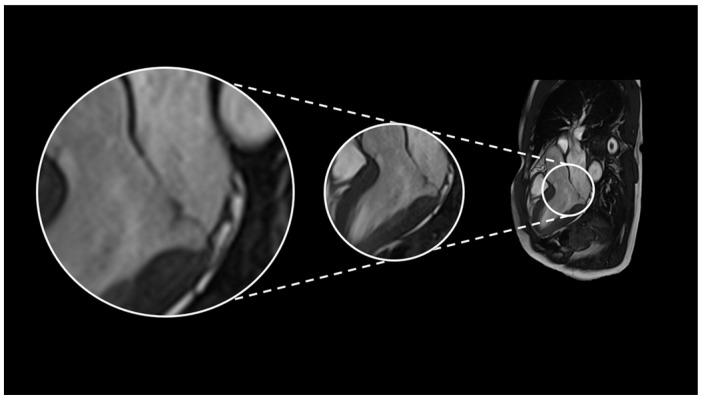 Figure 1
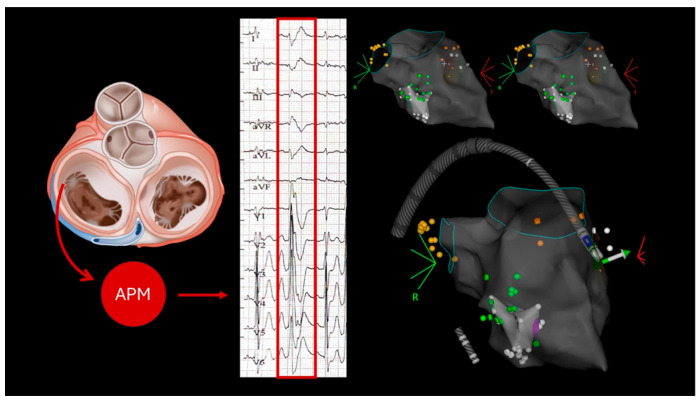 Figure 2
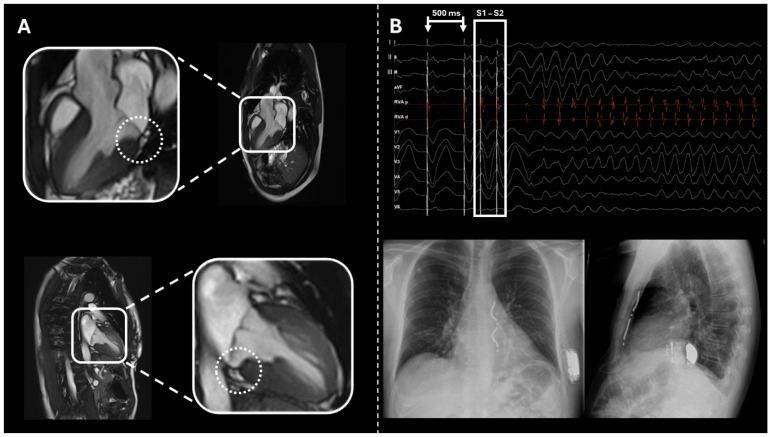 Figure 3
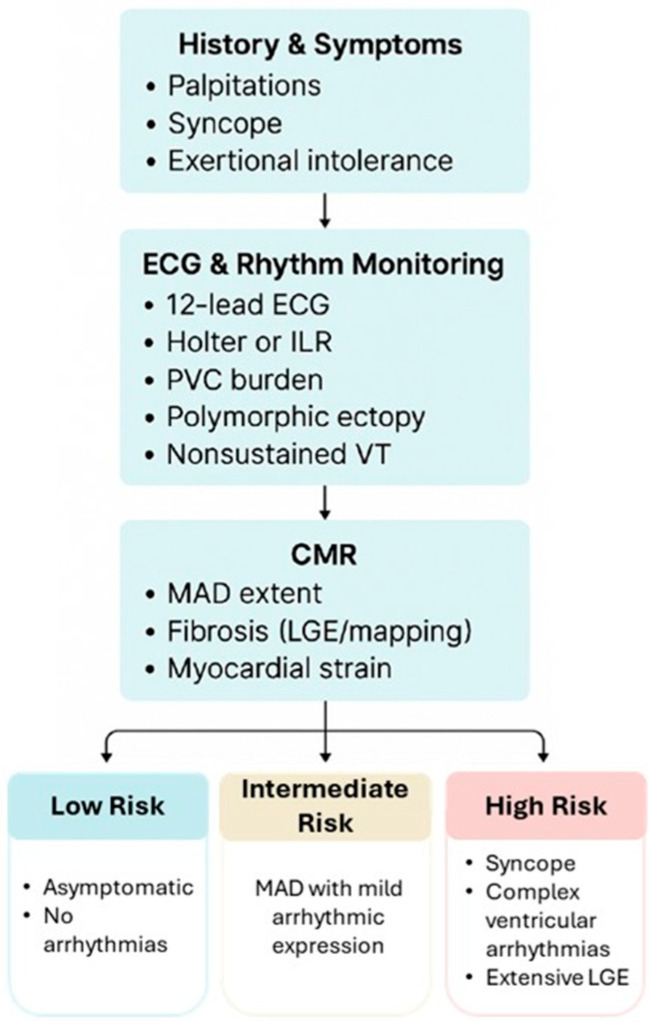 Figure 4
Peer Reviews
No public reviews on file for this paper yet. If you reviewed it on a platform where reviews are public (OpenReview, ICLR, NeurIPS, ICML), you can paste yours below so the community can read it here.
Videos
No videos yet. Explain this paper in a talk, walkthrough, or lecture? Add one.
Taxonomy
TopicsCardiac Valve Diseases and Treatments · Cardiac Structural Anomalies and Repair · Cardiac pacing and defibrillation studies