Multi-Center National Study of Genotype–Phenotype Correlation and Clinical Characteristics in Children and Young Adults with Friedreich’s Ataxia from Serbia
Gordana Kovacevic, Slobodanka Todorovic, Ivana Novakovic, Valerija Dobricic, Dusanka Savic-Pavicevic, Vedrana Milic Rasic, Marina Svetel, Milos Brkusanin, Vladislav Vukomanovic, Dragana Vucinic, Slavica Ostojic, Jovana Putnik, Ana Kosac

TL;DR
This study examines the genetic and clinical features of Friedreich’s ataxia in Serbian patients, revealing new comorbidities and partial genotype–phenotype correlations.
Contribution
The first genotype–phenotype analysis of Friedreich’s ataxia in Serbia, identifying novel comorbidities and partial correlations with GAA repeat lengths.
Findings
Hypertrophic cardiomyopathy was present in 73.3% of patients.
Larger GAA1 expansions were associated with extensor plantar responses.
Disease duration strongly correlated with neurological signs and loss of ambulation.
Abstract
Background/Objectives: Friedreich’s ataxia (FA) is a rare neurodegenerative disorder caused by GAA repeat expansions in the FXN gene. While well-studied in larger populations, data from Southeastern Europe are limited. This study aimed to characterize the clinical and genetic features of FA in a Serbian cohort and explore genotype–phenotype correlations. Methods: A multi-center, retrospective analysis was conducted on 30 genetically confirmed FA patients. Clinical assessments included neurological, cardiological, and metabolic evaluations. GAA repeat sizes were determined in 26 patients, and correlations with clinical features were analyzed. Results: The mean age at disease onset was 9.0 ± 3.0 years, with ataxia as the initial symptom in 80% of patients. Hypertrophic cardiomyopathy was present in 73.3%, and 43.3% of patients lost ambulation within 1.5 to 15 years after symptom onset.…
Genes, proteins, chemicals, diseases, species, mutations and cell lines named across the full text — each resolved to its canonical identifier and authoritative record.
Click any figure to enlarge with its caption.
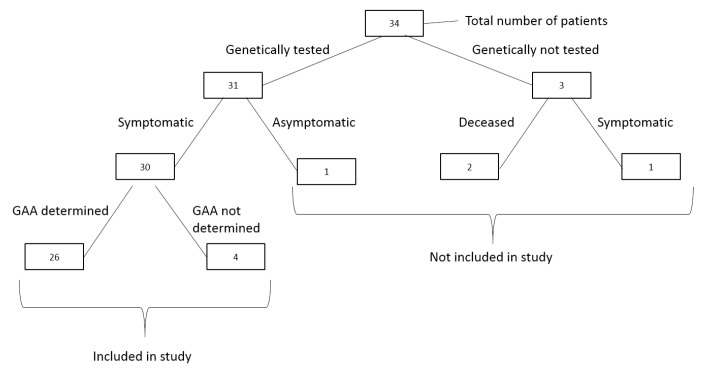 Figure 1
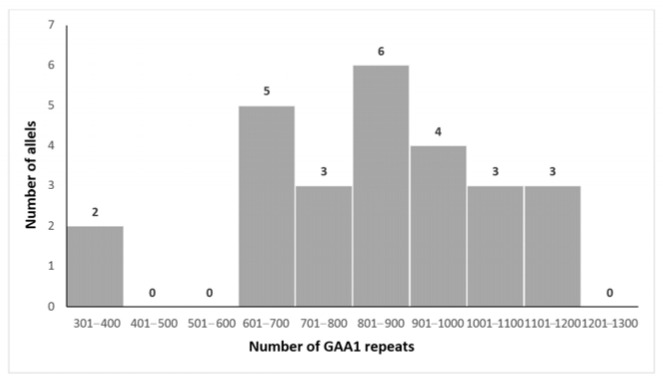 Figure 2
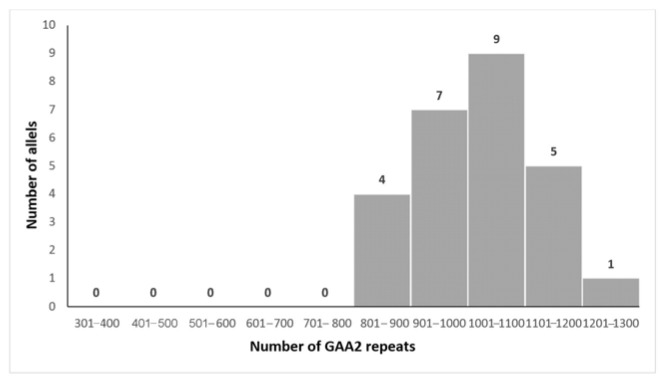 Figure 3
Peer Reviews
No public reviews on file for this paper yet. If you reviewed it on a platform where reviews are public (OpenReview, ICLR, NeurIPS, ICML), you can paste yours below so the community can read it here.
Videos
No videos yet. Explain this paper in a talk, walkthrough, or lecture? Add one.
Taxonomy
TopicsGenetic Neurodegenerative Diseases · Hereditary Neurological Disorders · Mitochondrial Function and Pathology