The Interaction Between CRHBP and FKBP5 Genes and Childhood Trauma Increases the Risk of Suicide Attempt in Patients with Schizophrenia and Bipolar Disorder
Marco Antonio Sanabrais-Jiménez, Zeltzin Celic Elguea-Ortiz, Ingrid Pamela Morales-Cedillo, Joanna Jiménez-Pavón, Mauricio Rosel-Vales, Ricardo Arturo Saracco-Álvarez, Beatriz Camarena

TL;DR
This study finds that genetic variations in CRHBP and FKBP5 genes, combined with childhood trauma, increase the risk of suicide attempts in patients with schizophrenia and bipolar disorder.
Contribution
The study identifies a gene-environment interaction between CRHBP, FKBP5, and childhood trauma in predicting suicide attempts in psychotic disorders.
Findings
The interaction of CRHBP and FKBP5 genes with childhood trauma increases suicide attempt risk (OR 4.17).
Emotional and sexual abuse show strong interactions with the genes, increasing suicide attempt risk (OR 3.67 and 3.32, respectively).
The study includes patients with schizophrenia and bipolar disorder, showing similar risk patterns across both conditions.
Abstract
Background/Objectives: Patients with psychotic disorders have a lifetime risk of suicide attempt (SA) of around 10 to 50%. Genetic variants in the corticotropin-releasing hormone-binding protein (CRHBP) and FK506-binding protein 5 (FKBP5) genes, which are implicated in the hypothalamic–pituitary–adrenal axis and childhood trauma (CT), are considered risk factors for SA. This study aimed to examine the interaction between the CRHBP and FKBP5 genes and CT in the development of SA. Methods: We included 350 patients, 180 patients with schizophrenia and 170 with bipolar disorder. The patients were divided into two groups: 175 with a history of SA and 175 without, and a sample of 350 healthy controls was also included. The Multifactor Dimensionality Reduction program was used to identify G × E interactions between the CRHBP (rs7728378, rs10474485, and rs1875999) and FKBP5 (rs3800373 and…
Genes, proteins, chemicals, diseases, species, mutations and cell lines named across the full text — each resolved to its canonical identifier and authoritative record.
Click any figure to enlarge with its caption.
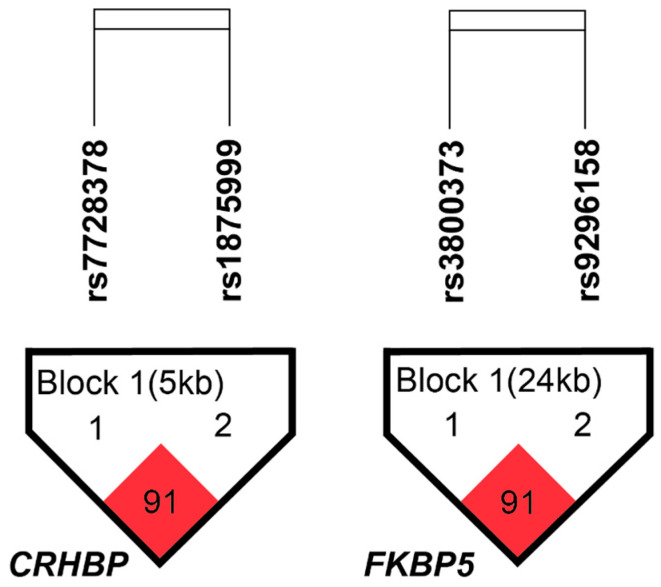 Figure 1
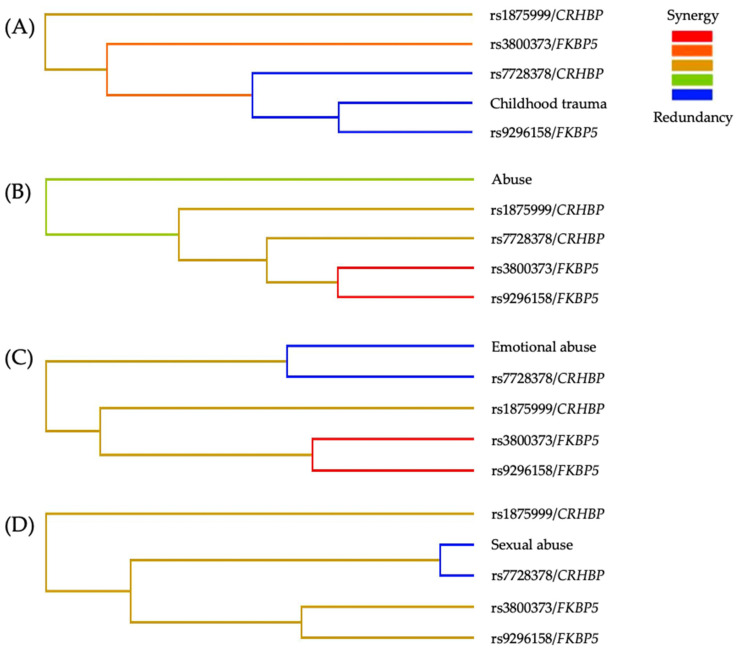 Figure 2
Peer Reviews
No public reviews on file for this paper yet. If you reviewed it on a platform where reviews are public (OpenReview, ICLR, NeurIPS, ICML), you can paste yours below so the community can read it here.
Videos
No videos yet. Explain this paper in a talk, walkthrough, or lecture? Add one.
Taxonomy
TopicsStress Responses and Cortisol · Tryptophan and brain disorders · Cardiac Health and Mental Health