Polyamine Homeostasis and Morphophysiological Responses to Salinity in Dizygostemon riparius: An Endemic Species from Brazilian ‘Cerrado’ Biome
Jordanya Ferreira Pinheiro, Sérgio Heitor Sousa Felipe, Irislene Cutrim Albuquerque, Vitória Karla de Oliveira Silva-Moraes, Givago Lopes Alves, Marion Nayon Braga Soares, Juliane Maciel Henschel, Laíse Trugilio Moreira Marinho, Claudete Santa-Catarina, Diego Silva Batista

TL;DR
This study explores how a Brazilian plant species responds to salt stress in a lab setting, revealing its sensitivity and potential for cultivation optimization.
Contribution
The study provides the first data-driven characterization of salinity effects on Dizygostemon riparius using in vitro culture.
Findings
Salinity significantly reduced biomass and growth parameters in D. riparius.
Photosystem II efficiency and chlorophyll content declined under salt stress.
Polyamine metabolism was altered, indicating limitations in defense mechanisms.
Abstract
Dizygostemon riparius, also known as “melosa”, is a subshrub endemic to the Brazilian ‘Cerrado’ with great medicinal and agrochemical potential due to their essential oils, which have biopesticide activity. Due to its recent cataloging, there is a huge gap regarding its cultivation and responses under adverse conditions, such as salinity, including under in vitro conditions—a biotechnological approach widely used in the production of essential oils, which in some cases can be enhanced by salinity. Thus, this study aimed to address how D. riparius cultured in vitro responds to salinity stress by evaluating the growth, photosynthesis, and homeostasis of polyamines—a group of plant hormones involved in stress responses. Despite the thickening of the leaf epidermis—a common defense response to salinity—our results indicate that this species is sensitive to salinity, as shown by the…
Genes, proteins, chemicals, diseases, species, mutations and cell lines named across the full text — each resolved to its canonical identifier and authoritative record.
Click any figure to enlarge with its caption.
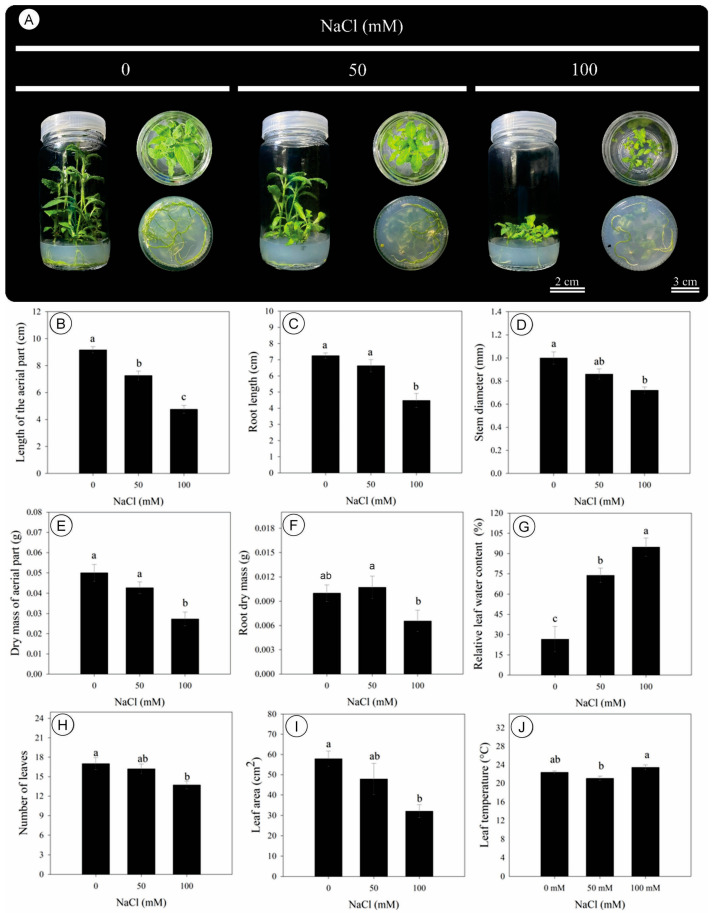 Figure 1
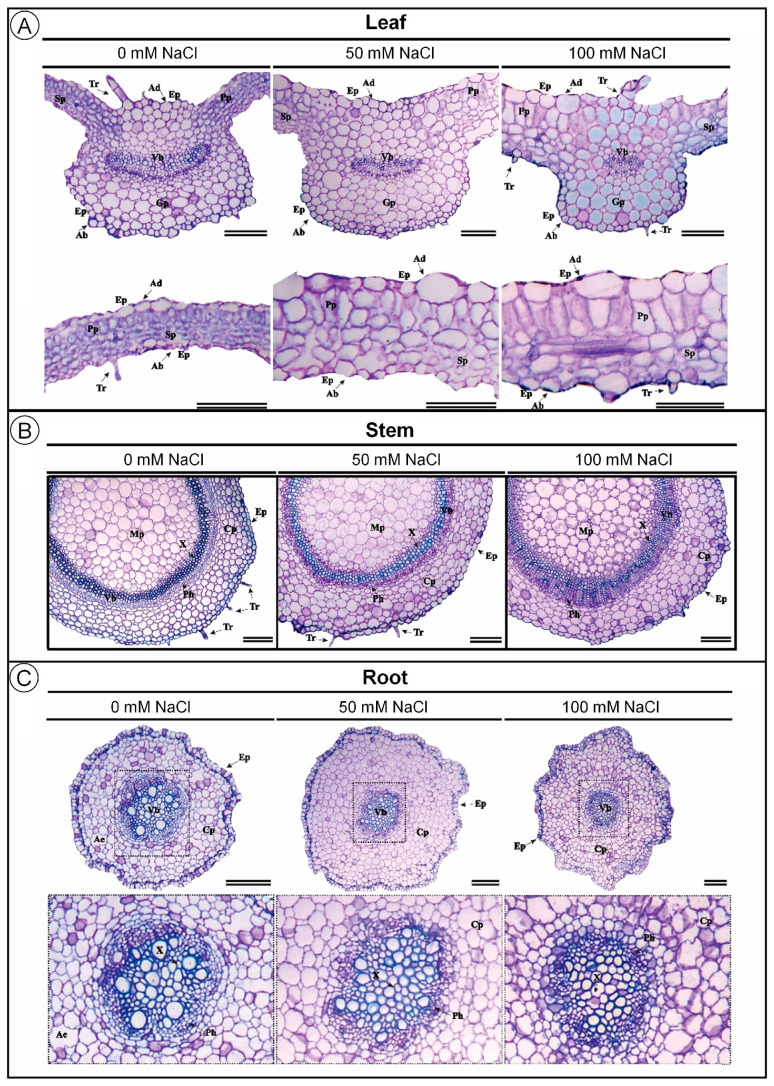 Figure 2
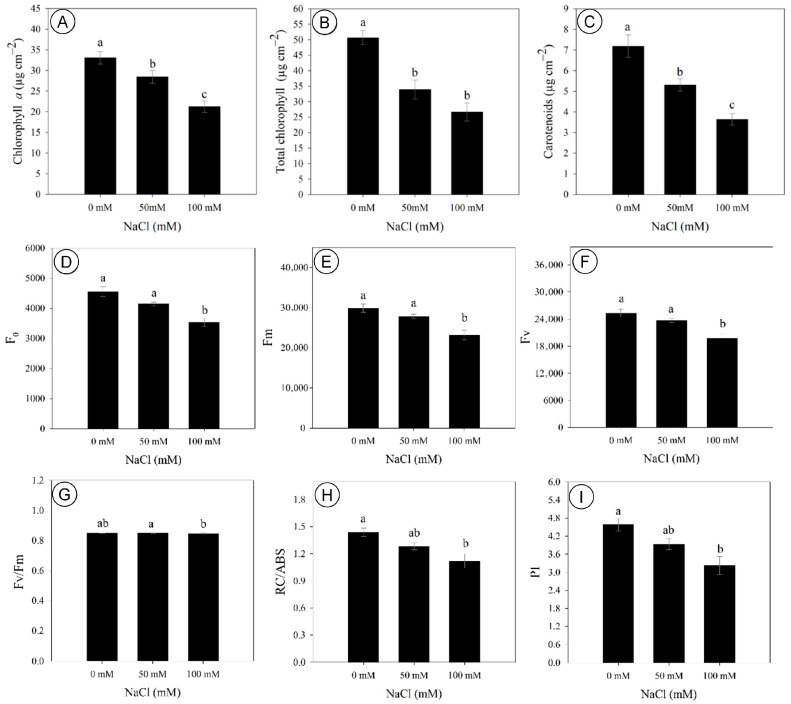 Figure 3
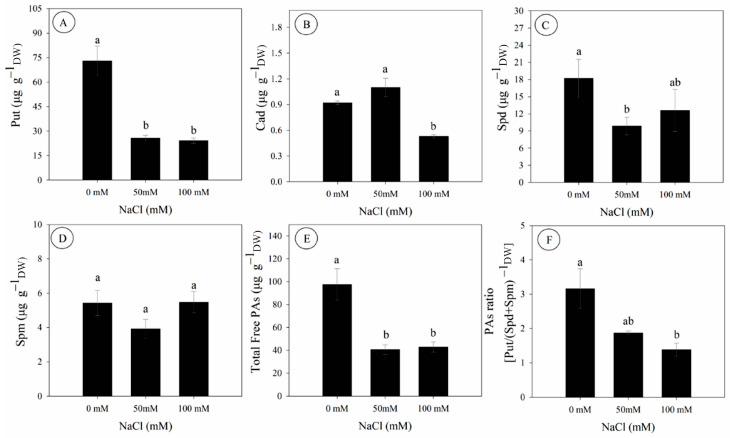 Figure 4
Peer Reviews
No public reviews on file for this paper yet. If you reviewed it on a platform where reviews are public (OpenReview, ICLR, NeurIPS, ICML), you can paste yours below so the community can read it here.
Videos
No videos yet. Explain this paper in a talk, walkthrough, or lecture? Add one.
Taxonomy
TopicsPolyamine Metabolism and Applications · Cassava research and cyanide · Botanical Research and Applications