A First Case of Fluorescence Polarization Biosensor-Based Assay for Rapid Monitoring of Protein API Content in Tablet Dosage Forms: Detection of Lysozyme in Tablets
Svetlana M. Filimonova, Ksenia S. Balyklova, Dmitry O. Zherdev, Sergei A. Eremin, Liliya I. Mukhametova, Vadim B. Krylov, Nikolay E. Nifantiev

TL;DR
This paper introduces a new fluorescence polarization method for quickly and accurately measuring lysozyme in tablets, offering a faster and more reliable alternative to traditional methods.
Contribution
The paper presents a novel fluorescence polarization biosensor-based assay for rapid and precise quantification of lysozyme in tablet dosage forms.
Findings
The FPIA method showed a linear range of 5.0–70 µg/mL for lysozyme quantification.
Recoveries of 98.0–100.1% were achieved with RSD not exceeding 13.7%, indicating good precision.
The method overcomes limitations of conventional turbidimetric assays by being faster and more robust.
Abstract
Protein-based APIs represent a big group of modern therapeutics. Their characterization involves complex analytical protocols which require special methods, especially in the case when the protein drug is included into tablet dosage forms. Although the fluorescence polarization assay (FPA) is not currently regulated by many national Pharmacopeias, it represents a promising approach for protein drug standardization, considering their rapid, sensitive, and automatable detection suitable for high-throughput analysis and real-time quality control. To evaluate the applicability of FPA for the analysis of protein drugs in tablets, the quantifying of lysozyme in tablet dosage forms was studied by this method with the use of a fluorescently labeled synthetic chitooligosaccharide tracer. It was shown that this approach overcomes the limitations of the conventional turbidimetric assay of lysozyme…
Genes, proteins, chemicals, diseases, species, mutations and cell lines named across the full text — each resolved to its canonical identifier and authoritative record.
Click any figure to enlarge with its caption.
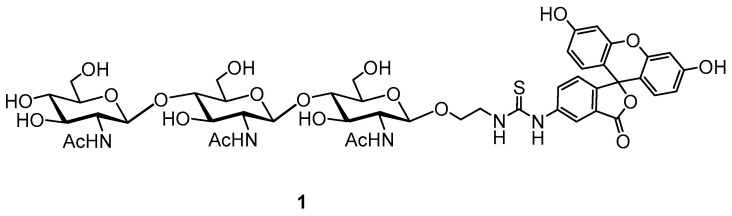 Figure 1
 Figure 2
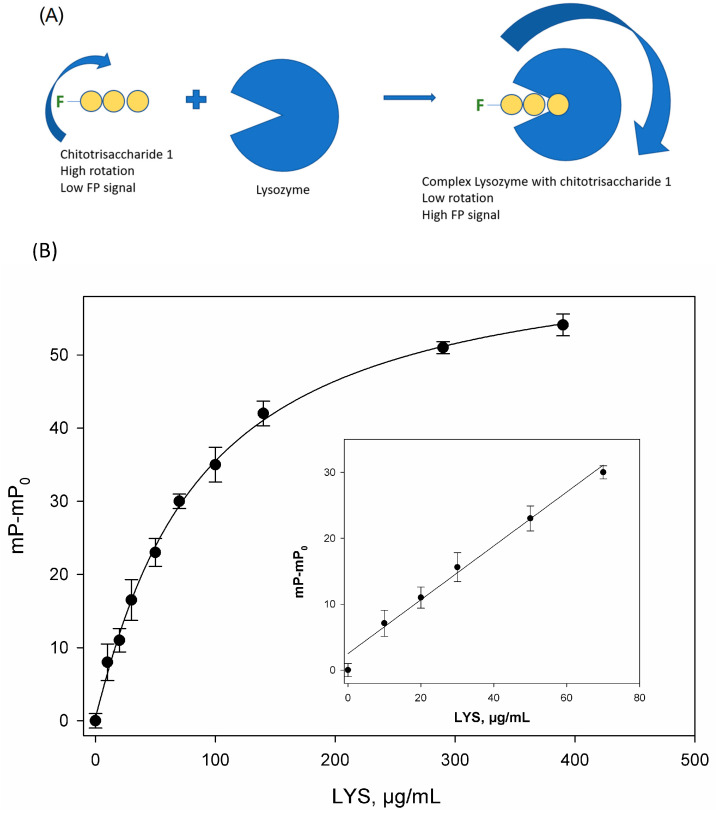 Figure 3
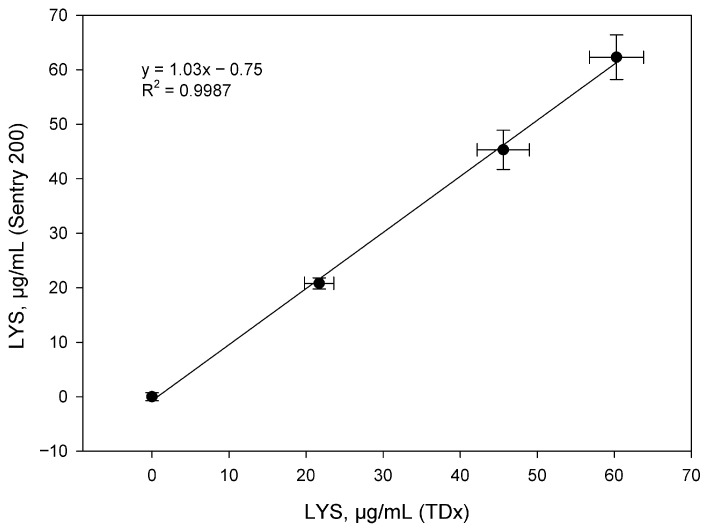 Figure 4
Peer Reviews
No public reviews on file for this paper yet. If you reviewed it on a platform where reviews are public (OpenReview, ICLR, NeurIPS, ICML), you can paste yours below so the community can read it here.
Videos
No videos yet. Explain this paper in a talk, walkthrough, or lecture? Add one.
Taxonomy
TopicsProtein Interaction Studies and Fluorescence Analysis · Protein purification and stability · Biosensors and Analytical Detection