Clinical Relevance of Lipoprotein(a) in Young Acute Myocardial Infarction: STEMI vs. NSTEMI
Silvana Isabella Cureraru, Alexandru Mugurel Belu, Eugen Nicolae Țieranu, Ionuț Cezar Buciu, Mina Teodora Piorescu, Ionuț Donoiu, Maria Iovănescu, Georgică Costinel Târtea, Cristian Militaru, Petre Alexandru Cojocaru, Octavian Istratoaie

TL;DR
High levels of Lp(a) are linked to heart disease in young people, especially those with NSTEMI heart attacks.
Contribution
The study identifies Lp(a) as a significant biomarker for multivessel disease in young NSTEMI patients.
Findings
Elevated Lp(a) levels are significantly more common in young AMI patients than in healthy controls.
High Lp(a) is strongly associated with multivessel coronary disease in NSTEMI cases.
Lp(a)'s impact in STEMI is weaker and influenced by other factors like diabetes and LDL cholesterol.
Abstract
Background: The incidence of acute myocardial infarction (AMI) in young adults has been steadily rising, emphasizing the need for new biomarkers to improve risk stratification. Lipoprotein(a) (Lp(a)), a genetically determined lipoprotein with pro-atherogenic and pro-thrombotic properties, has gained increasing attention in this context. Methods: We evaluated serum Lp(a) levels in young patients with AMI and compared them with healthy controls. Associations between elevated Lp(a) levels (≥30 mg/dL) and coronary artery disease patterns were analyzed separately for STEMI and NSTEMI presentations. Results: Elevated Lp(a) levels were significantly more common in young patients with AMI compared with healthy controls. Importantly, Lp(a) ≥ 30 mg/dL was strongly associated with multivessel coronary artery disease in NSTEMI, conferring more than a fourfold increased risk. In STEMI, the effect…
Genes, proteins, chemicals, diseases, species, mutations and cell lines named across the full text — each resolved to its canonical identifier and authoritative record.
Click any figure to enlarge with its caption.
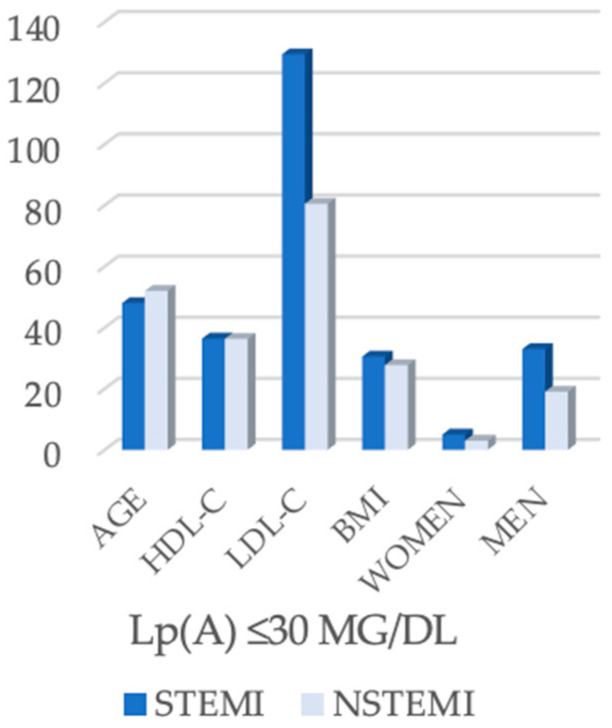 Figure 1
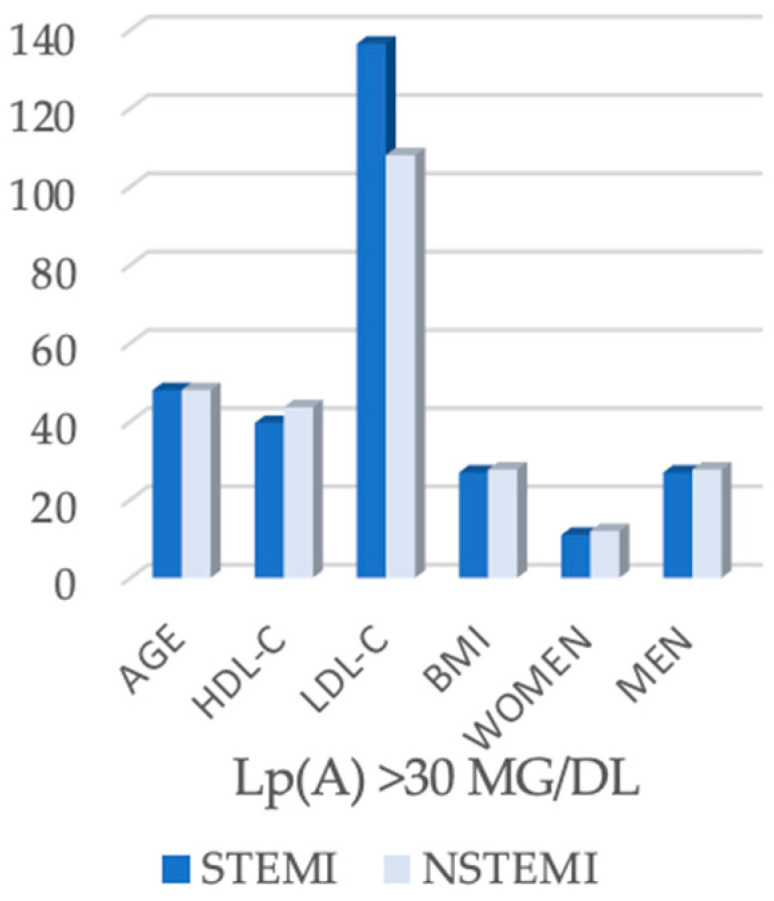 Figure 2
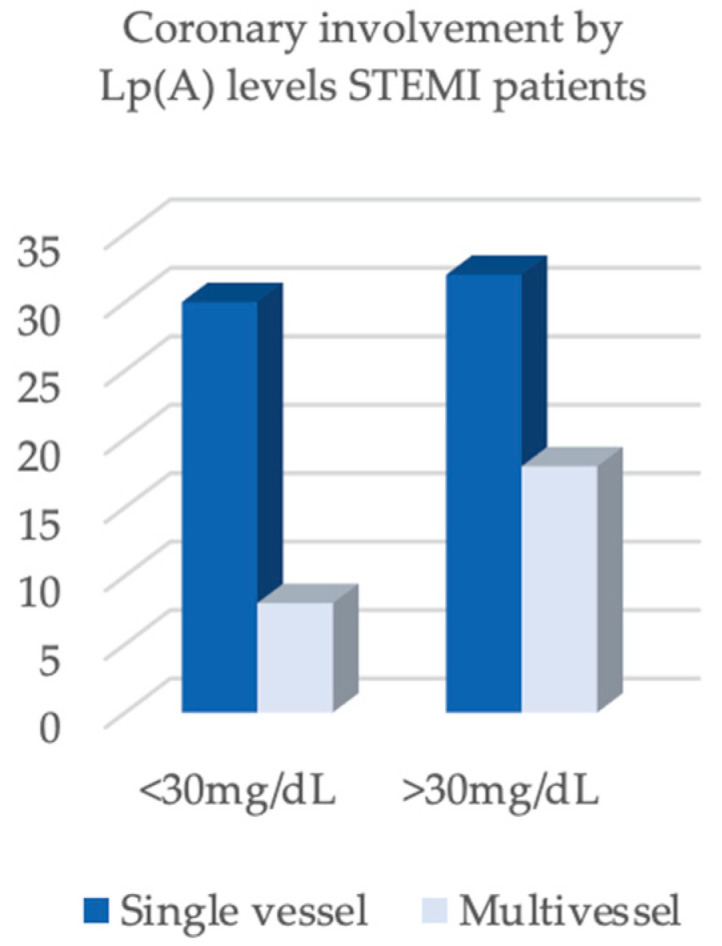 Figure 3
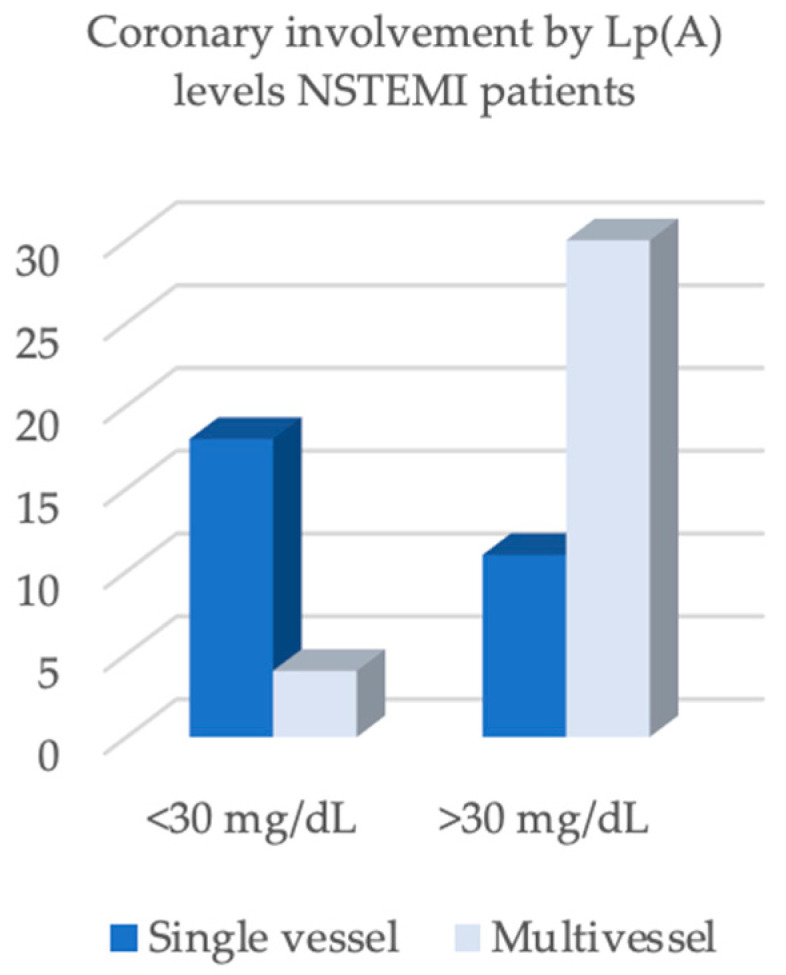 Figure 4
Peer Reviews
No public reviews on file for this paper yet. If you reviewed it on a platform where reviews are public (OpenReview, ICLR, NeurIPS, ICML), you can paste yours below so the community can read it here.
Videos
No videos yet. Explain this paper in a talk, walkthrough, or lecture? Add one.
Taxonomy
TopicsLipoproteins and Cardiovascular Health · Atherosclerosis and Cardiovascular Diseases · Paraoxonase enzyme and polymorphisms