Clinical Significance of Soluble L1CAM Serum Levels in Patients with High-Risk Endometrial Cancer
Antonella Ravaggi, Cosetta Bergamaschi, Laura Zanotti, Elisa Gozzini, Marina Momi, Germana Tognon, Franco Odicino, Eliana Bignotti

TL;DR
This study shows that high levels of a protein called sL1CAM in the blood are linked to worse outcomes in high-risk endometrial cancer patients, especially those with a specific tumor type.
Contribution
The study identifies sL1CAM as a potential prognostic and predictive biomarker in high-risk endometrial cancer.
Findings
Higher sL1CAM levels correlate with worse disease-specific survival and progression-free survival in high-risk endometrial cancer.
Elevated sL1CAM levels predict relapse within 6 months in endometrioid tumors after chemotherapy.
sL1CAM is significantly associated with platinum response in endometrioid tumors.
Abstract
Background/Objectives: Despite advances in targeted therapies, a substantial proportion of high-risk endometrial carcinomas (EC) do not respond to treatment and have a poor prognosis. The identification of prognostic and predictive biomarkers to improve patient stratification is therefore a clinical priority. L1 cell adhesion molecule (L1CAM) is a promising biomarker in EC; however, its soluble circulating form (sL1CAM) has been poorly investigated. This study aimed to evaluate the prognostic and predictive significance of sL1CAM in high-risk ECs. Methods: High-risk EC patients, treated with surgery and platinum-based adjuvant chemotherapy, were retrospectively enrolled. sL1CAM levels were quantified in 72 preoperative serum samples by enzyme-linked immunosorbent assay (ELISA). Results: High sL1CAM levels were associated with advanced age and non-endometrioid histology. Across the…
Genes, proteins, chemicals, diseases, species, mutations and cell lines named across the full text — each resolved to its canonical identifier and authoritative record.
Click any figure to enlarge with its caption.
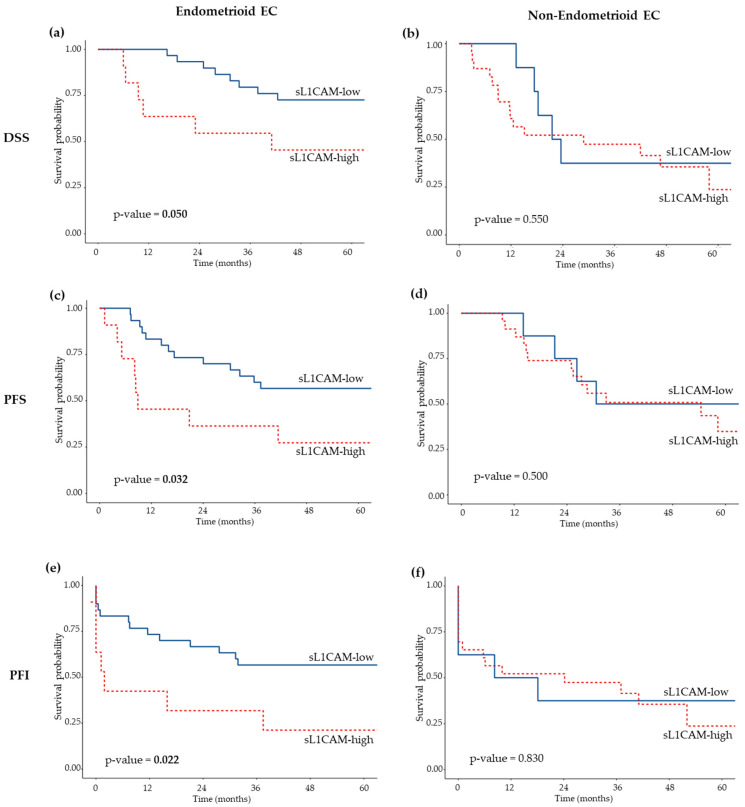 Figure 1
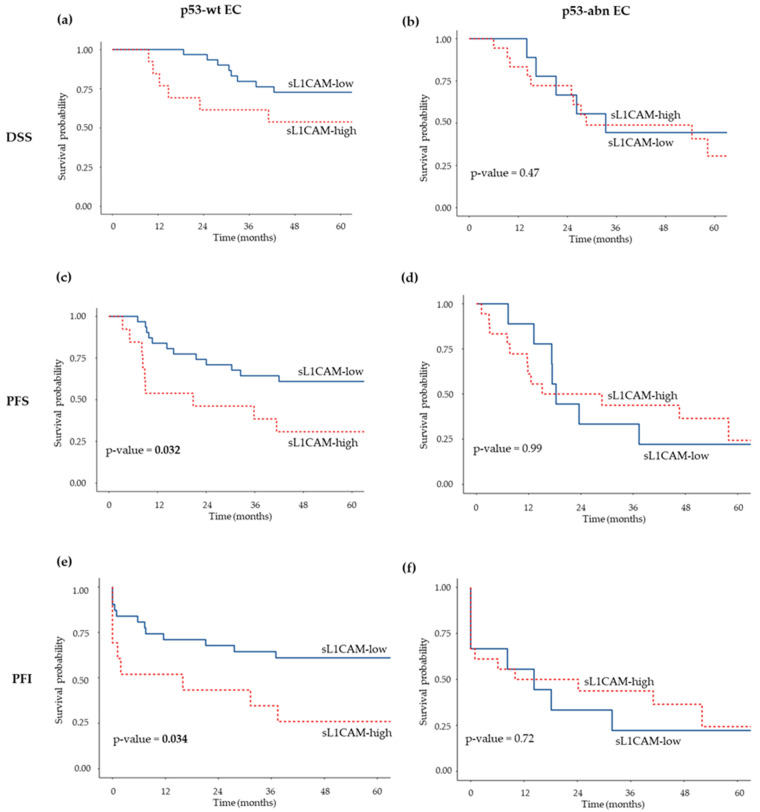 Figure 2
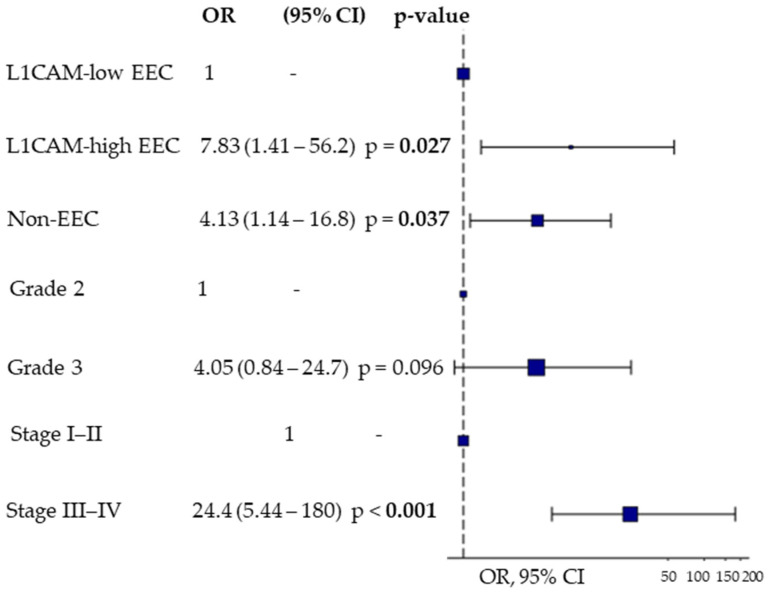 Figure 3
Peer Reviews
No public reviews on file for this paper yet. If you reviewed it on a platform where reviews are public (OpenReview, ICLR, NeurIPS, ICML), you can paste yours below so the community can read it here.
Videos
No videos yet. Explain this paper in a talk, walkthrough, or lecture? Add one.
Taxonomy
TopicsEndometrial and Cervical Cancer Treatments · Cell Adhesion Molecules Research · Single-cell and spatial transcriptomics