Infestation Patterns and Climate-Based Projections for European Spongy Moth (Lymantria dispar) in Whirlpool Forest, Ontario, Canada
Xiaolong Guo, Qianqian Wang

TL;DR
This study examines how spongy moths infest trees in Ontario and predicts future outbreaks due to climate change.
Contribution
The study provides region-specific insights into spongy moth infestation patterns and climate-based projections for Ontario.
Findings
Spongy moths prefer red oak trees, especially larger ones, and lay eggs above one meter on trunks.
Climate projections suggest a potential expansion of outbreak areas to nearly 10 million hectares by 2100.
A 1 °C temperature increase could expand outbreak areas by 814,100 hectares.
Abstract
The spongy moth is an invasive insect that damages forests across North America by eating tree leaves. We studied how these moths choose which trees to lay their eggs on in Whirlpool Forest near Niagara Falls, Ontario. We counted moth egg clusters on different tree species and measured tree sizes and health conditions. Our results showed that spongy moths strongly prefer oak trees, especially larger ones, and tend to place their eggs higher up on tree trunks. We found over 2000 egg clusters per hectare, which suggests moderate tree damage is likely in the coming growing season. Using climate data from the past eight years, we created a computer model to predict future moth outbreaks. The model shows that warmer temperatures and changing rainfall patterns could dramatically increase outbreak area across Ontario by the year 2100. In the worst climate scenario, the area at risk could…
Genes, proteins, chemicals, diseases, species, mutations and cell lines named across the full text — each resolved to its canonical identifier and authoritative record.
Click any figure to enlarge with its caption.
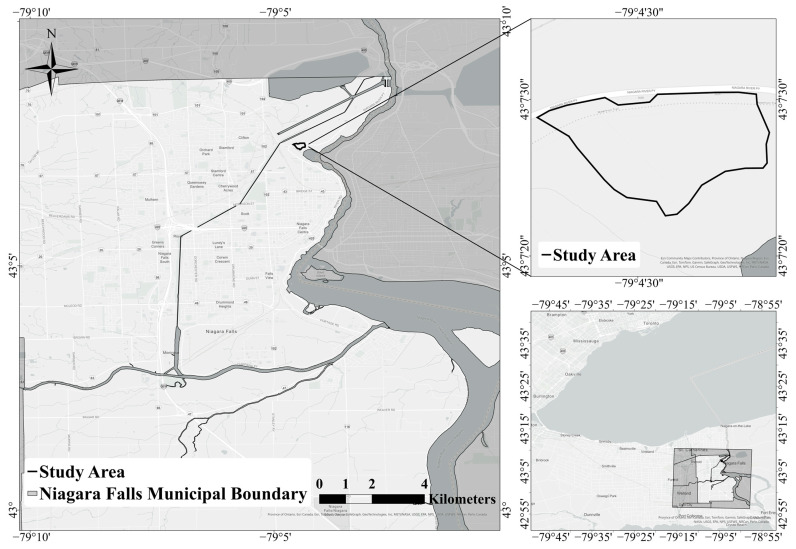 Figure 1
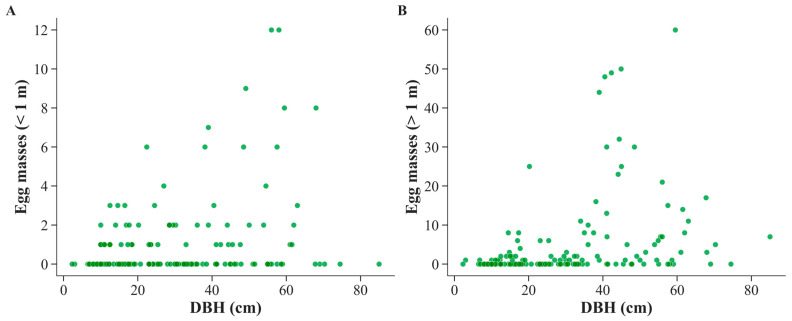 Figure 2
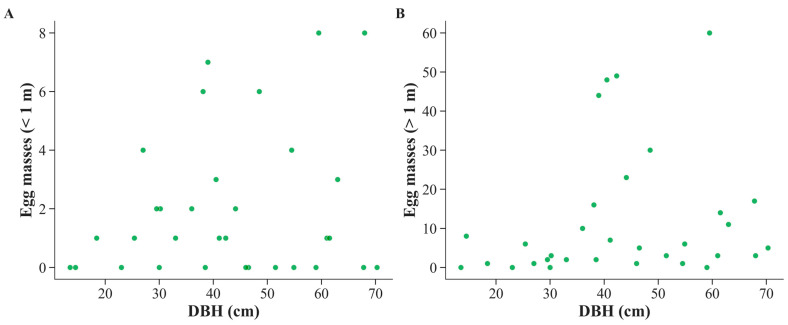 Figure 3
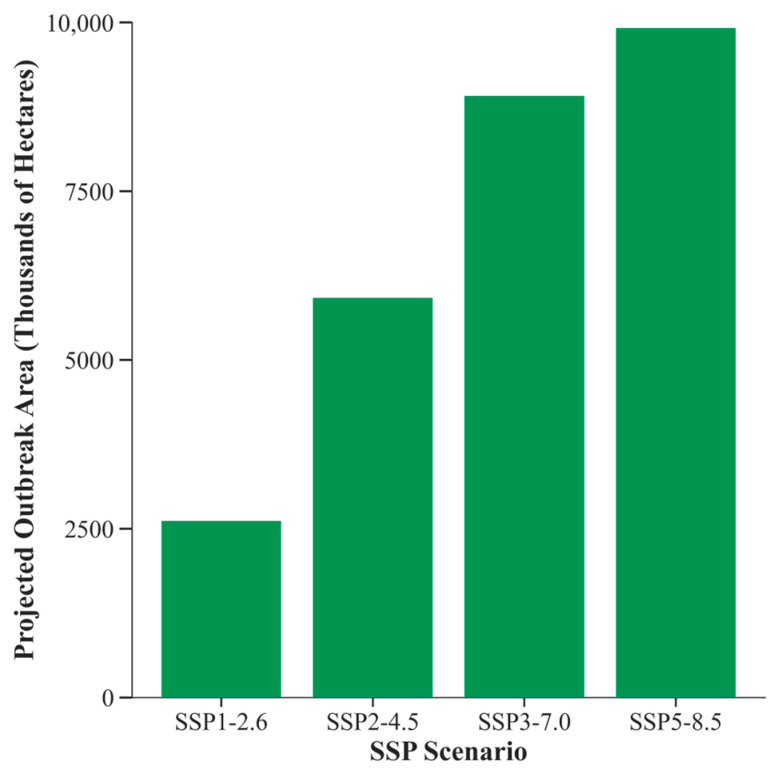 Figure 4
Peer Reviews
No public reviews on file for this paper yet. If you reviewed it on a platform where reviews are public (OpenReview, ICLR, NeurIPS, ICML), you can paste yours below so the community can read it here.
Videos
No videos yet. Explain this paper in a talk, walkthrough, or lecture? Add one.
Taxonomy
TopicsForest Insect Ecology and Management · Entomological Studies and Ecology · Insect Pheromone Research and Control