Protective Effects and Potential Mechanisms of D-Aspartate on Testicular Damage Induced by Polystyrene Microplastics
Sara Falvo, Giulia Grillo, Imed Messaoudi, Nada Fradi, Gabriella Chieffi Baccari, Maria Maddalena Di Fiore, Alessandra Biasi, Maria Rosaria Ambruosi, Alessandra Santillo, Massimo Venditti

TL;DR
This study shows that D-aspartate can protect rat testicles from damage caused by polystyrene microplastics by reducing oxidative stress and improving sperm production.
Contribution
This is the first in vivo study to demonstrate the protective effects of D-aspartate against microplastic-induced testicular damage.
Findings
D-aspartate reduced oxidative stress and apoptosis in testicular tissue exposed to polystyrene microplastics.
D-aspartate restored steroidogenesis and spermatogenesis by normalizing key marker proteins.
The amino acid mitigated autophagy activation induced by microplastics.
Abstract
Polystyrene Microplastics (PS-MPs) affect testicular activity, as evidenced by increased oxidative stress, apoptosis, and autophagy activation, impairing steroidogenesis and spermatogenesis. The present study investigates, for the first time in vivo, the potential protective effect of D-aspartate (D-Asp) against PS-MPs-induced damage on the testicular function of adult rats. D-Asp, well-known stimulator of testosterone biosynthesis and spermatogenesis progression, possesses pharmacological properties, including antioxidant and anti-apoptotic ones. The results showed that PS-MP’s adverse effects on testicular activity were reversed by D-Asp treatment. Mechanistically, D-Asp inhibited testicular oxidative stress by modulating the protein levels of CAT, SOD1, SOD2, and 4-HNE; affecting TBARS levels; and reducing apoptosis, as suggested by CYT C analysis and a TUNEL assay. Furthermore,…
Genes, proteins, chemicals, diseases, species, mutations and cell lines named across the full text — each resolved to its canonical identifier and authoritative record.
Click any figure to enlarge with its caption.
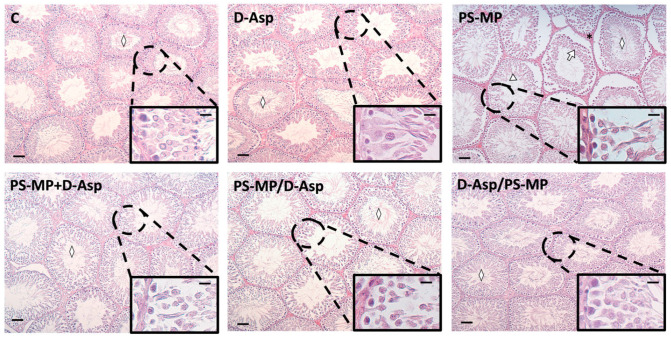 Figure 1
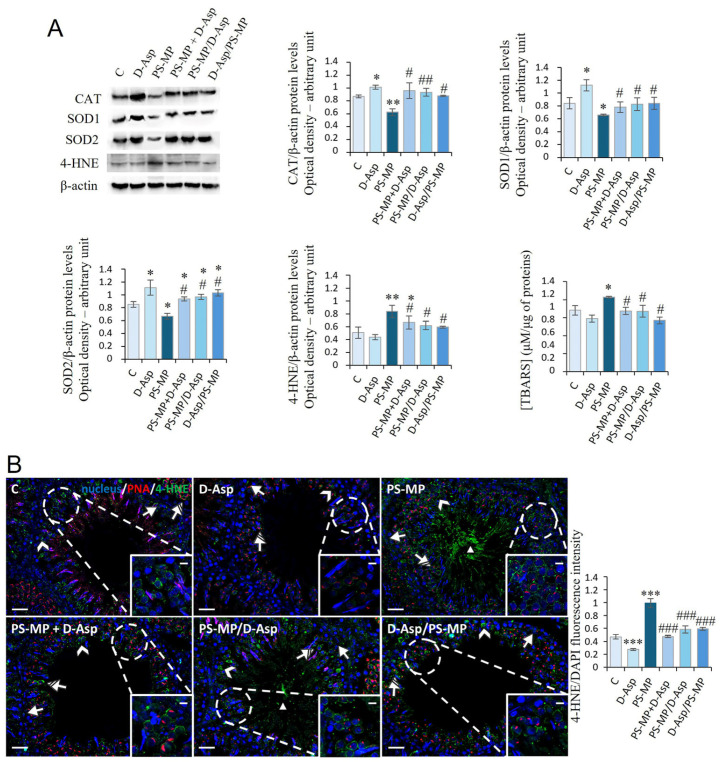 Figure 2
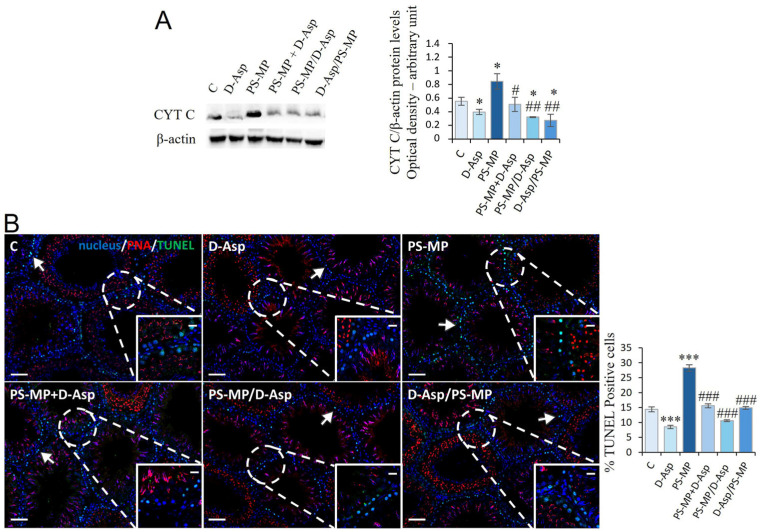 Figure 3
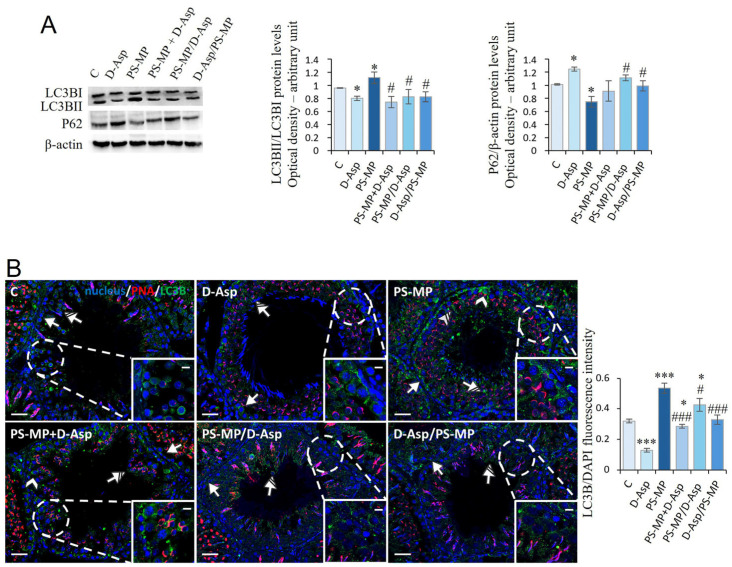 Figure 4
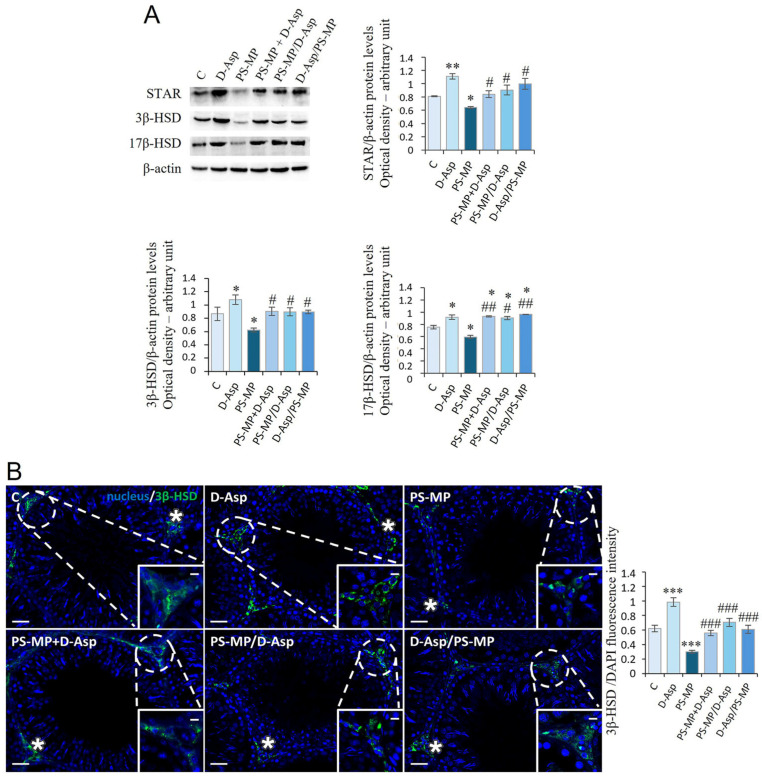 Figure 5
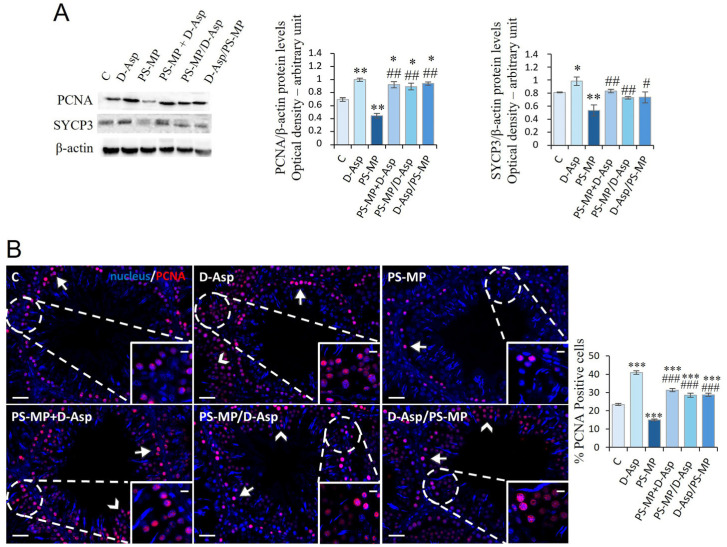 Figure 6
Peer Reviews
No public reviews on file for this paper yet. If you reviewed it on a platform where reviews are public (OpenReview, ICLR, NeurIPS, ICML), you can paste yours below so the community can read it here.
Videos
No videos yet. Explain this paper in a talk, walkthrough, or lecture? Add one.
Taxonomy
TopicsMicroplastics and Plastic Pollution · biodegradable polymer synthesis and properties · Effects and risks of endocrine disrupting chemicals