The Autism Open Clinical Model (A.-O.C.M.) as a Phenomenological Framework for Prompt Design in Parent Training for Autism: Integrating Embodied Cognition and Artificial Intelligence
Flavia Morfini, Sebastian G. D. Cesarano

TL;DR
This paper introduces a new clinical model for autism treatment that combines embodied cognition and AI to improve parent training and therapist-caregiver interactions.
Contribution
The novel contribution is a clinical framework integrating phenomenology, embodied cognition, and AI for adaptive autism interventions.
Findings
Relational patterns in therapist-caregiver dynamics reveal structural elements useful for personalizing interventions.
Bodily and emotional attunement quality influences readiness for change in autism interventions.
AI-supported prompts enhance intervention effectiveness through adaptive clinician styles.
Abstract
Background/Objectives: In the treatment of autism spectrum disorders, families express the need for dedicated clinical spaces to manage emotional overload and to develop effective relational skills. Parent training addresses this need by supporting the parent–child relationship and fostering the child’s development. This study proposes a clinical protocol designed for psychotherapists and behavior analysts, based on the Autism Open Clinical Model (A.-O.C.M.), which integrates the rigor of Applied Behavior Analysis (ABA) with a phenomenological and embodied perspective. The model acknowledges technology—particularly artificial intelligence—as an opportunity to structure adaptive and personalized intervention tools. Methods: A multi-level prompt design system was developed, grounded in the principles of the A.-O.C.M. and integrated with generative AI. The tool employs clinical questions,…
Genes, proteins, chemicals, diseases, species, mutations and cell lines named across the full text — each resolved to its canonical identifier and authoritative record.
Click any figure to enlarge with its caption.
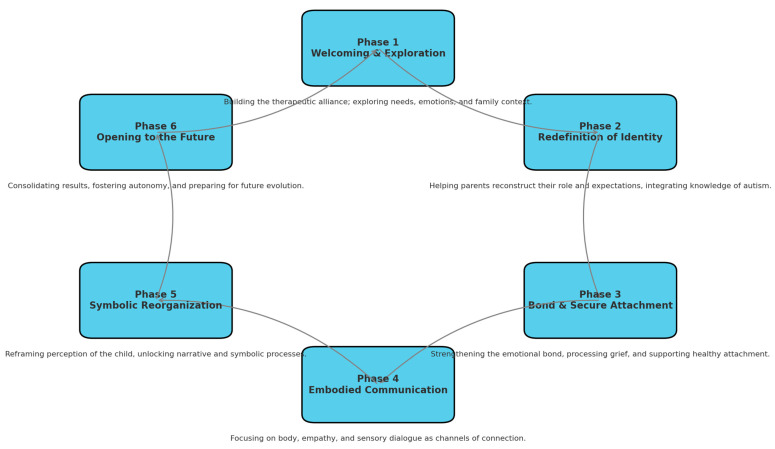 Figure 1
Peer Reviews
No public reviews on file for this paper yet. If you reviewed it on a platform where reviews are public (OpenReview, ICLR, NeurIPS, ICML), you can paste yours below so the community can read it here.
Videos
No videos yet. Explain this paper in a talk, walkthrough, or lecture? Add one.
Taxonomy
TopicsAutism Spectrum Disorder Research · Child and Animal Learning Development · Digital Mental Health Interventions