Spatiotemporal Dynamics of Ecological Vulnerability to Climate Change in Northwestern Sichuan’s Terrestrial Ecosystems of China: Conservation Implications
Cuicui Jiao, Xiaobo Yi, Ji Luo, Ying Wang, Yuanjie Deng, Jiangtao Gou, Danting Luo

TL;DR
This study maps how climate change affects ecosystems in northwestern Sichuan, showing where and when vulnerability changes, and how to protect biodiversity.
Contribution
The study reveals spatiotemporal patterns of ecological vulnerability in TENS, highlighting ecosystem-specific dynamics and migration trends.
Findings
Vulnerability increases from south to north and forms a V-shape from west to east due to topography and climate.
Wetlands are most vulnerable, while forests are more resilient, with distinct responses to temperature and precipitation.
About 34.6% of the area shows fluctuating vulnerability trends, with recovery spreading from southwest to north.
Abstract
Climate change is exerting mounting pressure on terrestrial ecosystems in Northwestern Sichuan (TENS) of China, where rugged topography and variable climate render them particularly vulnerable. Previous studies have subsumed TENS within the broader analyses of the Tibetan Plateau, thereby overlooking its dynamics and heterogeneities. Consequently, the spatiotemporal variations in TENS’ vulnerability remain poorly understood. This study aims to demonstrate how vulnerability varies across spaces and over time, identify ecosystem-specific vulnerabilities, phased interannual dynamics, trend conversions, and migration paths of vulnerability changing trends. Using data on vegetation growth, temperature, and precipitation, we found that vulnerability increases from south to north and forms a V-shape from west to east. Wetlands are the most vulnerable, while forests are more resilient. Over…
Genes, proteins, chemicals, diseases, species, mutations and cell lines named across the full text — each resolved to its canonical identifier and authoritative record.
Click any figure to enlarge with its caption.
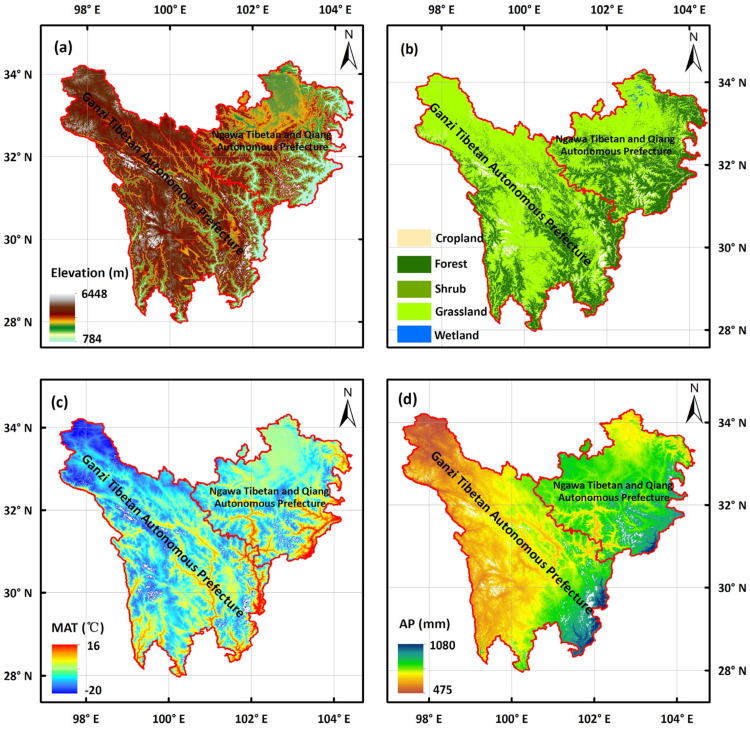 Figure 1
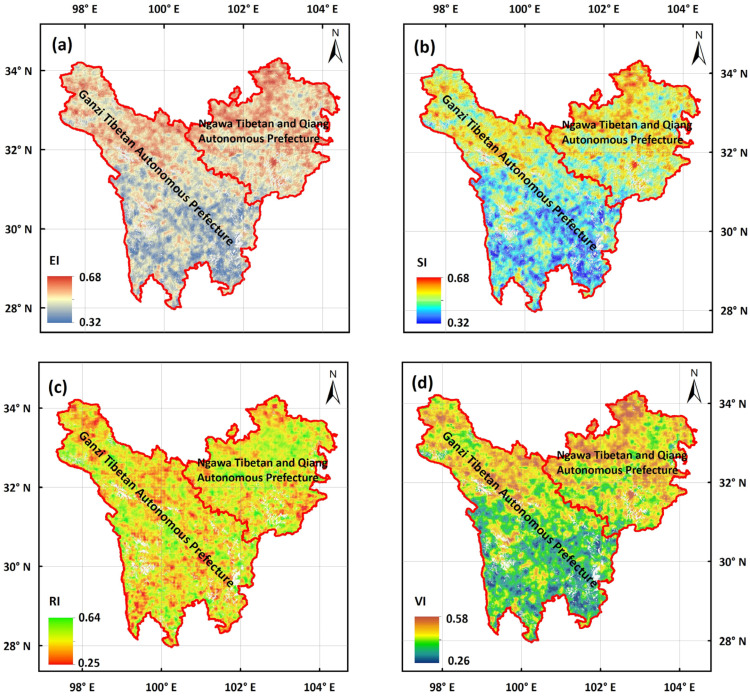 Figure 2
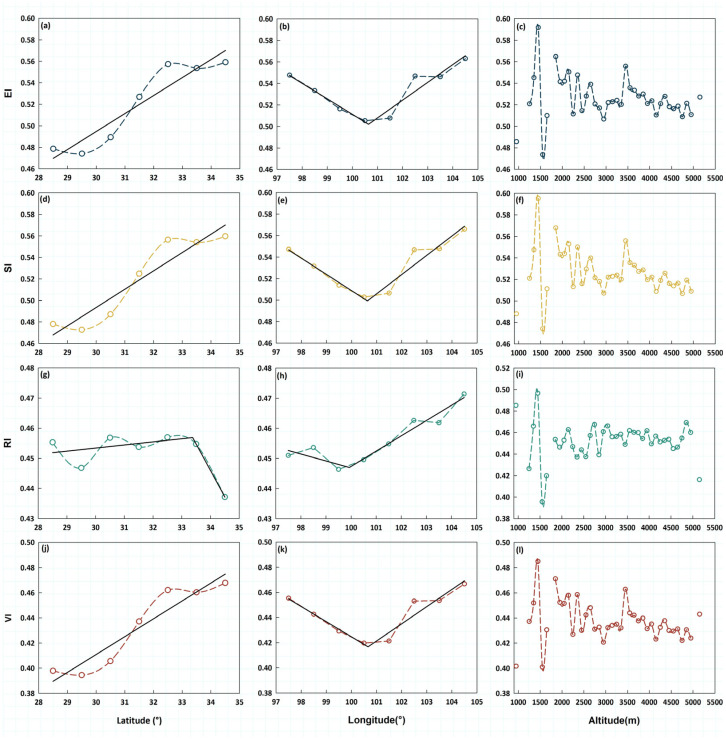 Figure 3
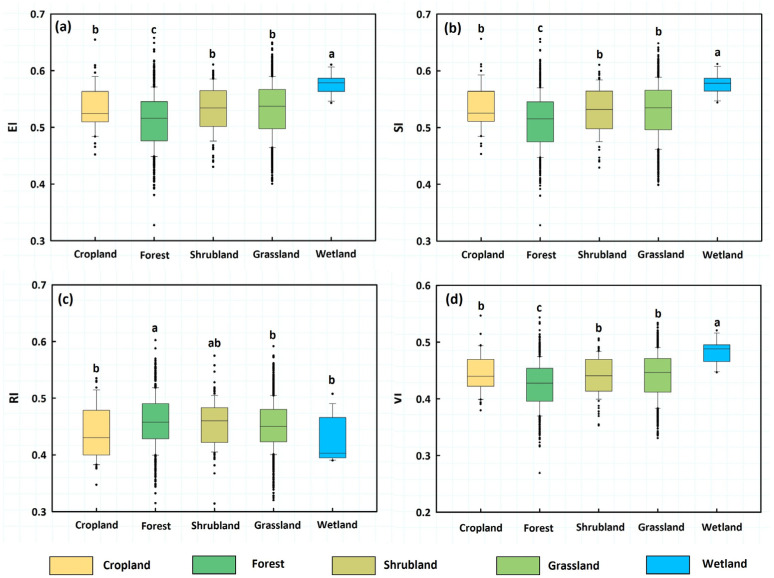 Figure 4
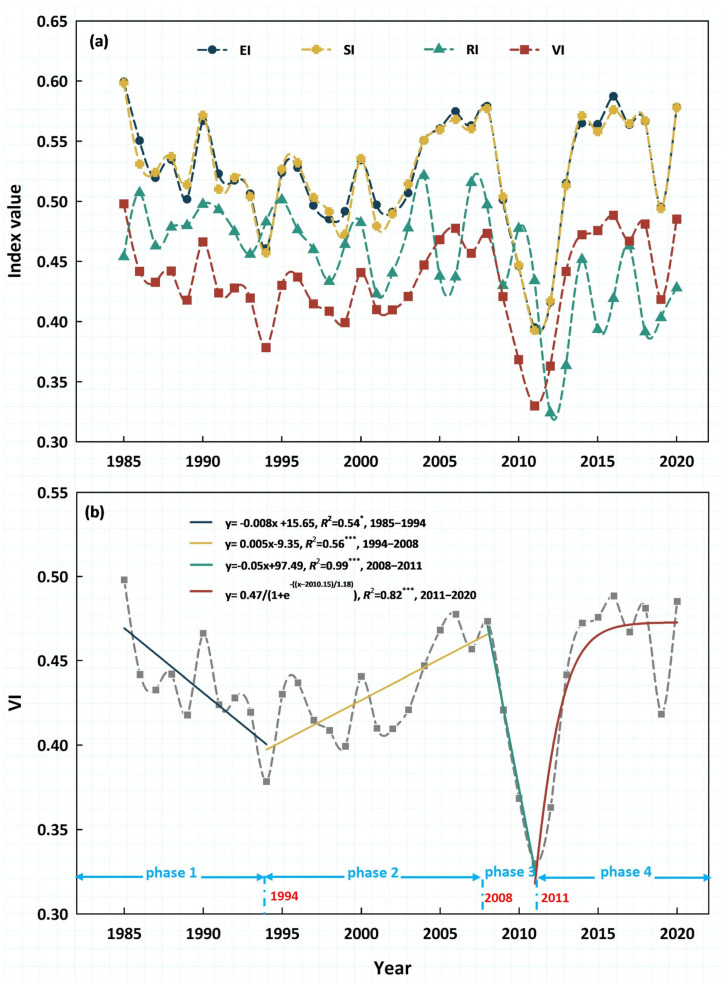 Figure 5
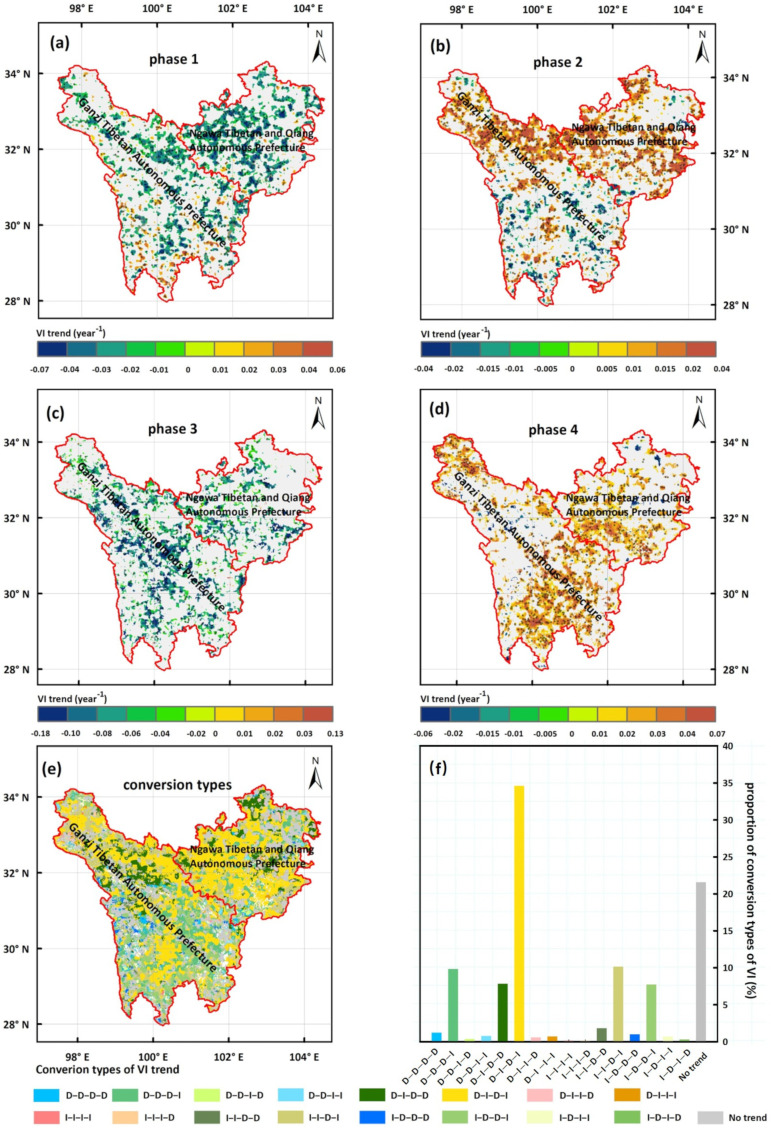 Figure 6
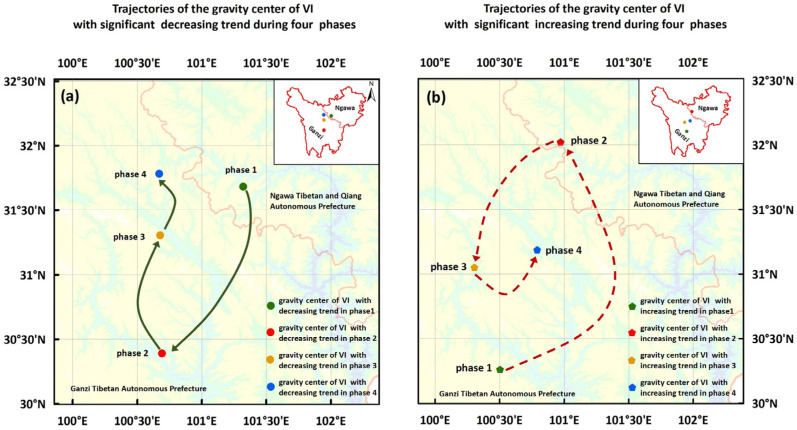 Figure 7
Peer Reviews
No public reviews on file for this paper yet. If you reviewed it on a platform where reviews are public (OpenReview, ICLR, NeurIPS, ICML), you can paste yours below so the community can read it here.
Videos
No videos yet. Explain this paper in a talk, walkthrough, or lecture? Add one.
Taxonomy
TopicsRemote Sensing in Agriculture · Climate change impacts on agriculture · Climate variability and models