Plasma Heparin-Binding Protein as a Predictor of Functional Recovery and a Potential Therapeutic Target in Acute Anterior Circulation Large-Vessel Occlusion Stroke
Chao Wu, Hedi An, You Yin, Dongya Huang

TL;DR
High levels of a protein called HBP in stroke patients after a procedure to remove blood clots are linked to worse recovery, suggesting it could help predict outcomes and guide treatment.
Contribution
This study identifies plasma HBP as an independent predictor of poor recovery in stroke patients after mechanical thrombectomy and suggests its potential as a therapeutic target.
Findings
Higher HBP levels were significantly associated with poor functional outcomes in stroke patients.
HBP remained an independent predictor of poor outcomes after adjusting for multiple clinical factors.
Adding HBP to clinical models improved the accuracy of predicting patient outcomes.
Abstract
Background: Patients with acute anterior circulation large-vessel occlusion (AC-LVO) stroke frequently experience poor outcomes despite successful mechanical thrombectomy (MT). Heparin-binding protein (HBP), a neutrophil-derived mediator of inflammation and vascular permeability, may contribute to neuroinflammation and prognosis; however, its role in stroke remains unclear. Methods: In this retrospective study, 163 patients with AC-LVO stroke who underwent MT were enrolled. Plasma HBP levels were measured within 24 h after thrombectomy. Functional outcomes were evaluated using the modified Rankin Scale (mRS) at 90 days, with an mRS score 3–6 suggesting a poor outcome. Multivariable logistic regression and receiver operating characteristic (ROC) analyses were performed to assess associations between HBP and outcomes. Results: Of the 163 patients, 88 (54.0%) had poor functional outcomes.…
Genes, proteins, chemicals, diseases, species, mutations and cell lines named across the full text — each resolved to its canonical identifier and authoritative record.
Click any figure to enlarge with its caption.
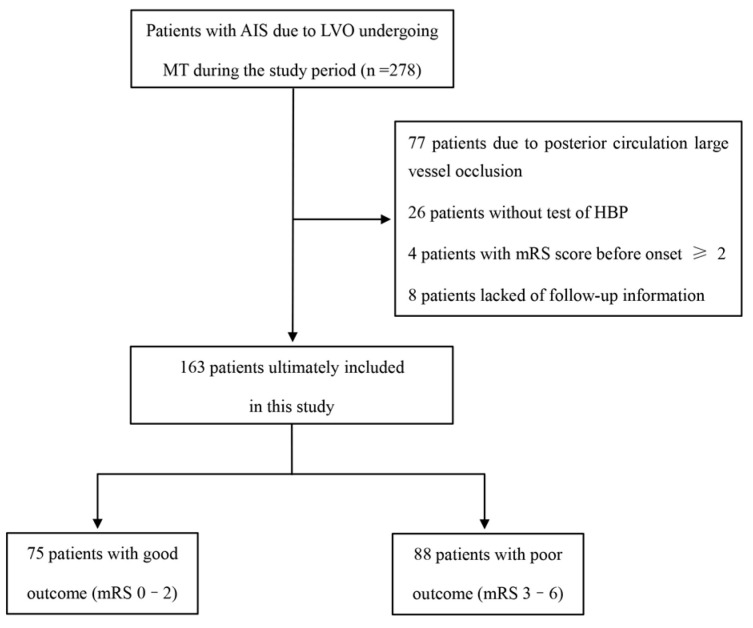 Figure 1
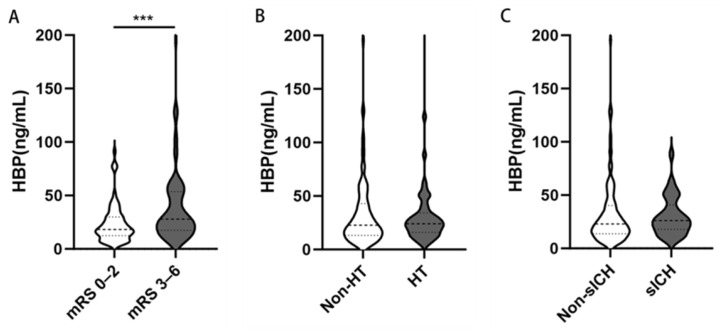 Figure 2
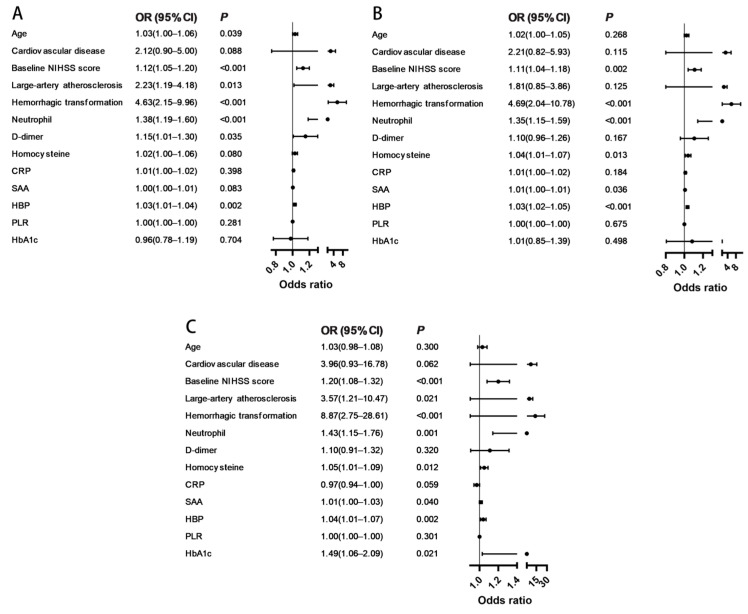 Figure 3
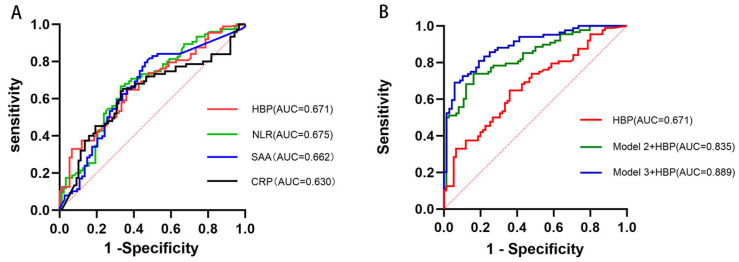 Figure 4
Peer Reviews
No public reviews on file for this paper yet. If you reviewed it on a platform where reviews are public (OpenReview, ICLR, NeurIPS, ICML), you can paste yours below so the community can read it here.
Videos
No videos yet. Explain this paper in a talk, walkthrough, or lecture? Add one.
Taxonomy
TopicsAcute Ischemic Stroke Management · Neuroinflammation and Neurodegeneration Mechanisms · S100 Proteins and Annexins