Sensory Modality-Dependent Interplay Between Updating and Inhibition Under Increased Working Memory Load: An ERP Study
Yuxi Luo, Ao Guo, Jinglong Wu, Jiajia Yang

TL;DR
This study explores how working memory load and sensory modality affect cognitive processes like updating and inhibition, using ERP measurements.
Contribution
The study reveals how sensory modality influences the interplay between updating and inhibition under varying working memory loads.
Findings
Higher working memory load leads to reduced accuracy and longer reaction times in both visual and cross-modal tasks.
Flanker interference emerges at lower loads in visual tasks but at higher loads in cross-modal tasks.
ERP results show modality-specific differences in N200 and P300 amplitudes under different loads.
Abstract
Background/Objectives: Working memory (WM) performance relies on the coordination of updating and inhibition functions within the central executive system. However, their interaction under varying cognitive loads, particularly across sensory modalities, remains unclear. Methods: This study examined how sensory modality modulates flanker interference under increasing WM loads. Twenty-two participants performed a visual n-back task at three load levels (1-, 2-, and 3-back) while ignoring visual (within-modality) or auditory (cross-modality) flankers. Results: Behaviorally, increased WM load (2- and 3-back) led to reduced accuracy (AC) and prolonged reaction times (RTs) in both conditions. In addition, flanker interference was observed under the 2-back condition in both the visual within-modality (VM) and audiovisual cross-modality (AVM) tasks. However, performance impairment emerged at a…
Genes, proteins, chemicals, diseases, species, mutations and cell lines named across the full text — each resolved to its canonical identifier and authoritative record.
Click any figure to enlarge with its caption.
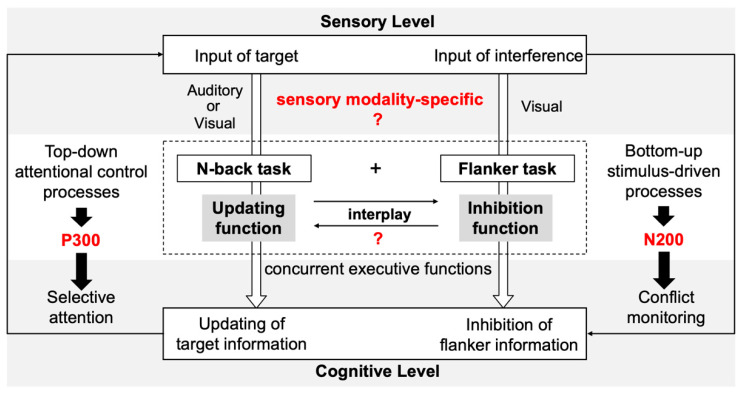 Figure 1
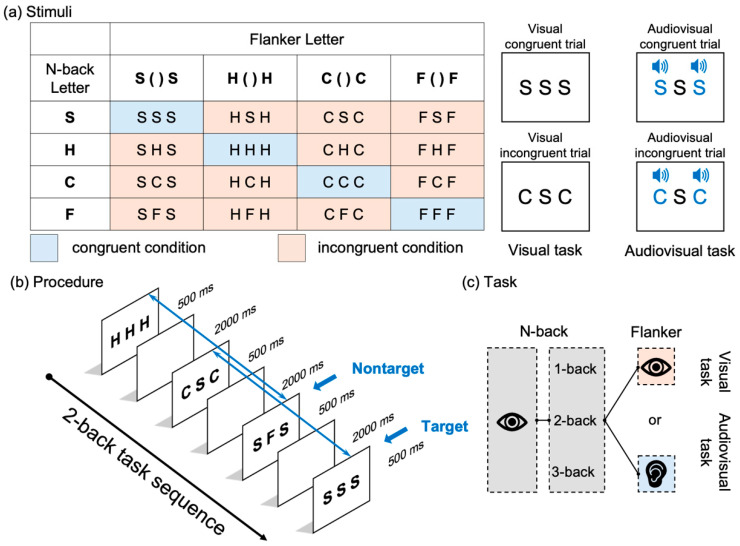 Figure 2
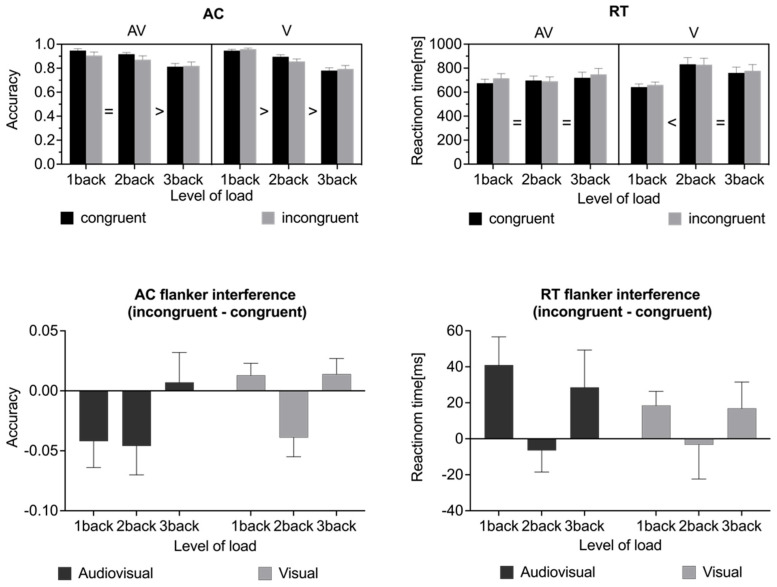 Figure 3
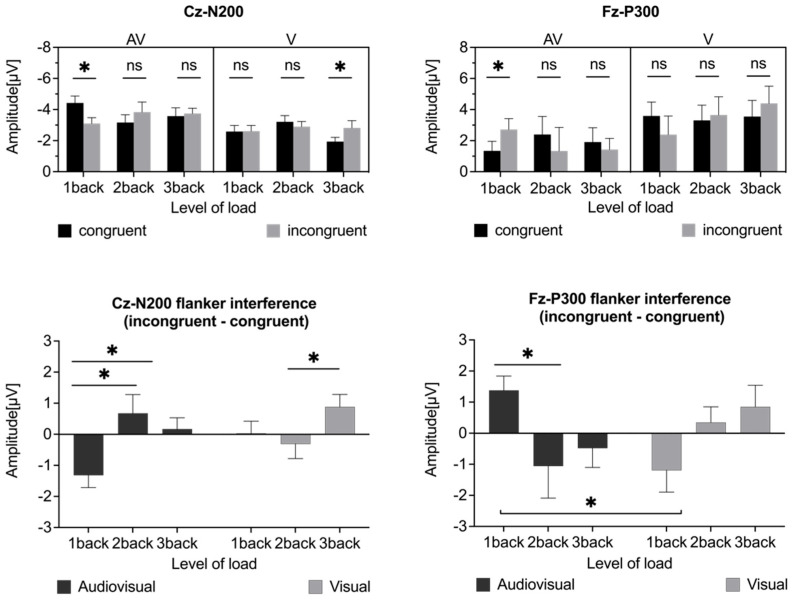 Figure 4
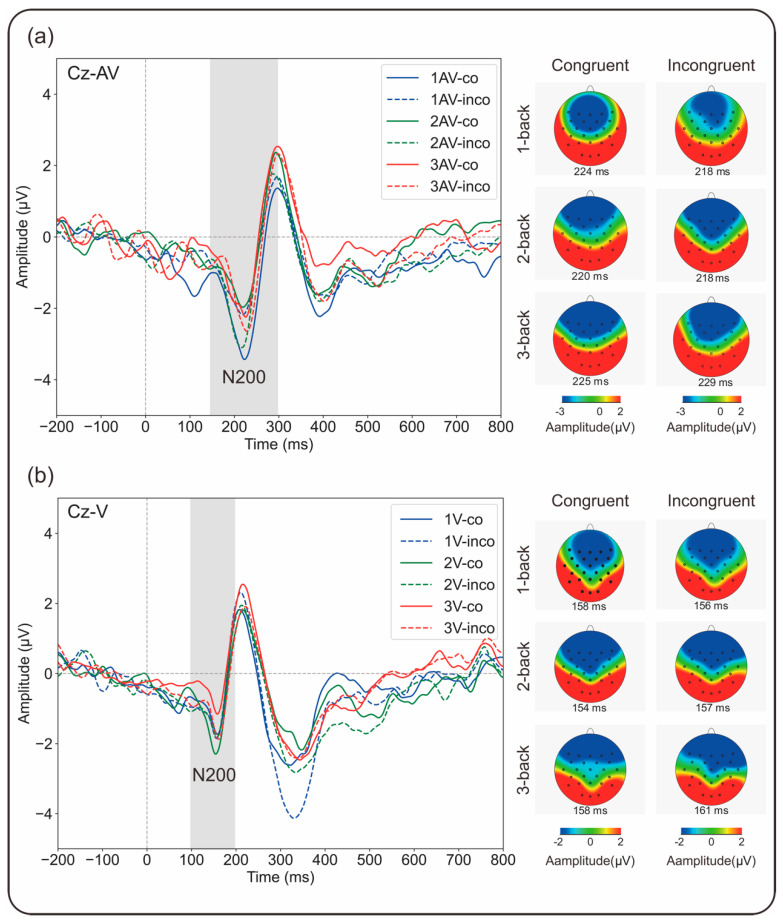 Figure 5
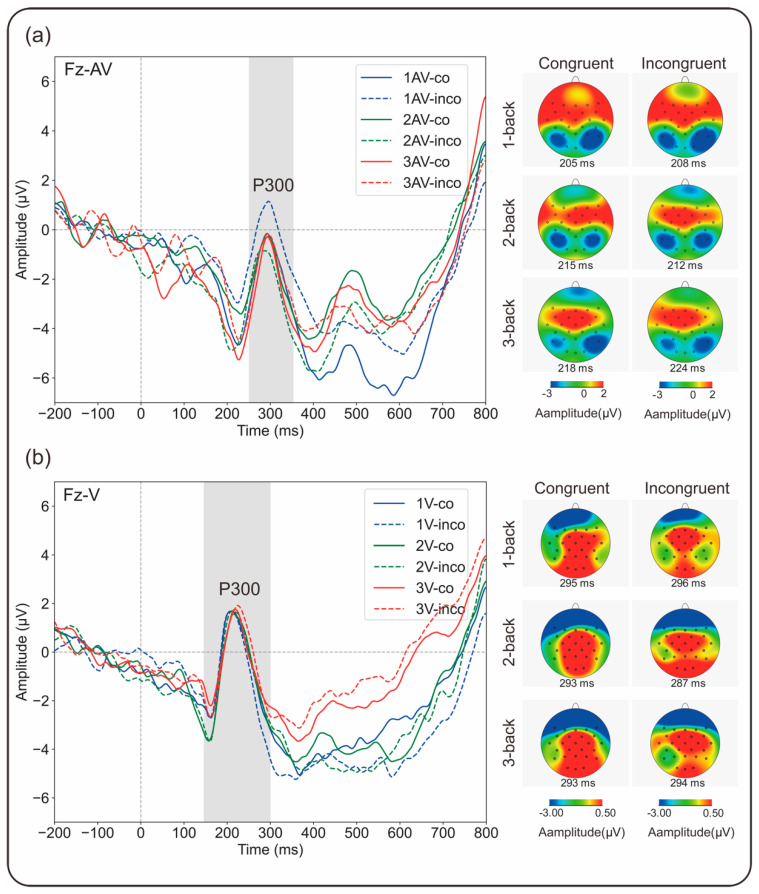 Figure 6
Peer Reviews
No public reviews on file for this paper yet. If you reviewed it on a platform where reviews are public (OpenReview, ICLR, NeurIPS, ICML), you can paste yours below so the community can read it here.
Videos
No videos yet. Explain this paper in a talk, walkthrough, or lecture? Add one.
Taxonomy
TopicsNeural and Behavioral Psychology Studies · Neuroscience and Music Perception · Cognitive Abilities and Testing