Predicting the Potential Distribution of Galeruca daurica in Inner Mongolia Under Current and Future Climate Scenarios Using the MaxEnt Model
Tian-Yu Xu, Xiao-Shuan Bai, MU Ren

TL;DR
This study predicts where a pest beetle will live in Inner Mongolia under current and future climate conditions, finding that suitable habitats may shrink and shift northward.
Contribution
The study introduces a MaxEnt model-based prediction of Galeruca daurica's future distribution under climate change scenarios in Inner Mongolia.
Findings
Currently, about 44.9% of Inner Mongolia is suitable for Galeruca daurica, mainly in central–western arid and semi-arid areas.
Future projections suggest a significant reduction in suitable habitat, especially under the SSP2-4.5 scenario, with a northward shift in distribution.
Precipitation and temperature variables are the main predictors of the beetle's distribution.
Abstract
In recent years, the grasslands of Inner Mongolia, an important ecological region in Northern China, have experienced severe outbreaks of a pest beetle known as Galeruca daurica. These outbreaks are largely driven by climate change and grassland degradation. To help anticipate future risks, this study used a computer modeling approach to predict where this beetle could live under current and future climate conditions. We found that key factors affecting its distribution are rainfall patterns and temperature variation. At present, about 45% of Inner Mongolia offers a suitable habitat, mainly in the central and western dry grasslands. In the future, however, suitable areas are projected to shrink and shift northward. These results can help guide early pest warnings and focused management efforts, supporting the protection of grassland ecosystems and sustainable land use in the region. In…
Genes, proteins, chemicals, diseases, species, mutations and cell lines named across the full text — each resolved to its canonical identifier and authoritative record.
Click any figure to enlarge with its caption.
 Figure 1
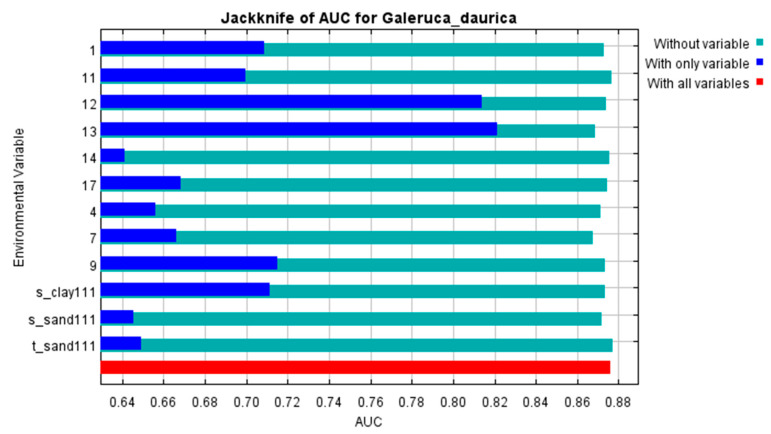 Figure 2
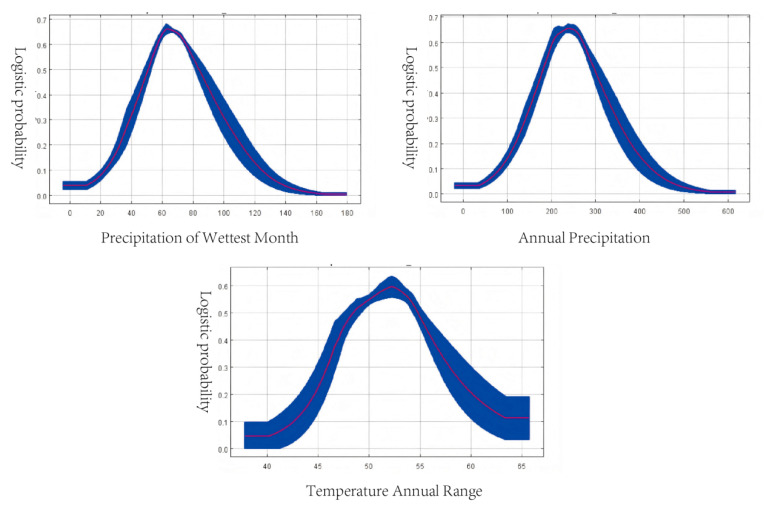 Figure 3
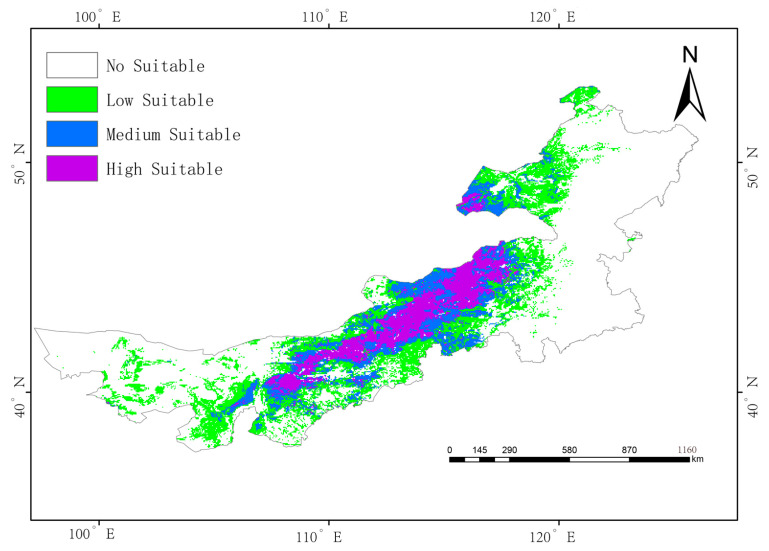 Figure 4
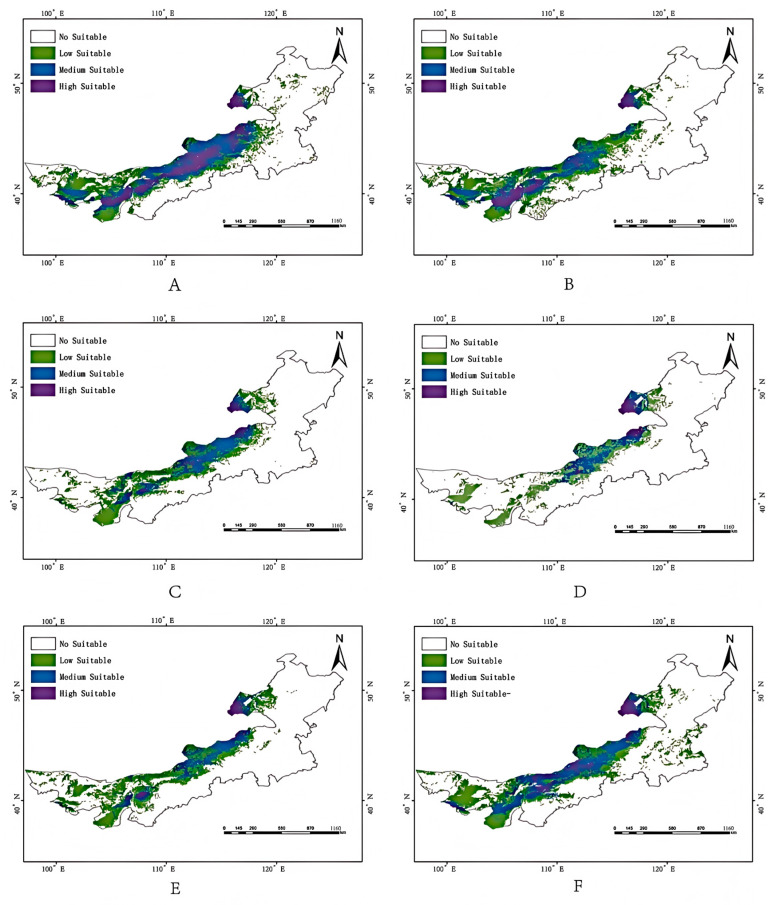 Figure 5
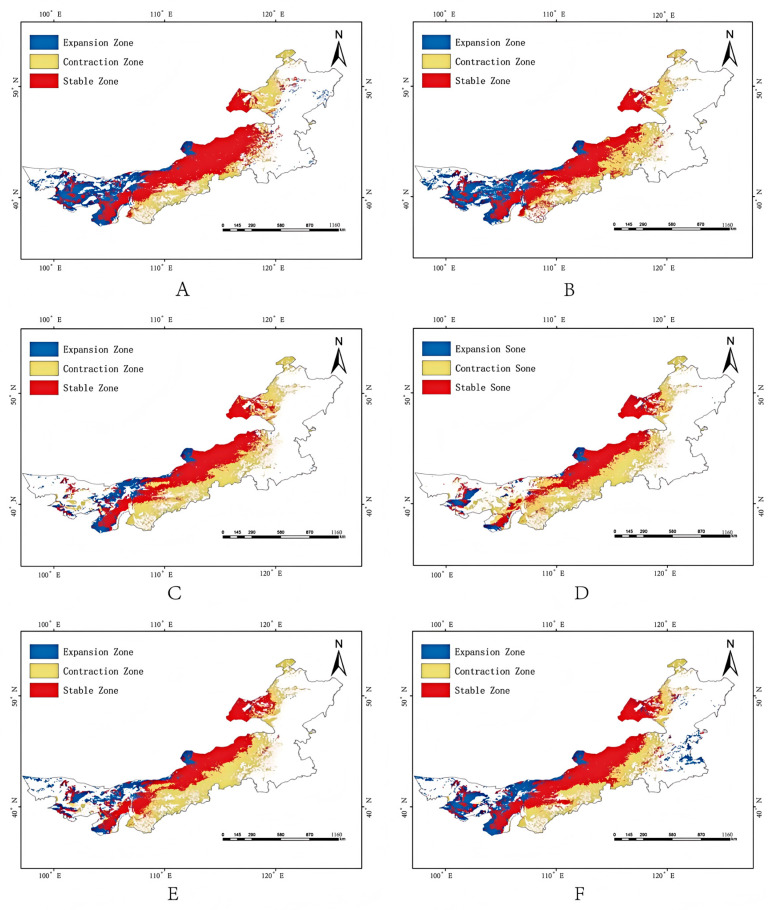 Figure 6
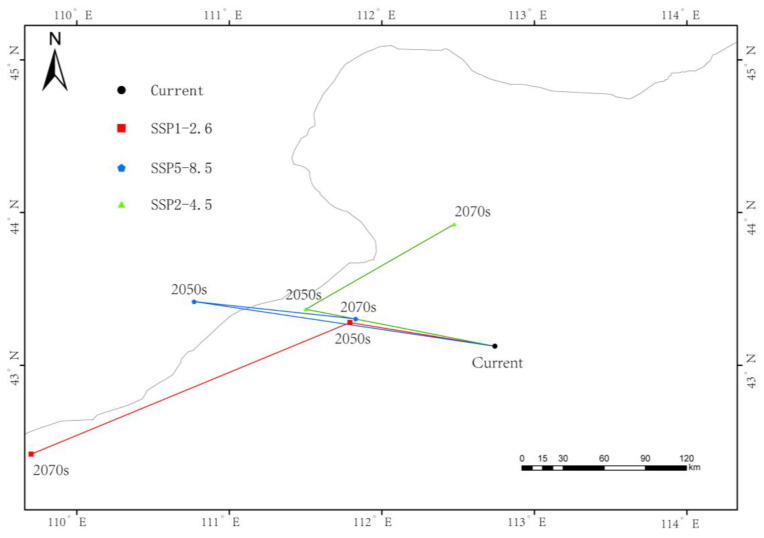 Figure 7
Peer Reviews
No public reviews on file for this paper yet. If you reviewed it on a platform where reviews are public (OpenReview, ICLR, NeurIPS, ICML), you can paste yours below so the community can read it here.
Videos
No videos yet. Explain this paper in a talk, walkthrough, or lecture? Add one.
Taxonomy
TopicsSpecies Distribution and Climate Change · Plant and animal studies · Plant Parasitism and Resistance