Infants Receive More Care by Harassing Matings in a Multi-Level Primate Society
Fang-Jun Cao, James R. Anderson, Wei-Wei Fu, Ni-Na Gou, Hui Feng, Xiao-Ning Chen, Li-Na Su, Shu-Jun He, Cheng Fang, Lu Wang, Shan-Shan Sun, Min Mao, Kai-Feng Wang, Bin Yang

TL;DR
Infant Sichuan snub-nosed monkeys harass their mothers during mating to receive more care, suggesting a strategy to gain parental attention.
Contribution
This study identifies infant harassment of maternal mating as a behavior linked to increased maternal care in a multilevel primate society.
Findings
Infants harassed their mothers more during mating than non-mothers, leading to increased maternal care.
Mothers responded to harassment with increased caretaking, while non-mothers responded with aggression.
Infant harassment of matings correlates with receiving more care and facing more aggression.
Abstract
The aims of this study were to assess the motivation underlying harassment of adult matings by infants in a multilevel social primate, namely wild (provisioned) Sichuan snub-nosed monkeys, and to describe and quantify the reactions of harassed adults to infant harassment. Infants more frequently harassed sexual activities of their mothers than non-mothers, leading to them receiving more care from their mothers; non-mothers were more likely to respond to infant harassment with aggression. These findings can be taken as providing indirect support for parent–infant conflict theory in as much as infant harassment of their mother’s sexual activity was effective in securing more maternal care. Future work on parent–infant conflict should incorporate behavioral, physiological, and reproductive measures, including pregnancy onset and inter-birth intervals. To better understand the motivation…
Genes, proteins, chemicals, diseases, species, mutations and cell lines named across the full text — each resolved to its canonical identifier and authoritative record.
Click any figure to enlarge with its caption.
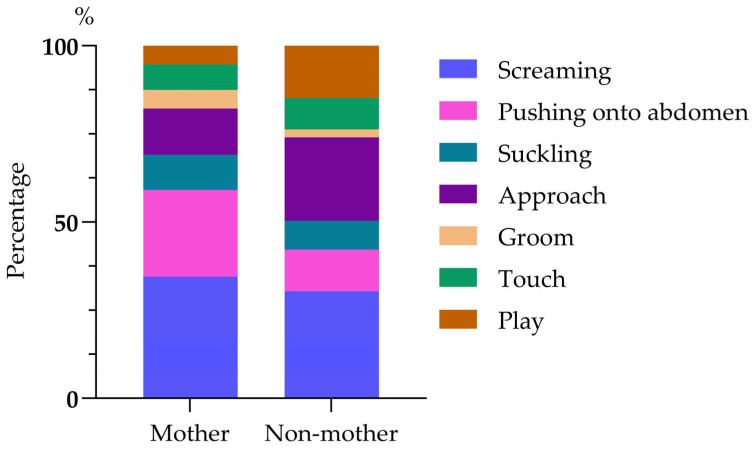 Figure 1
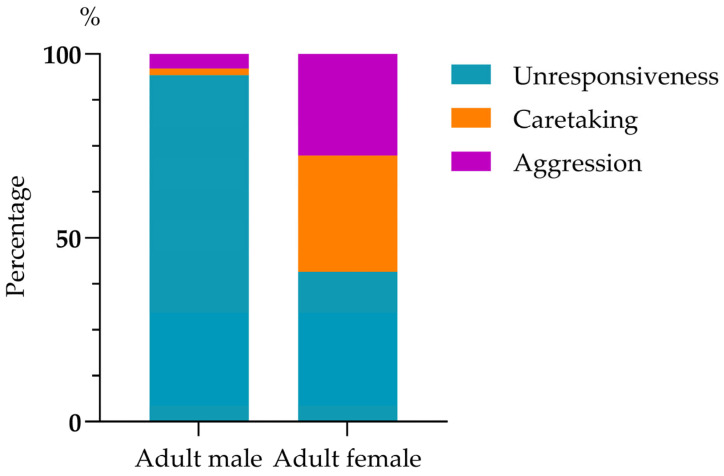 Figure 2
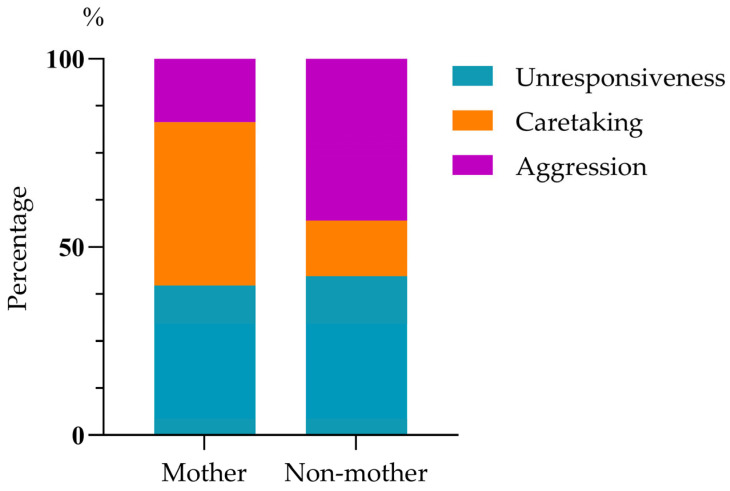 Figure 3
Peer Reviews
No public reviews on file for this paper yet. If you reviewed it on a platform where reviews are public (OpenReview, ICLR, NeurIPS, ICML), you can paste yours below so the community can read it here.
Videos
No videos yet. Explain this paper in a talk, walkthrough, or lecture? Add one.
Taxonomy
TopicsPrimate Behavior and Ecology · Evolutionary Psychology and Human Behavior · Neuroendocrine regulation and behavior