Urinary Vitamin D Binding Protein and Kidney Injury Molecule-1 Are Potent Predictors of Acute Kidney Injury After Left Ventricular Assist Device Implantation
Shiyi Li, Iván Murrieta-Álvarez, Katherine V. Nordick, Zachary Gray, Camila Hochman-Mendez, Alexis E. Shafii, Kenneth K. Liao, Carl P. Walther, Nandan K. Mondal

TL;DR
This study shows that measuring two urine proteins can help predict kidney damage after heart surgery, improving patient care.
Contribution
The study identifies urinary VDBP and KIM-1 as novel, potent predictors of AKI after LVAD implantation.
Findings
Urinary VDBP and KIM-1 levels were significantly higher in patients who developed AKI.
Pre-LVAD biomarker levels were associated with a nearly two-fold increased AKI risk.
Combining biomarkers with kidney function and hemodynamic status improved predictive performance.
Abstract
Background/Objectives: Acute kidney injury (AKI) is a frequent and serious complication following left ventricular assist device (LVAD) implantation. This study aimed to predict AKI within 90 days post-LVAD by evaluating urinary levels of vitamin D binding protein (VDBP) and kidney injury molecule-1 (KIM-1). Methods: We prospectively enrolled 29 advanced heart failure patients undergoing LVAD implantation and categorized them into four groups based on pre-LVAD kidney function and hemodynamic stability. Early-morning urine samples were collected 24 h before and 1 week after surgery. Urinary VDBP and KIM-1 levels, normalized to creatinine, were measured. Results: Thirteen patients developed AKI postoperatively. Both biomarkers were significantly elevated in patients with pre-existing kidney dysfunction and hemodynamic instability, as well as in those who developed AKI. Pre-LVAD VDBP and…
Genes, proteins, chemicals, diseases, species, mutations and cell lines named across the full text — each resolved to its canonical identifier and authoritative record.
Click any figure to enlarge with its caption.
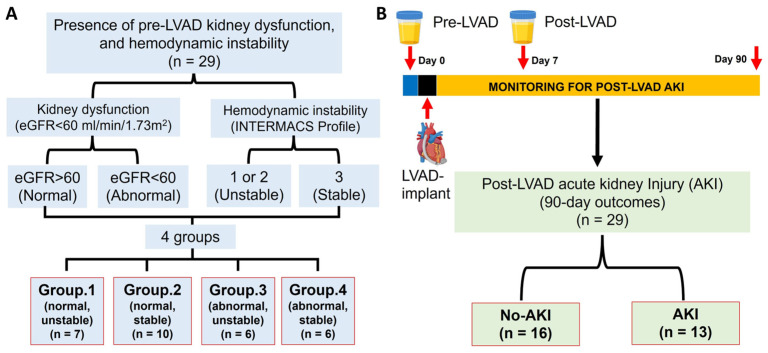 Figure 1
 Figure 2
 Figure 3
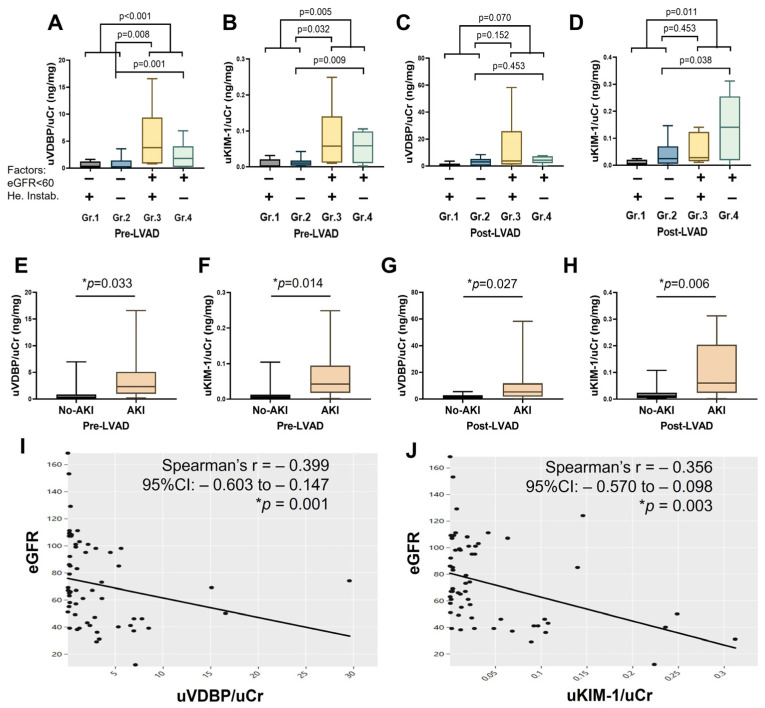 Figure 4
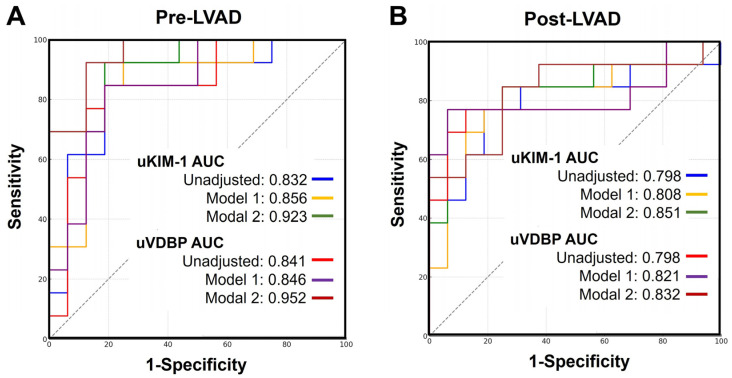 Figure 5
Peer Reviews
No public reviews on file for this paper yet. If you reviewed it on a platform where reviews are public (OpenReview, ICLR, NeurIPS, ICML), you can paste yours below so the community can read it here.
Videos
No videos yet. Explain this paper in a talk, walkthrough, or lecture? Add one.
Taxonomy
TopicsMechanical Circulatory Support Devices · Acute Kidney Injury Research · Muscle and Compartmental Disorders