Nanomaterials for Sensory Systems—A Review
Andrei Ivanov, Daniela Laura Buruiana, Constantin Trus, Viorica Ghisman, Iulian Vasile Antoniac

TL;DR
Nanomaterials are being used to create highly sensitive food sensors that detect spoilage and contamination quickly, improving food safety and reducing waste.
Contribution
This review comprehensively examines the use of nanomaterials in food sensory systems, highlighting innovations in detection methods and smart packaging.
Findings
Nanosensors can detect food spoilage indicators with high sensitivity and rapid response times.
Smart packaging with nanomaterials enables continuous freshness monitoring and early spoilage prevention.
Examples include Au/AgNP melamine tests and Fe3O4/DPV detection systems with low detection limits.
Abstract
Nanotechnology offers powerful new tools to enhance food quality monitoring and safety assurance. In the food industry, nanoscale materials (e.g., metal, metal oxide, carbon, and polymeric nanomaterials) are being integrated into sensory systems to detect spoilage, contamination, and intentional food tampering with unprecedented sensitivity. Nanosensors can rapidly identify foodborne pathogens, toxins, and chemical changes that signal spoilage, overcoming the limitations of conventional assays that are often slow, costly, or require expert operation. These advances translate into improved food safety and extended shelf-life by allowing early intervention (for example, via antimicrobial nano-coatings) to prevent spoilage. This review provides a comprehensive overview of the types of nanomaterials used in food sensory applications and their mechanisms of action. We examine current…
Genes, proteins, chemicals, diseases, species, mutations and cell lines named across the full text — each resolved to its canonical identifier and authoritative record.
Click any figure to enlarge with its caption.
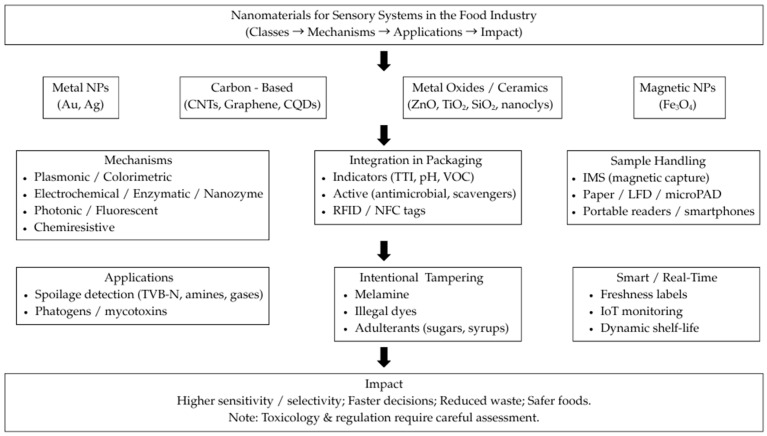 Figure 1
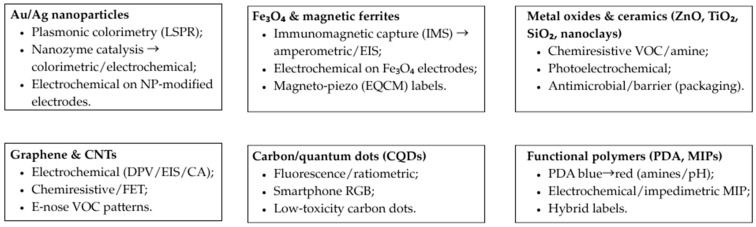 Figure 2
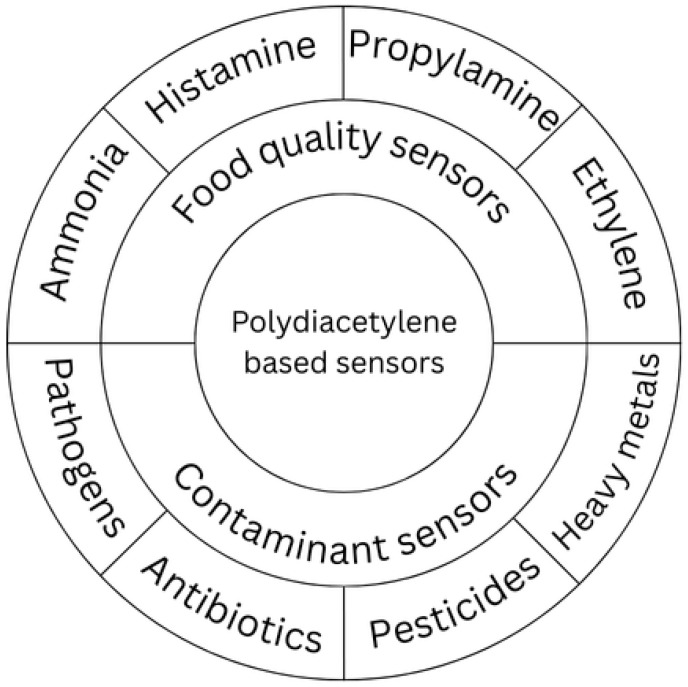 Figure 3
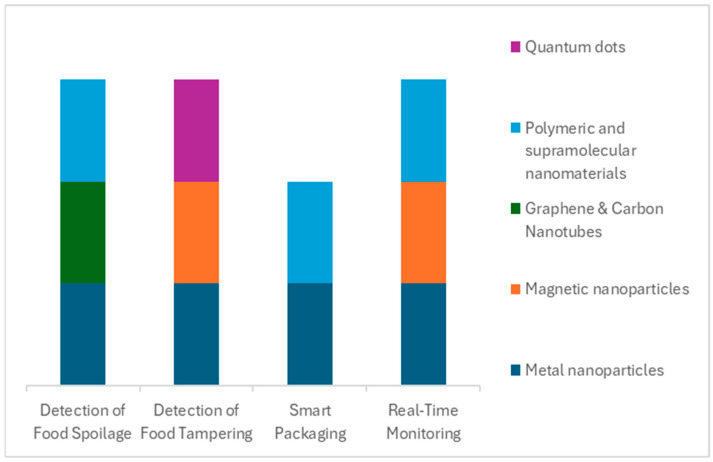 Figure 4
Peer Reviews
No public reviews on file for this paper yet. If you reviewed it on a platform where reviews are public (OpenReview, ICLR, NeurIPS, ICML), you can paste yours below so the community can read it here.
Videos
No videos yet. Explain this paper in a talk, walkthrough, or lecture? Add one.
Taxonomy
TopicsMelamine detection and toxicity · Dye analysis and toxicity · Biosensors and Analytical Detection