Loss of AT8 Nuclear Tau as a Marker of Neuronal Ageing and Alzheimer’s Disease Progression
Francesca Bruno, Laura Gil, Valentina Sturiale, Carmen Guerrero, Ana Belen Rebolledo, Desiree Brancato, Javier Morales, Salvatore Saccone, Concetta Federico

TL;DR
This study shows that a specific form of tau protein in neurons, called AT8, decreases with age and in Alzheimer’s disease, suggesting it could be an early marker of brain aging and disease progression.
Contribution
The novel finding is that nuclear AT8 tau is uniquely reduced in aging and Alzheimer’s disease, linking it to neuronal dysfunction and nuclear stress.
Findings
AT8 nuclear tau is abundant in young neurons but significantly reduced in aged and Alzheimer’s disease brains.
Loss of AT8 correlates with nucleolar disorganisation and neuronal cell cycle re-entry.
AT8 is the only nuclear tau epitope showing age- and disease-related changes.
Abstract
Background/Objectives: Tau protein, a central player in Alzheimer’s disease (AD) pathology, is classically known for its role in microtubule stabilisation. However, accumulating evidence indicates that tau also localises to the neuronal nucleus, particularly the nucleolus, where it may regulate chromatin organisation and transcription. In this study, we investigated whether different phosphorylation states of nuclear tau display age- and disease-dependent patterns, with a specific focus on the AT8 epitope (phospho-Ser202/Thr205). Methods: We analysed nuclear tau epitopes (Tau-1, AT8, PHF1, T181, and S262) by indirect immunofluorescence in SK-N-BE neuroblastoma cells under proliferative and retinoic acid-induced differentiated conditions and in post-mortem hippocampal CA1 neurons from foetal, young, aged, and AD brains. Other functional markers (UBTF, Ki67, fibrillarin and acetylated…
Genes, proteins, chemicals, diseases, species, mutations and cell lines named across the full text — each resolved to its canonical identifier and authoritative record.
Click any figure to enlarge with its caption.
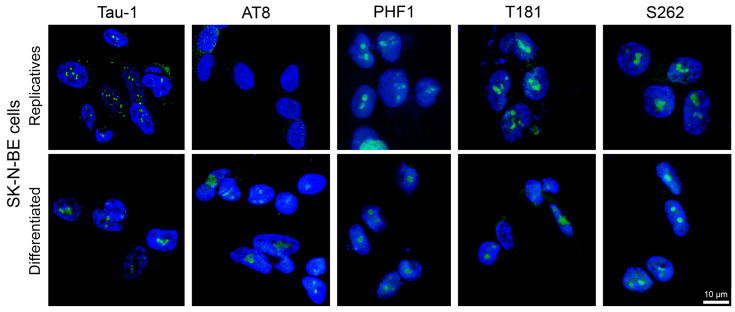 Figure 1
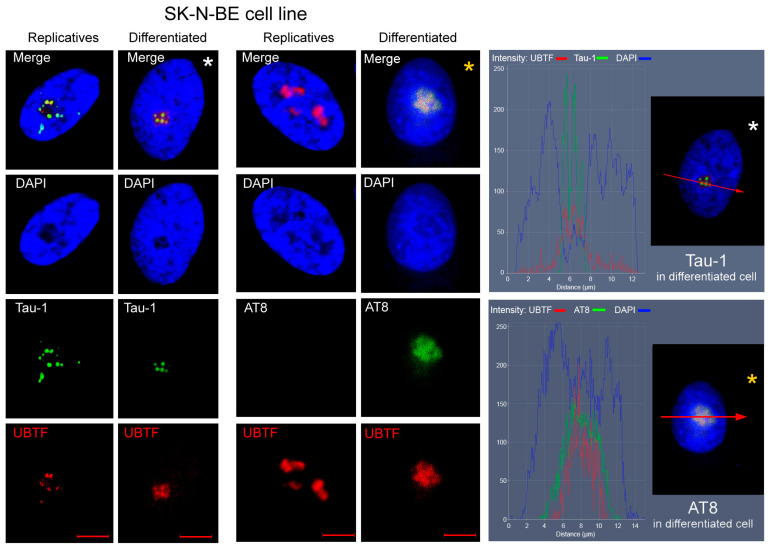 Figure 2
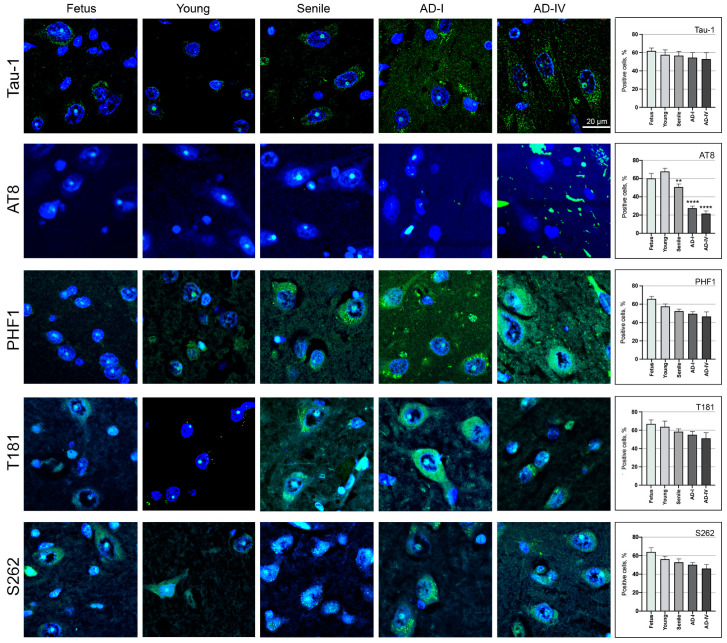 Figure 3
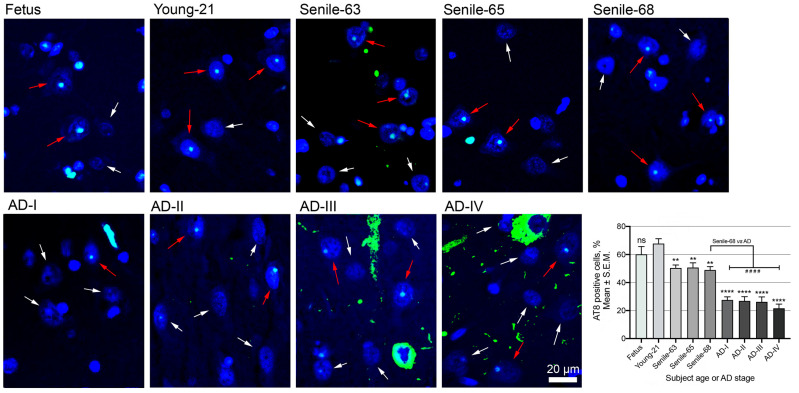 Figure 4
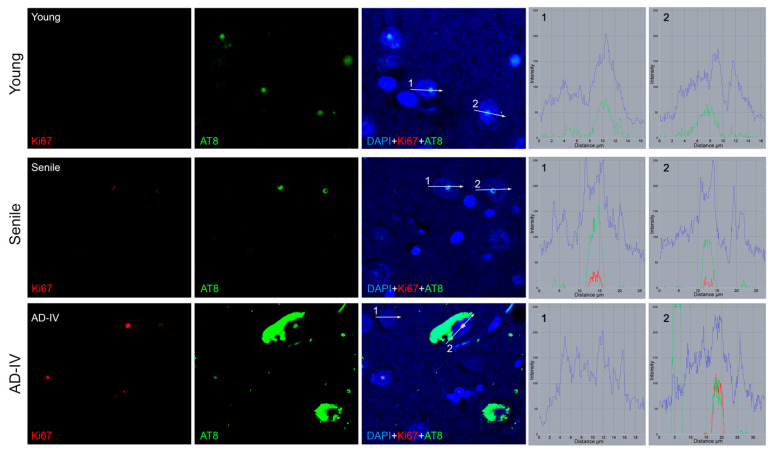 Figure 5
 Figure 6
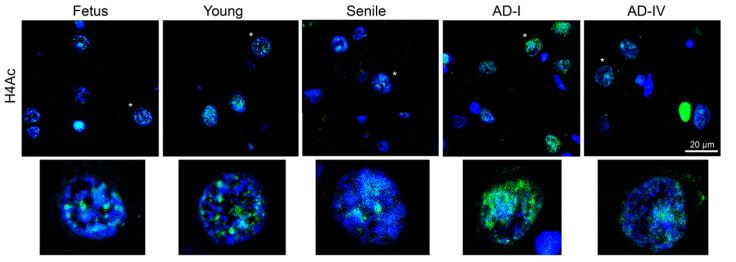 Figure 7
Peer Reviews
No public reviews on file for this paper yet. If you reviewed it on a platform where reviews are public (OpenReview, ICLR, NeurIPS, ICML), you can paste yours below so the community can read it here.
Videos
No videos yet. Explain this paper in a talk, walkthrough, or lecture? Add one.
Taxonomy
TopicsAlzheimer's disease research and treatments · Neuroscience and Neuropharmacology Research · Mitochondrial Function and Pathology