A Vector-Based Computational Model of Multimodal Insect Learning Walks
Zhehong Xiang, Xuelong Sun, Jigen Peng

TL;DR
This paper introduces a computational model that simulates how insects learn to navigate using multiple senses, offering insights into their brain mechanisms and potential applications in robotics.
Contribution
The novel Learning Vector mechanism dynamically integrates multimodal sensory inputs to simulate insect learning walks with behavioral flexibility.
Findings
The model replicates biological features of insect learning walks, including sensory integration and behavioral adaptation.
It accounts for individual and species-specific variability through adjustable parameters like cue preferences.
The model provides testable predictions for neural and behavioral mechanisms in insect navigation.
Abstract
Navigation is crucial for animal survival, and despite their small brains, insects are impressive at it. For example, desert ants acquire environmental information by learning to walk before foraging, enabling them to return home accurately over long distances. These learning walks involve multimodal sensory experiences and induce neuroplastic changes in the Central Complex (CX) and the Mushroom Body (MB) of ants’ brains, making them a key topic in behavioural science, neuroscience, and computational modelling. To address unresolved questions in how ants integrate sensory cues and adapt navigation strategies, we propose a computational model that achieves multisensory integration during learning walks. Central to this model is a novel Learning Vector mechanism that dynamically combines visual, olfactory, and path integration inputs to guide movement decisions. Specifically, the agent in…
Genes, proteins, chemicals, diseases, species, mutations and cell lines named across the full text — each resolved to its canonical identifier and authoritative record.
Click any figure to enlarge with its caption.
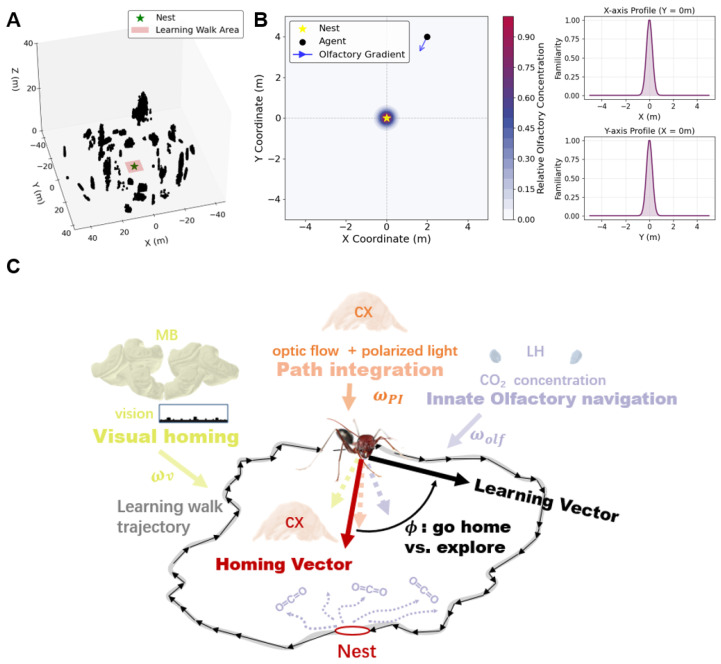 Figure 1
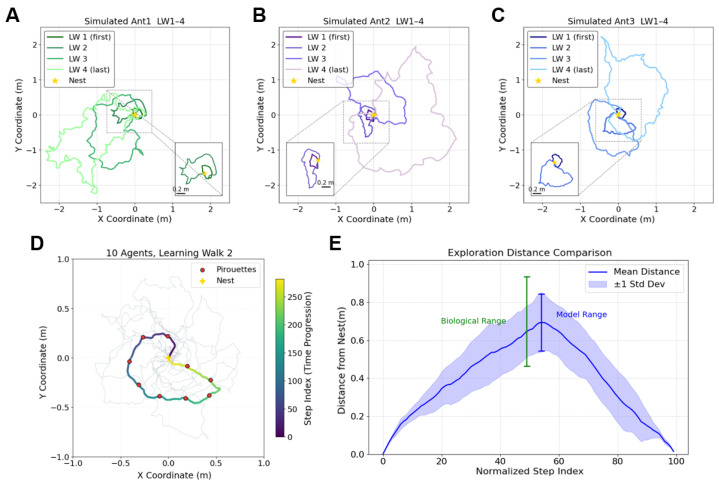 Figure 2
 Figure 3
 Figure 4
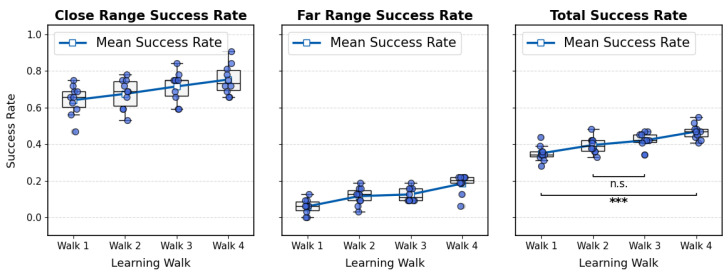 Figure 5
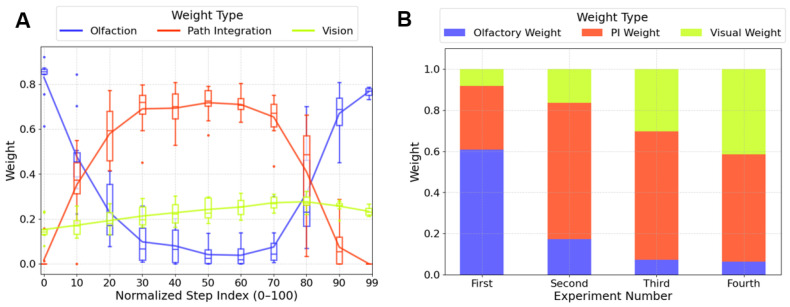 Figure 6
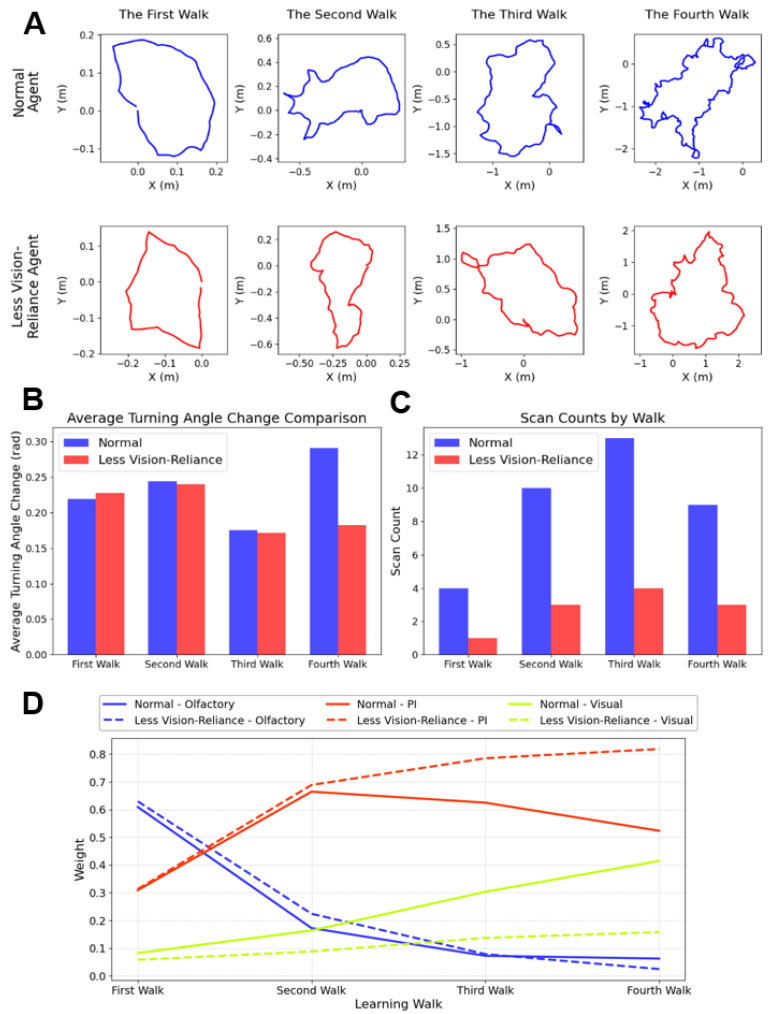 Figure 7
Peer Reviews
No public reviews on file for this paper yet. If you reviewed it on a platform where reviews are public (OpenReview, ICLR, NeurIPS, ICML), you can paste yours below so the community can read it here.
Videos
No videos yet. Explain this paper in a talk, walkthrough, or lecture? Add one.
Taxonomy
TopicsNeurobiology and Insect Physiology Research · Insect Pheromone Research and Control · Diffusion and Search Dynamics