Deep Learning-Based Prediction of Individual Cell α-Dispersion Capacitance from Morphological Features
Tae Young Kang, Soojung Kim, Yoon-Hwae Hwang, Kyujung Kim

TL;DR
This paper introduces a deep learning method to separate morphological effects from electrical measurements in cells, improving cancer diagnostics.
Contribution
A novel deep learning model predicts and corrects morphology-induced capacitance errors in cell electrical measurements.
Findings
A CNN model accurately predicts capacitance spectra from cell morphology with <10% error.
The model isolates true biological responses from morphological artifacts in EGF-stimulated HeLa cells.
The method improves EGFR-based cancer diagnostics by correcting measurement errors.
Abstract
The biophysical characteristics of cellular membranes, particularly their electrical properties in the α-dispersion frequency domain, offer valuable insights into cellular states and are increasingly important for cancer diagnostics through epidermal growth factor receptor (EGFR) expression analysis. However, a critical limitation in these electrical measurements is the confounding effect of morphological changes that inevitably occur during prolonged observation periods. These shape alterations significantly impact measured capacitance values, potentially masking true biological responses to epidermal growth factor (EGF) stimulation that are essential for cancer detection. In this study, we attempted to address this fundamental challenge by developing a deep learning method that establishes a direct computational relationship between cellular morphology and electrical properties. We…
Genes, proteins, chemicals, diseases, species, mutations and cell lines named across the full text — each resolved to its canonical identifier and authoritative record.
Click any figure to enlarge with its caption.
 Figure 1
 Figure 2
 Figure 3
 Figure 4
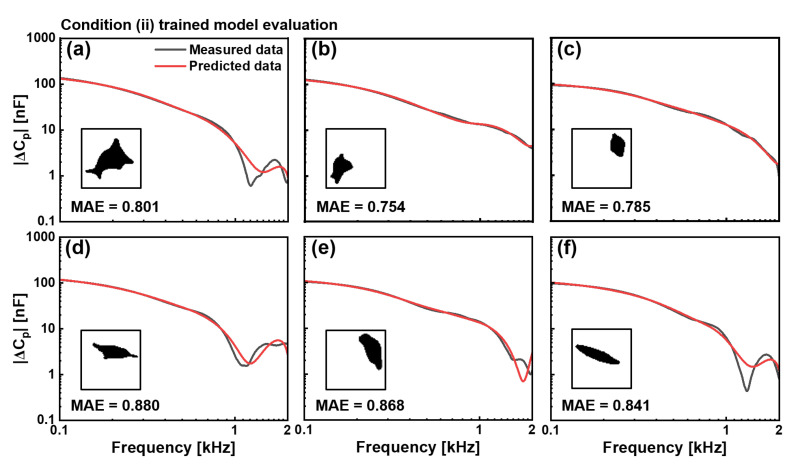 Figure 5
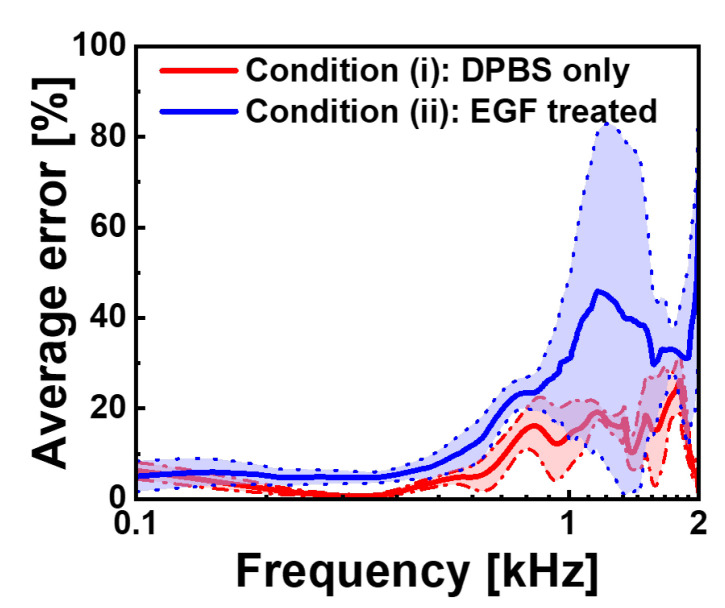 Figure 6
Peer Reviews
No public reviews on file for this paper yet. If you reviewed it on a platform where reviews are public (OpenReview, ICLR, NeurIPS, ICML), you can paste yours below so the community can read it here.
Videos
No videos yet. Explain this paper in a talk, walkthrough, or lecture? Add one.
Taxonomy
TopicsMicrofluidic and Bio-sensing Technologies · Electrical and Bioimpedance Tomography · Digital Holography and Microscopy