Spatio-Temporal Niche Differentiation of Alpine Musk Deer, Chinese Serow, and Tufted Deer in Changdu Prefecture, Tibet, China
Changjian Wang, Yang Yu, Yang Liu, Tong Zhang, Fu Shu, Yuling Chen, Jiyuan Yu, Yi Chen, Haochun Chen, Zhuoma Quzhen, Ali Krzton, Keji Guo, Zuofu Xiang

TL;DR
This study explores how three deer species in Tibet coexist by using different habitats and activity times, helping inform conservation efforts.
Contribution
The study provides new insights into spatio-temporal niche differentiation among three sympatric ungulates in a high-altitude ecosystem.
Findings
Tufted deer occupy fragmented forest habitats, while alpine musk deer and Chinese serow have broader distributions with significant spatial overlap.
Chinese serow is primarily nocturnal, reducing competition through temporal partitioning with other species.
The findings highlight how spatial and temporal niche differentiation supports coexistence in alpine ecosystems.
Abstract
Understanding how species coexist is essential for conserving biodiversity. This study investigates the spatio-temporal niche differentiation among three sympatric ungulates—alpine musk deer (Moschus chrysogaster), Chinese serow (Capricornis milneedwardsii), and tufted deer (Elaphodus cephalophus)—in Changdu, Tibet. Using data from 186 camera traps and species distribution models (SDMs), we analyzed their habitat preferences and daily activity rhythms. The results revealed distinct patterns: Tufted deer occupied smaller, fragmented forest habitats (total suitable area: 14,968 km2), while alpine musk deer (41,909 km2) and Chinese serow (36,954 km2) showed broader distributions with significant spatial overlap (26,869 km2). Temporally, tufted deer and alpine musk deer exhibited diurnal activity with peak overlaps (Δ = 0.88), whereas chinese serow was primarily nocturnal, reducing direct…
Genes, proteins, chemicals, diseases, species, mutations and cell lines named across the full text — each resolved to its canonical identifier and authoritative record.
Click any figure to enlarge with its caption.
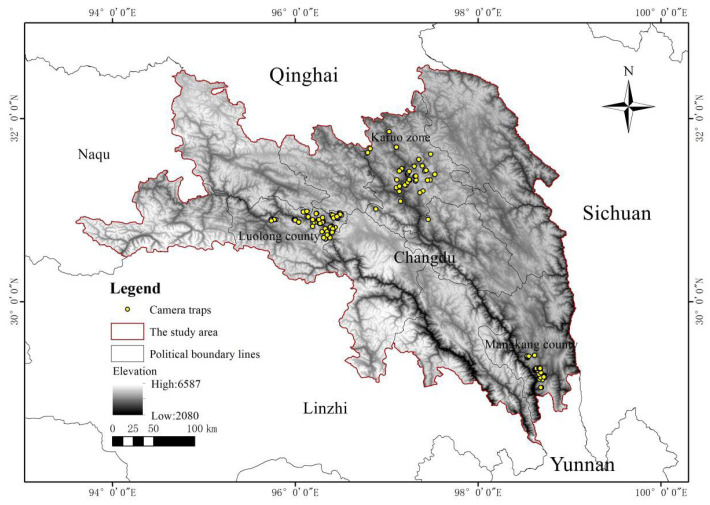 Figure 1
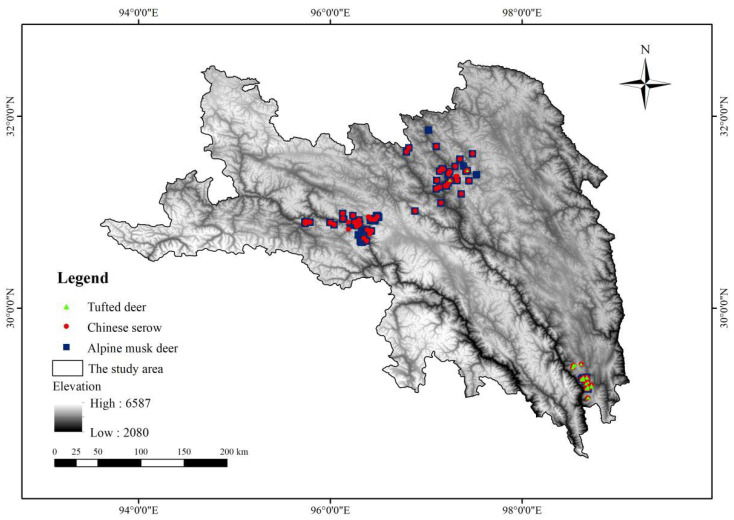 Figure 2
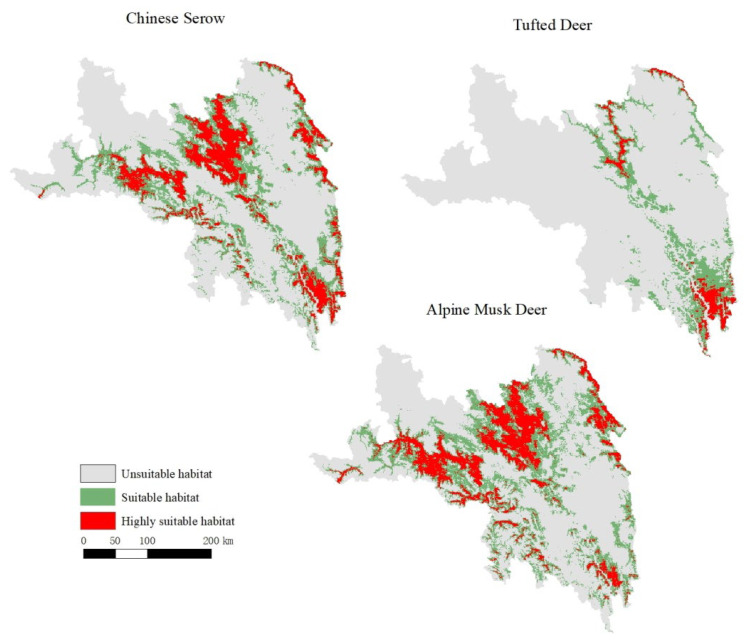 Figure 3
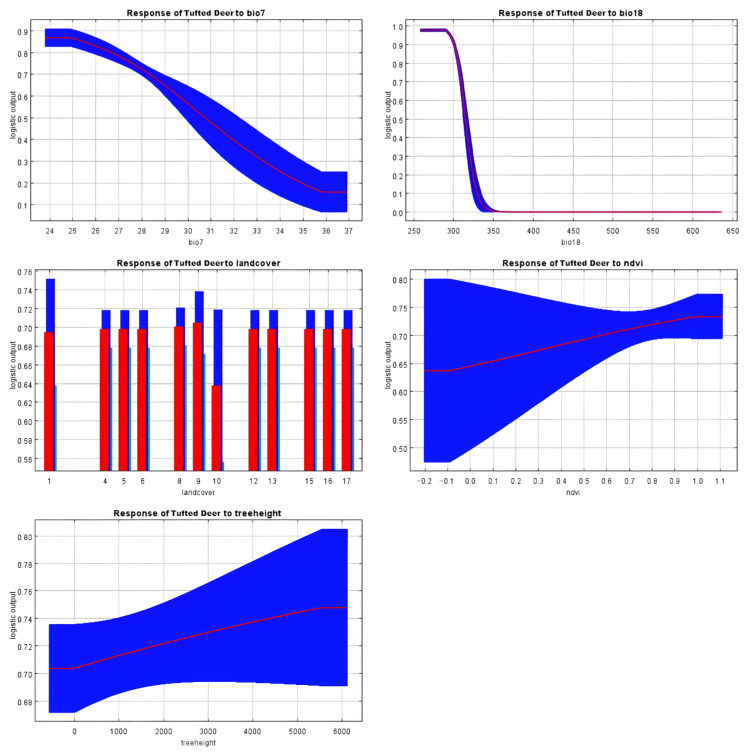 Figure 4
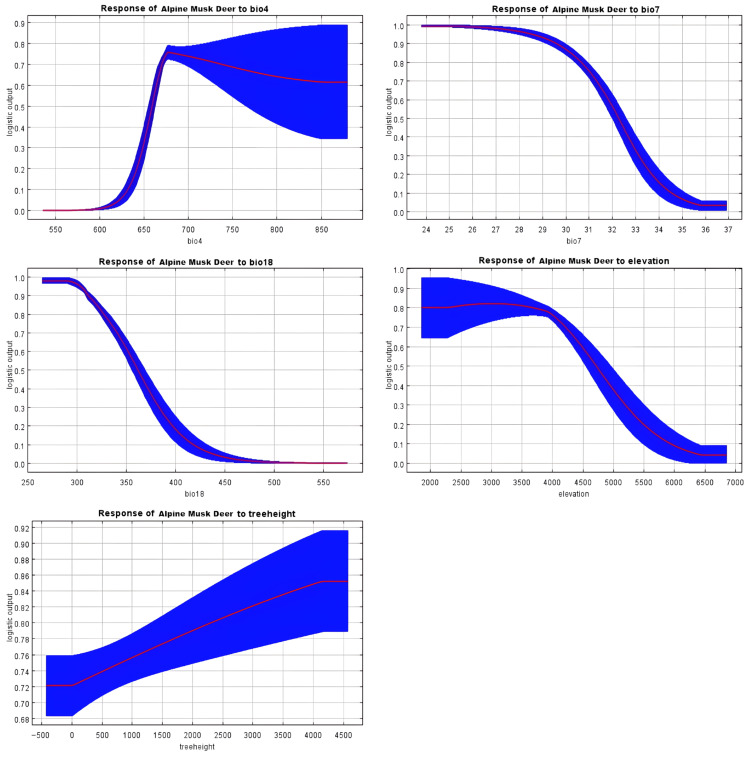 Figure 5
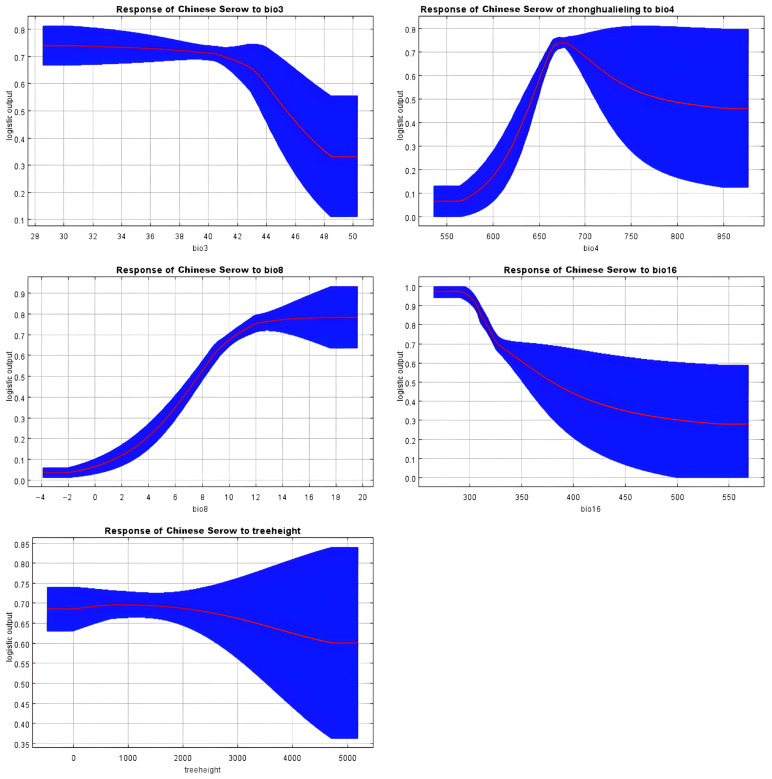 Figure 6
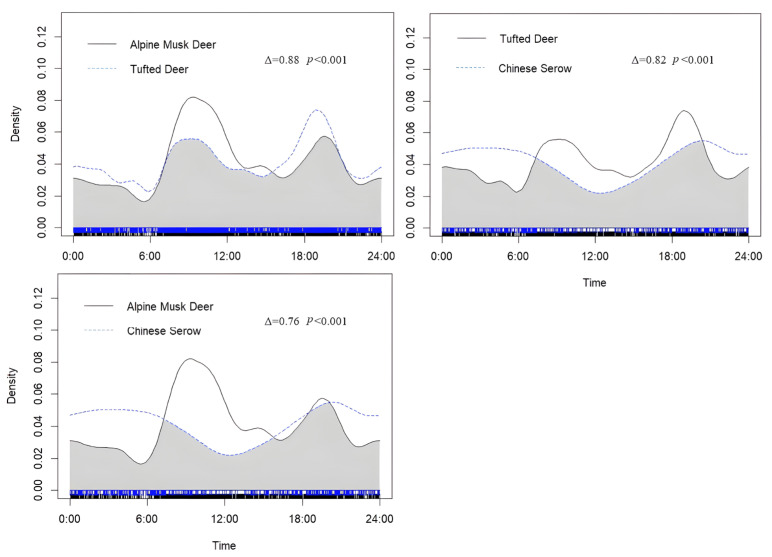 Figure 7
Peer Reviews
No public reviews on file for this paper yet. If you reviewed it on a platform where reviews are public (OpenReview, ICLR, NeurIPS, ICML), you can paste yours below so the community can read it here.
Videos
No videos yet. Explain this paper in a talk, walkthrough, or lecture? Add one.
Taxonomy
TopicsWildlife Ecology and Conservation · Species Distribution and Climate Change · Ecology and Vegetation Dynamics Studies