Does Developmental Timing Matter? Comparative Analysis of Day 5 and Day 6 Euploid Blastocyst Transfers in Recurrent Implantation Failure Patients
Alper Şişmanoğlu, Süleyman Cemil Oğlak, Zafer Atayurt, Fulya Gökdağlı Sağır, Ulun Uluğ

TL;DR
This study found that transferring euploid blastocysts on day 5 leads to better pregnancy outcomes than day 6, especially in younger patients with implantation failure.
Contribution
The study provides evidence that developmental timing of blastocysts affects clinical outcomes differently based on maternal age in RIF patients.
Findings
Day 5 transfers had higher clinical pregnancy rates (79.2%) compared to day 6 (58.6%) in RIF patients.
In patients aged 35 or younger, day 5 transfers showed significantly better outcomes than day 6 transfers.
For patients older than 35, no significant difference was observed between day 5 and day 6 transfers.
Abstract
Background/Objectives: The timing of blastocyst formation is an important factor in in vitro fertilization (IVF) outcomes. While many studies have shown similar pregnancy rates for euploid blastocyst transfers occurring on day 5 or 6, controversy remains, especially regarding patients with recurrent implantation failure (RIF). This study aimed to evaluate whether day 5 (D5) and day 6 (D6) euploid blastocysts differ in terms of the clinical outcomes achieved after frozen–thawed euploid embryo transfer, with subgroup analysis by maternal age in RIF patients. Methods: This retrospective analysis included a cohort of 514 patients who experienced RIF, categorized into two distinct groups: the initial group consisting of individuals who underwent embryo biopsy on day 5 (n = 456 euploid transfers) and the subsequent group comprising patients who underwent biopsy on day 6 (n = 58 euploid…
Genes, proteins, chemicals, diseases, species, mutations and cell lines named across the full text — each resolved to its canonical identifier and authoritative record.
Click any figure to enlarge with its caption.
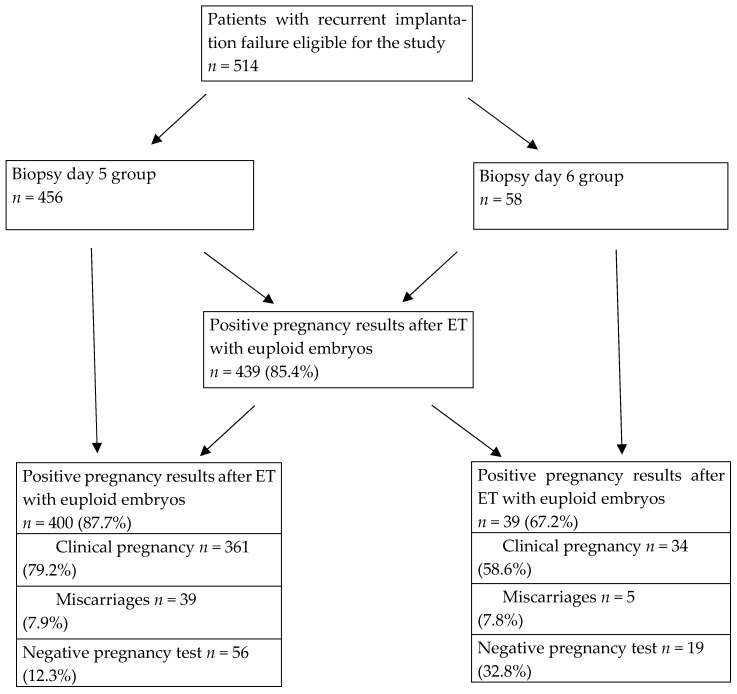 Figure 1
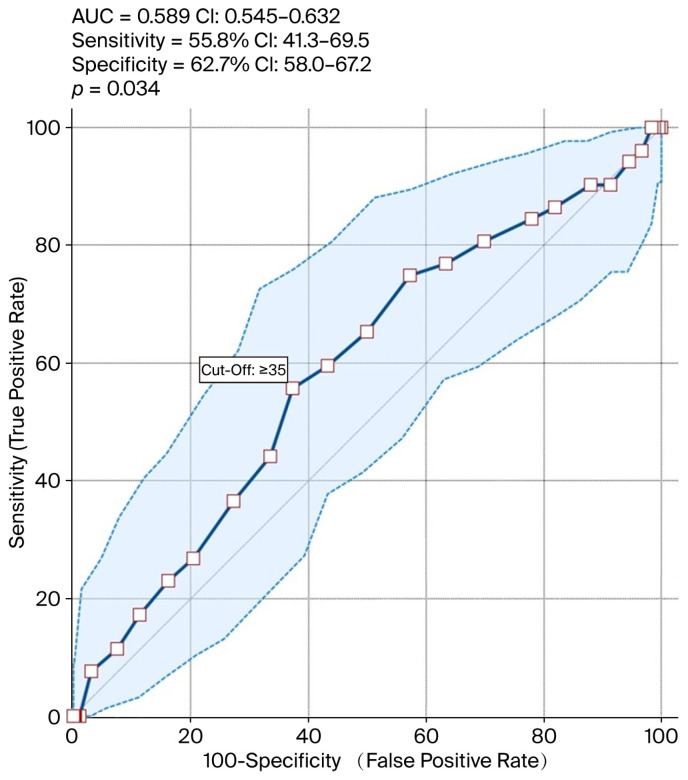 Figure 2
Peer Reviews
No public reviews on file for this paper yet. If you reviewed it on a platform where reviews are public (OpenReview, ICLR, NeurIPS, ICML), you can paste yours below so the community can read it here.
Videos
No videos yet. Explain this paper in a talk, walkthrough, or lecture? Add one.
Taxonomy
TopicsOvarian function and disorders · Reproductive Biology and Fertility · Reproductive System and Pregnancy