Breathing Rate as a Marker for Noise-Induced Stress in Guinea Pigs
Mark N. Wallace, Joel I. Berger, Christian J. Sumner, Alan R. Palmer, Michael A. Akeroyd, Peter A. McNaughton

TL;DR
This study shows that breathing rate in guinea pigs can be used to measure stress caused by noise, with a surprising finding that louder sounds don't increase stress after an initial startle.
Contribution
A novel method for measuring psychosocial stress in guinea pigs using abdominal movement tracking.
Findings
Abdominal markers in guinea pigs effectively track respiratory movements, unlike in mice.
Quiet startle pulses (75–80 dB SPL) significantly increase guinea pig breathing rate by about 20%.
Increasing sound levels beyond 85 dB SPL does not further increase stress as measured by breathing rate.
Abstract
Background: Breathing rate is affected by physical stressors such as temperature or hypercapnia and by psychosocial stressors such as noise or overcrowding. In behavioral tests for tinnitus, rodents are often presented with trains of startle pulses. We postulated that using these pulses at successively higher sound levels would produce a cumulative increase in stress. Here, we demonstrate a novel means of assessing that increase in stress. Methods: By placing pairs of reflective markers on the abdomen and using a motion tracking system, we were able to remotely measure respiratory movements. A series of 20 startle pulses were presented in sequence at seven increasing sound levels, and changes in respiratory rate were tested with the Wilcoxon matched-pairs signed rank test and the Friedman Test. Results: Markers placed on 20 alert active mice showed evidence of sniffing behavior but no…
Genes, proteins, chemicals, diseases, species, mutations and cell lines named across the full text — each resolved to its canonical identifier and authoritative record.
Click any figure to enlarge with its caption.
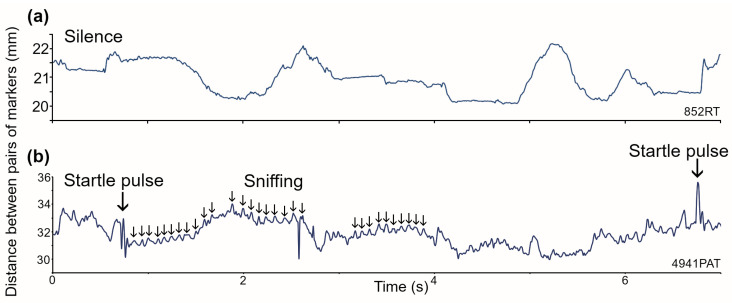 Figure 1
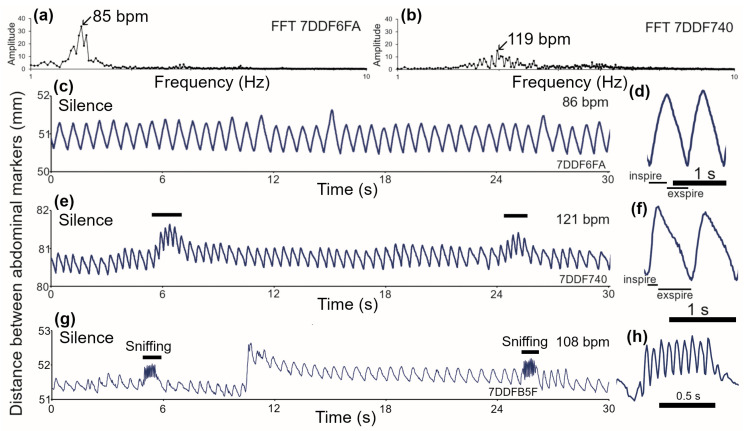 Figure 2
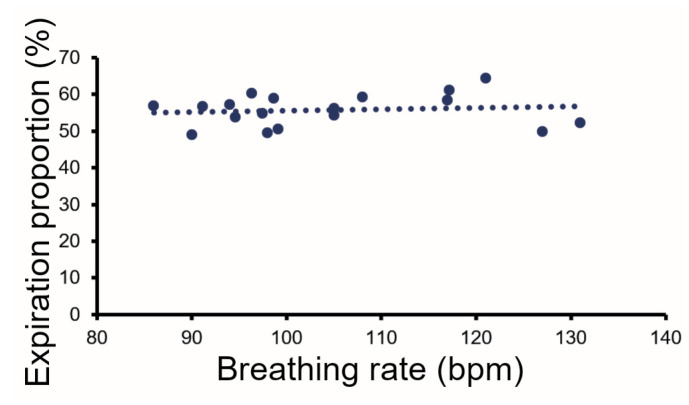 Figure 3
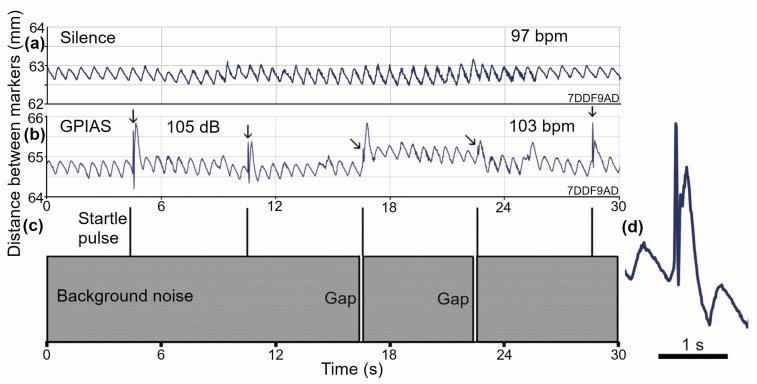 Figure 4
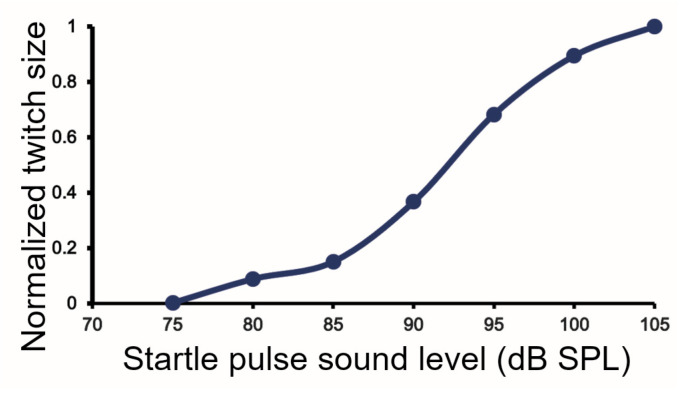 Figure 5
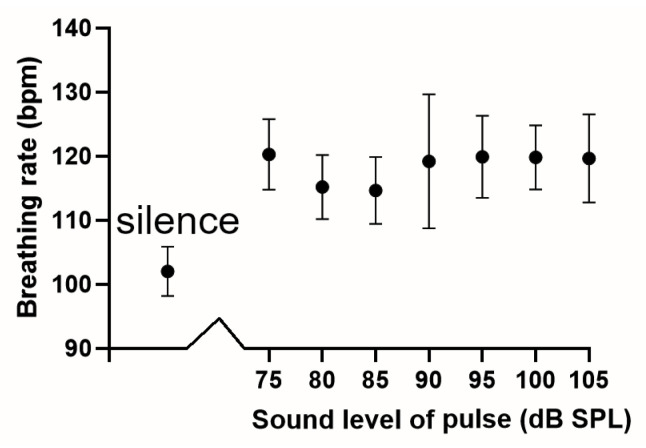 Figure 6
Peer Reviews
No public reviews on file for this paper yet. If you reviewed it on a platform where reviews are public (OpenReview, ICLR, NeurIPS, ICML), you can paste yours below so the community can read it here.
Videos
No videos yet. Explain this paper in a talk, walkthrough, or lecture? Add one.
Taxonomy
TopicsNeuroscience of respiration and sleep · Heart Rate Variability and Autonomic Control · Hearing, Cochlea, Tinnitus, Genetics