Type II Cells in the Human Carotid Body Display P2X7 Receptor and Pannexin-1 Immunoreactivity
Marcos Anache, Ramón Méndez, Olivia García-Suárez, Patricia Cuendias, Graciela Martínez-Barbero, Elda Alba, Teresa Cobo, Iván Suazo, José A. Vega, José Martín-Cruces, Yolanda García-Mesa

TL;DR
This study identifies P2X7 receptors and pannexin-1 in type II cells of the human carotid body, suggesting a role in gliotransmission.
Contribution
The study is the first to show P2X7r and pannexin-1 in human carotid body type II cells, linking them to potential gliotransmission mechanisms.
Findings
P2X7 receptors and pannexin-1 are present in type II cells of the human carotid body.
P2X7r and pannexin-1 are also found in nerve profiles of the carotid body and ganglia.
P2X7r distribution varies between petrosal and cervical sympathetic ganglia.
Abstract
The carotid body is a peripheral chemoreceptor that consists of clusters of chemoreceptive type I cells, glia-like type II cells, afferent and efferent nerves, and sinusoidal capillaries and arterioles. Cells and nerves communicate through reciprocal chemical synapses and electrical coupling that form a “tripartite synapse,” which allows for the process of sensory stimuli within the carotid body involving neurotransmission, autocrine, and paracrine pathways. In this network there are a variety of neurotransmitters and neuromodulators including adenosine 5′-triphosphate (ATP). Carotid body cells and nerve fibre terminals express ATP receptors, i.e., purinergic receptors. Here we used double immunofluorescence associated with laser confocal microscopy to detect the ATP receptor P2X7 and pannexin 1 (an ATP permeable channel) in the human carotid body, as well as the petrosal and cervical…
Genes, proteins, chemicals, diseases, species, mutations and cell lines named across the full text — each resolved to its canonical identifier and authoritative record.
Click any figure to enlarge with its caption.
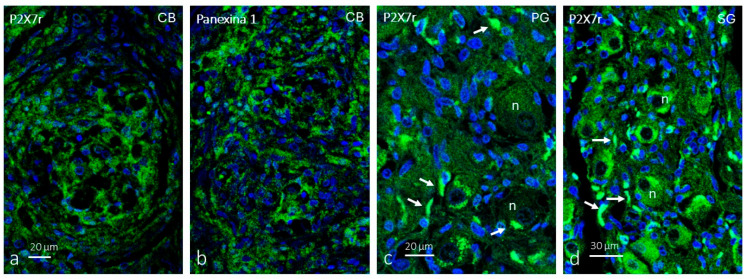 Figure 1
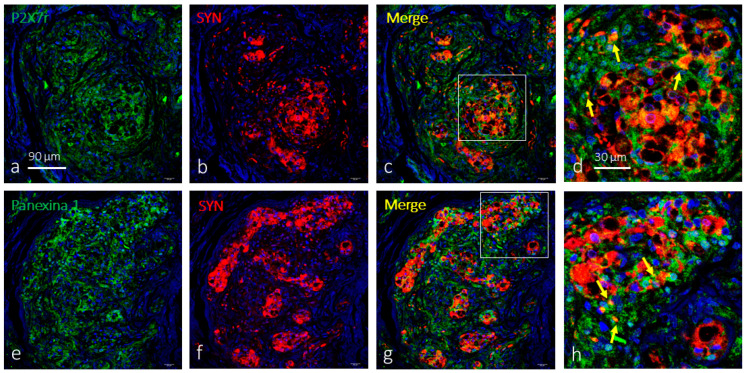 Figure 2
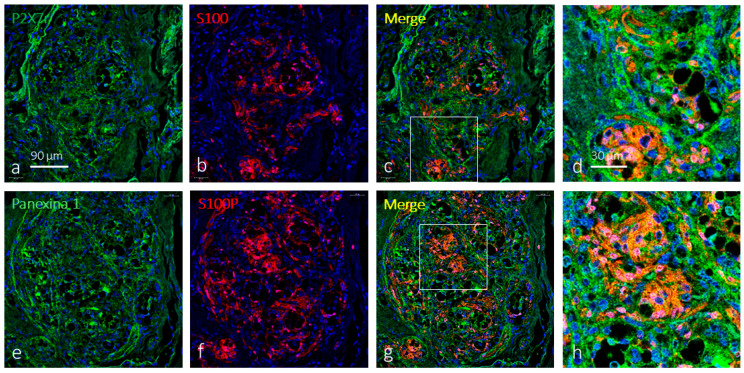 Figure 3
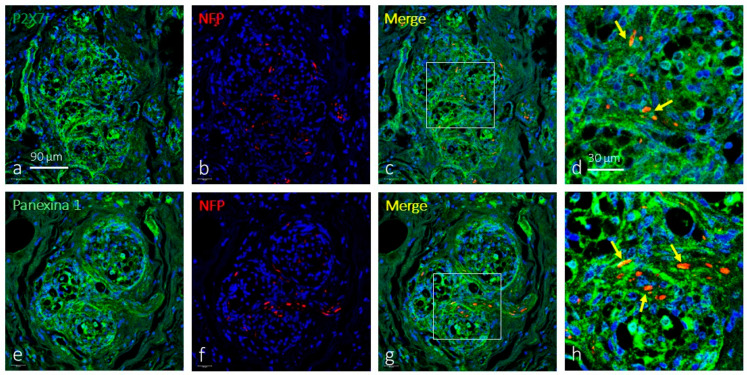 Figure 4
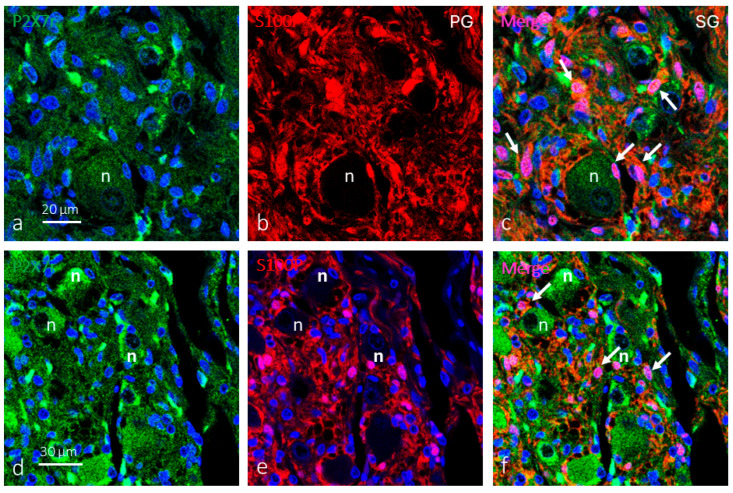 Figure 5
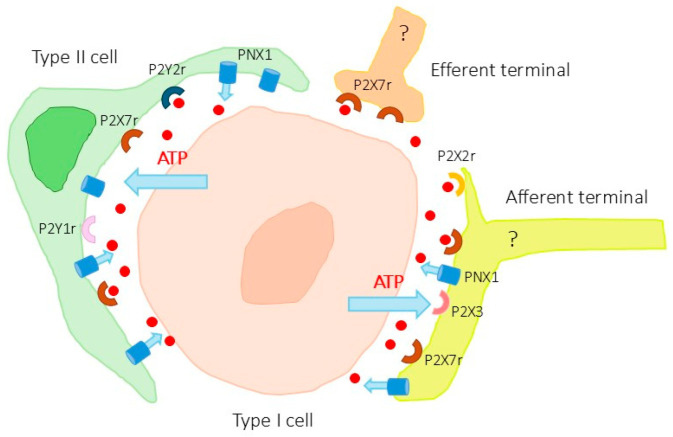 Figure 6
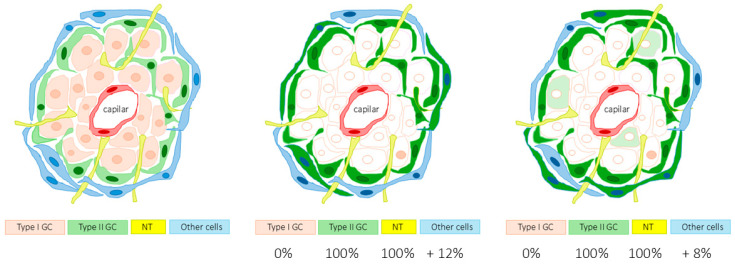 Figure 7
Peer Reviews
No public reviews on file for this paper yet. If you reviewed it on a platform where reviews are public (OpenReview, ICLR, NeurIPS, ICML), you can paste yours below so the community can read it here.
Videos
No videos yet. Explain this paper in a talk, walkthrough, or lecture? Add one.
Taxonomy
TopicsNeuroscience of respiration and sleep · Obstructive Sleep Apnea Research · Circadian rhythm and melatonin