Rapid On-Site Detection of Pseudomonas aeruginosa via ecfX-Targeted Loop-Mediated Isothermal Amplification
Xuliang He, Meimei Zeng, Wentao Bai, Ziyan Tang, Jianhua Ding, Zhu Chen

TL;DR
A new rapid test detects Pseudomonas aeruginosa using a specific gene target, offering quick and accurate results for clinical and environmental use.
Contribution
A novel fluorescence-based LAMP method targeting the ecfX gene enables rapid and specific detection of Pseudomonas aeruginosa.
Findings
The optimal primer set EC2 achieved high sensitivity and specificity for Pseudomonas aeruginosa detection.
The LAMP assay showed no cross-reactivity with non-PA pathogens and comparable detection limits to PCR.
The method was validated with bacterial strains and environmental samples, confirming its reliability and feasibility.
Abstract
Pseudomonas aeruginosa (PA) is a significant pathogen of clinical concern that is frequently associated with multidrug resistance, leading to respiratory tract, wound, and hospital-acquired infections. To enable rapid and accurate detection, we developed a fluorescence-based loop-mediated isothermal amplification (LAMP) method, targeting the PA-specific ecfX gene. Among ten primer sets designed, the optimal set (EC2) was identified, and reaction conditions were optimized (Bst polymerase 320 U/mL, Mg2+ 8 mM, dNTP 1.4 mM, inner/outer primer ratio 1:8, 64 °C, 20 min). The assay demonstrated a detection limit that was comparable to a real-time polymerase chain reaction and immunochromatographic assays, but with a markedly reduced turnaround time. No cross-reactivity was observed with non-PA pathogens, and reproducibility tests confirmed high stability. In addition, the reliability of the…
Genes, proteins, chemicals, diseases, species, mutations and cell lines named across the full text — each resolved to its canonical identifier and authoritative record.
Click any figure to enlarge with its caption.
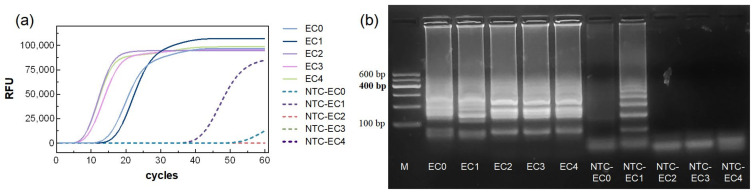 Figure 1
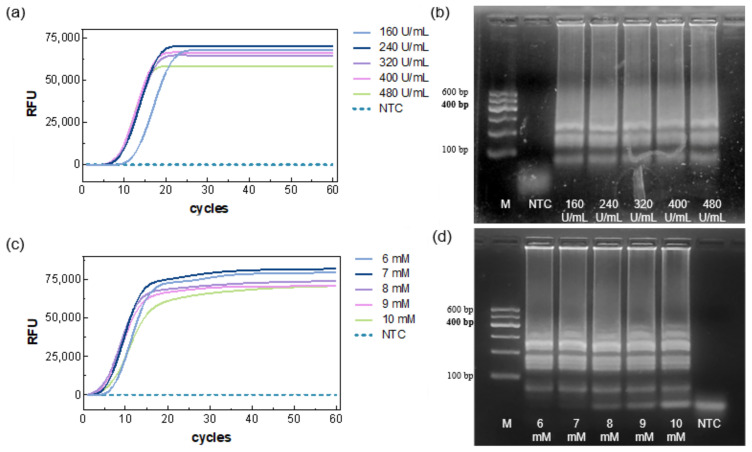 Figure 2
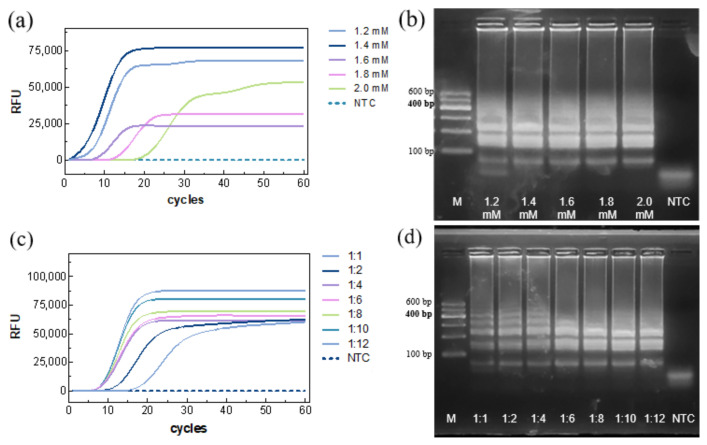 Figure 3
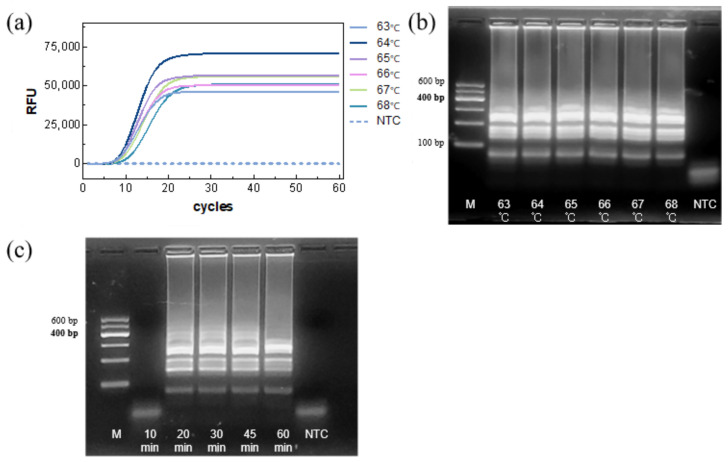 Figure 4
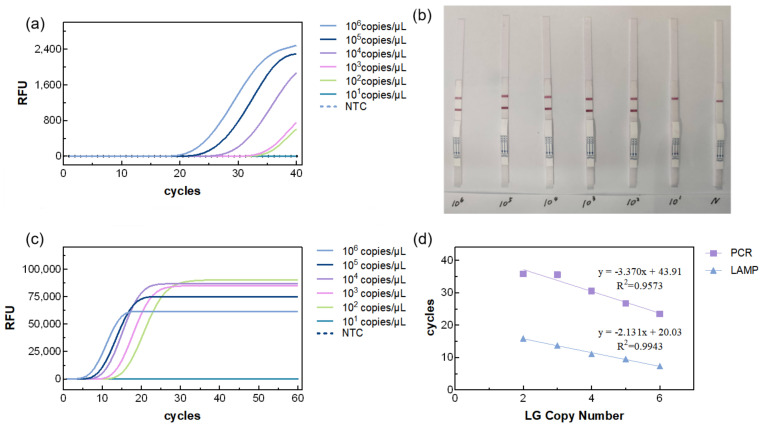 Figure 5
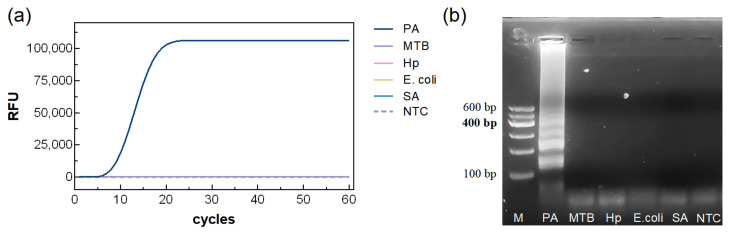 Figure 6
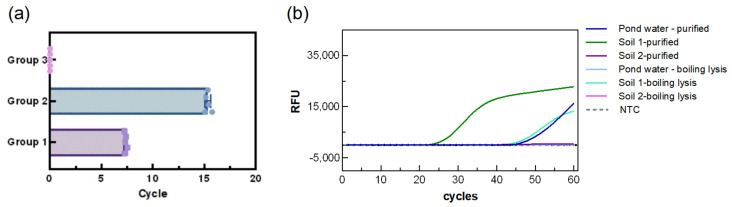 Figure 7
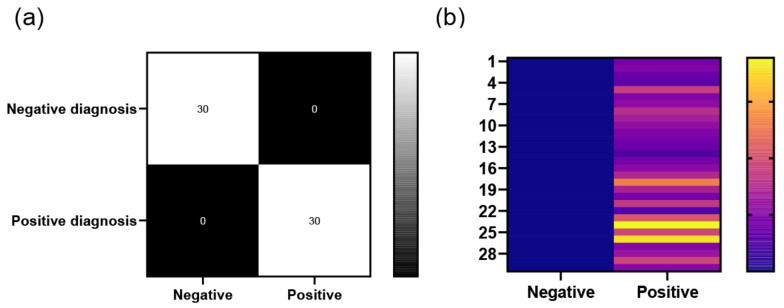 Figure 8
Peer Reviews
No public reviews on file for this paper yet. If you reviewed it on a platform where reviews are public (OpenReview, ICLR, NeurIPS, ICML), you can paste yours below so the community can read it here.
Videos
No videos yet. Explain this paper in a talk, walkthrough, or lecture? Add one.
Taxonomy
TopicsBiosensors and Analytical Detection · Bacterial biofilms and quorum sensing · Bacterial Identification and Susceptibility Testing