Real-Time Control of a Focus Tunable Lens for Presbyopia Correction Using Ciliary Muscle Biopotentials and Artificial Neural Networks
Bishesh Sigdel, Sven Schumayer, Sebastian Kaltenstadler, Eberhart Zrenner, Volker Bucher, Albrecht Rothermel, Torsten Straßer

TL;DR
This paper introduces a real-time system using biopotentials and AI to correct presbyopia by dynamically adjusting a focus-tunable lens.
Contribution
A novel closed-loop system for presbyopia correction using ciliary muscle biopotentials and neural networks for real-time lens control.
Findings
The system achieved 0.79 accuracy in predicting accommodative states with F1-scores of 0.78 and 0.77 for accommodation and disaccommodation.
Near visual acuity improved significantly in two presbyopic subjects while distance acuity remained stable.
The system demonstrates feasibility of restoring natural accommodation using neuromuscular signals and adaptive lens control.
Abstract
Ageing results in the progressive loss of near vision, known as presbyopia, which impacts individuals and society. Existing corrective methods offer only partial compensation and do not restore dynamic focusing at varying distances. This work presents a closed-loop correction system for presbyopia, employing biopotential signals from the ciliary muscle and an artificial neural network to predict the eye’s accommodative state in real time. Non-invasive contact lens electrodes collect biopotential data, which are preprocessed and classified using a multi-layer perceptron. The classifier output guides a control system that adjusts an external focus-tunable lens, enabling both accommodation and disaccommodation similar to a young eye. The system demonstrated an accuracy of 0.79, with F1-scores of 0.78 for prediction of accommodation and 0.77 for disaccommodation. Using the system in two…
Genes, proteins, chemicals, diseases, species, mutations and cell lines named across the full text — each resolved to its canonical identifier and authoritative record.
Click any figure to enlarge with its caption.
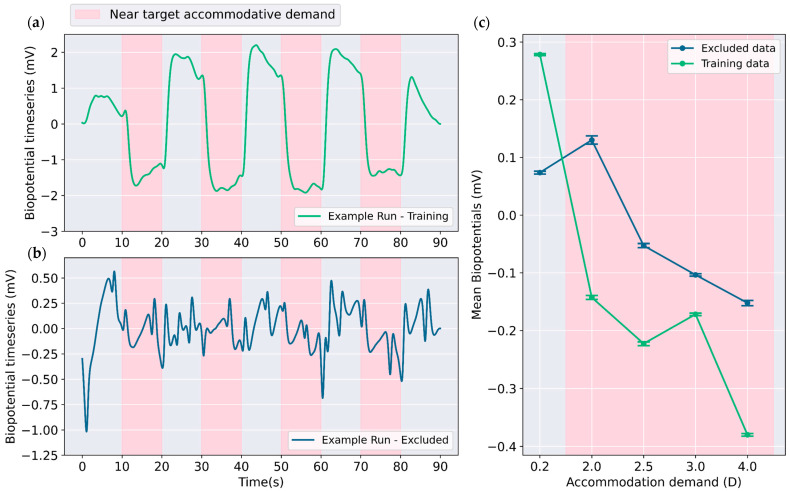 Figure 1
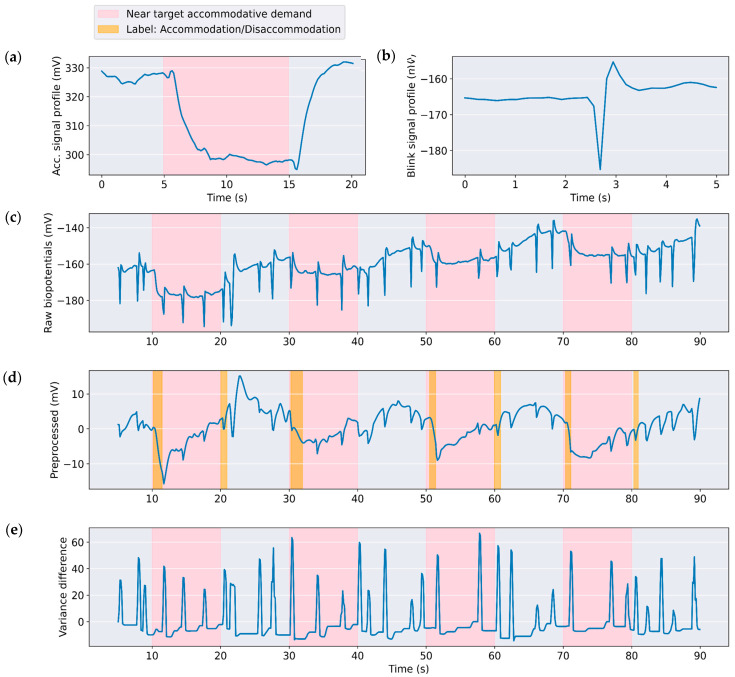 Figure 2
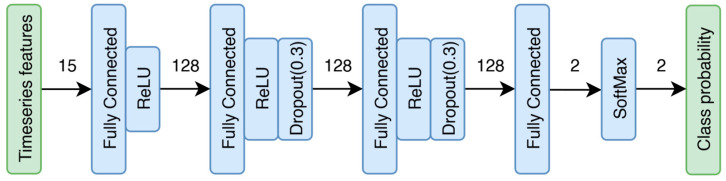 Figure 3
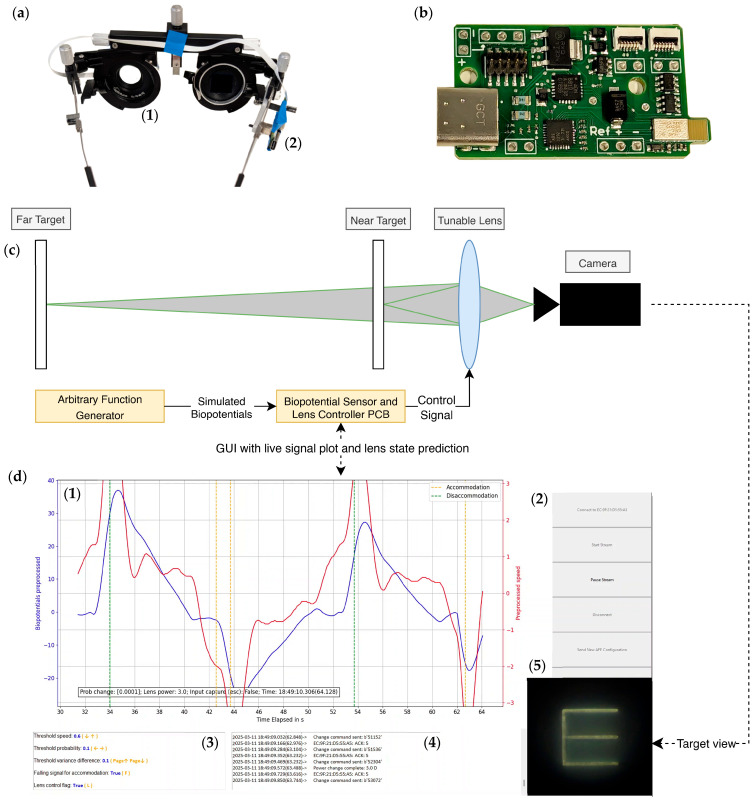 Figure 4
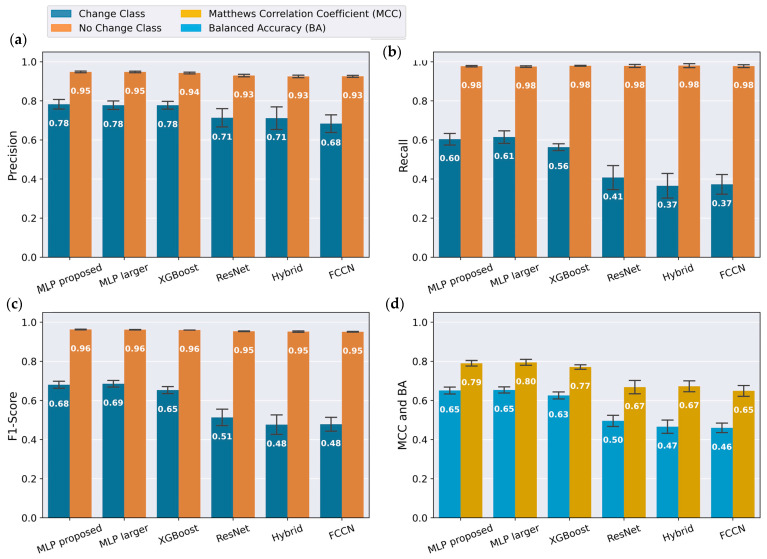 Figure 5
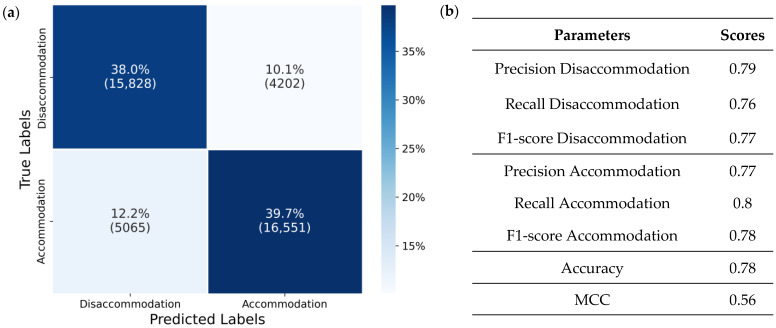 Figure 6
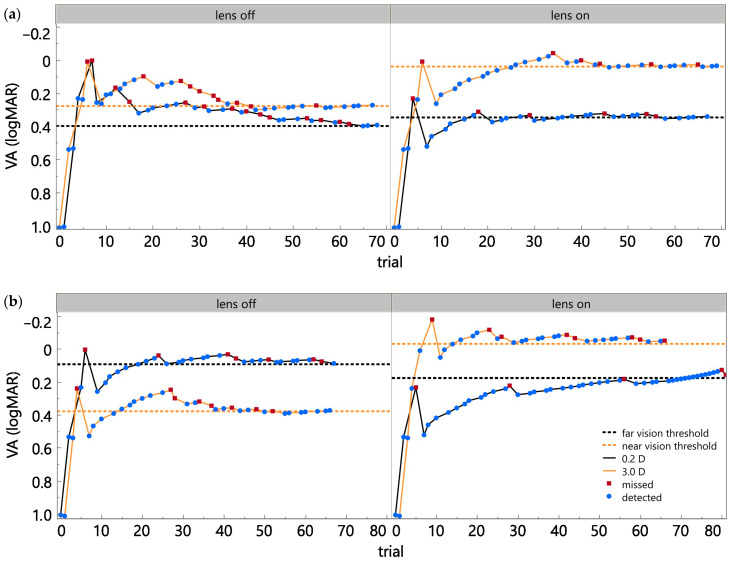 Figure 7
Peer Reviews
No public reviews on file for this paper yet. If you reviewed it on a platform where reviews are public (OpenReview, ICLR, NeurIPS, ICML), you can paste yours below so the community can read it here.
Videos
No videos yet. Explain this paper in a talk, walkthrough, or lecture? Add one.
Taxonomy
TopicsOphthalmology and Visual Impairment Studies · Tactile and Sensory Interactions · Neuroscience and Neural Engineering