Percutaneous Temporary Mechanical Circulatory Support as a Bridge to Heart Transplantation in the Current UNOS Allocation System
Rohan Goswami, Jose Ruiz, Aarti Desai, Peter Wlodkowski, Basar Sareyyupoglu, Sean Kiley, Anirban Bhattacharyya, Daniel Yip, Melissa Lyle, Jose Nativi-Nicolau, Juan Leoni, Devang Sanghavi, Alfredo Quiñones-Hinojosa, Sanjay Chaudhary, Kevin Landolfo, Si Pham, Parag Patel

TL;DR
Using the Impella 5.5 device as a bridge to heart transplant significantly improved outcomes compared to traditional LVADs, including faster wait times and higher transplant success.
Contribution
Demonstrates the effectiveness of Impella 5.5 as a bridge to heart transplantation under the current UNOS allocation system.
Findings
Patients with Impella 5.5 had a 100% transplant success rate compared to 70% with LVADs.
Impella users had a median wait time of 32 days versus 696 days for LVAD users.
Impella support was associated with lower postoperative vasoactive requirements and no deaths while waiting for transplant.
Abstract
Background: Progressive heart failure cardiogenic shock (HFCS) often requires escalation to temporary or durable mechanical circulatory support (MCS) as a bridge to transplant (BTT). Following the 2018 UNOS allocation changes, our center revised its BTT strategy to optimize support and shorten wait times. At our institution, the Impella 5.5 with SmartAssist via the axillary approach was selectively used for patients who remained refractory to guideline-directed medical therapy, failed single-inotrope therapy, and were not considered suitable durable LVAD candidates by our multidisciplinary heart team. We compared transplant-related outcomes of BTT patients supported with Impella 5.5 versus durable LVAD. Methods: We performed a single-center retrospective review of all heart and heart/kidney transplant candidates at Mayo Clinic Florida from October 2018 to February 2021. INTERMACS…
Genes, proteins, chemicals, diseases, species, mutations and cell lines named across the full text — each resolved to its canonical identifier and authoritative record.
Click any figure to enlarge with its caption.
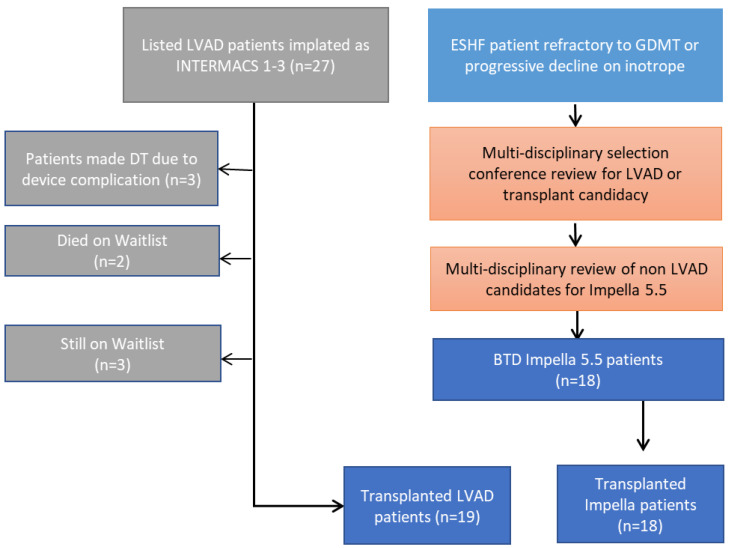 Figure 1
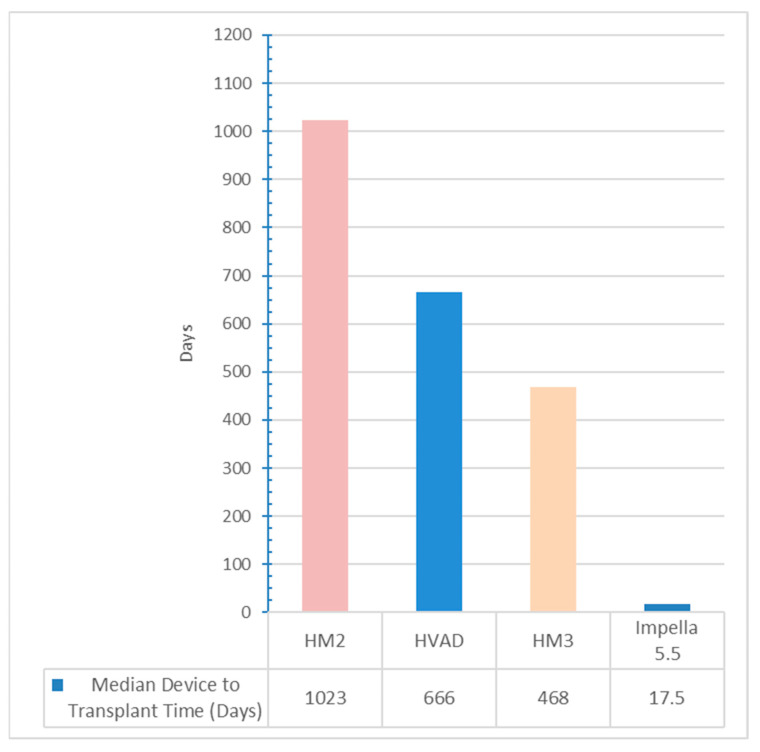 Figure 2
Peer Reviews
No public reviews on file for this paper yet. If you reviewed it on a platform where reviews are public (OpenReview, ICLR, NeurIPS, ICML), you can paste yours below so the community can read it here.
Videos
No videos yet. Explain this paper in a talk, walkthrough, or lecture? Add one.
Taxonomy
TopicsMechanical Circulatory Support Devices · Cardiac and Coronary Surgery Techniques · Cardiac Structural Anomalies and Repair