Cerebral Perfusion Pressure in Severe Traumatic Brain Injury Survivors and Non-Survivors: A Meta-Analysis
Maria Karagianni, Alexandros G. Brotis, Charikleia S. Vrettou, Kerasia Goupou, George Stranjalis, Kostas N. Fountas

TL;DR
This study finds that higher cerebral perfusion pressure is linked to better outcomes in severe traumatic brain injury patients, suggesting a need for personalized treatment approaches.
Contribution
The study provides evidence that CPP levels above 75 mmHg improve survival and recovery in severe TBI patients, challenging the use of a fixed CPP threshold.
Findings
Patients with good outcomes had a CPP of 77.5 mmHg compared to 67.2 mmHg in poor outcomes.
Survivors had a CPP 8.15 mmHg higher than non-survivors.
The optimal CPP range for better outcomes is suggested to be around 75–80 mmHg.
Abstract
Background: Severe traumatic brain injury (sTBI) is a leading cause of death and disability worldwide. Cerebral perfusion pressure (CPP), the difference between mean arterial and intracranial pressure, is crucial for maintaining cerebral blood flow. However, the optimal CPP threshold for improving outcomes remains uncertain. Objective: To identify CPP levels associated with favorable outcomes following sTBI through a systematic review and meta-analysis. Methods: Following PRISMA guidelines, we systematically searched PubMed, Scopus, and Web of Science up to February 2024 for studies involving adult sTBI patients admitted to intensive care units. Studies reporting CPP in relation to outcomes measured by the Glasgow Outcome Scale (GOS) were included. Pooled mean CPP differences between outcome groups were calculated using a random-effects model. Study quality was assessed using the…
Genes, proteins, chemicals, diseases, species, mutations and cell lines named across the full text — each resolved to its canonical identifier and authoritative record.
Click any figure to enlarge with its caption.
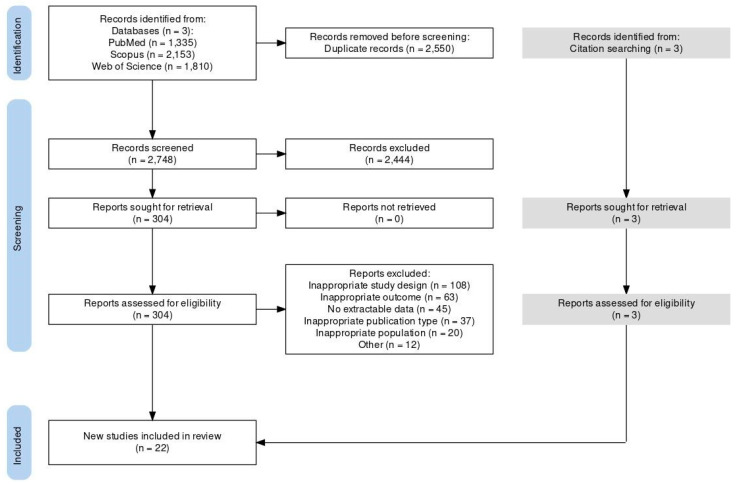 Figure 1
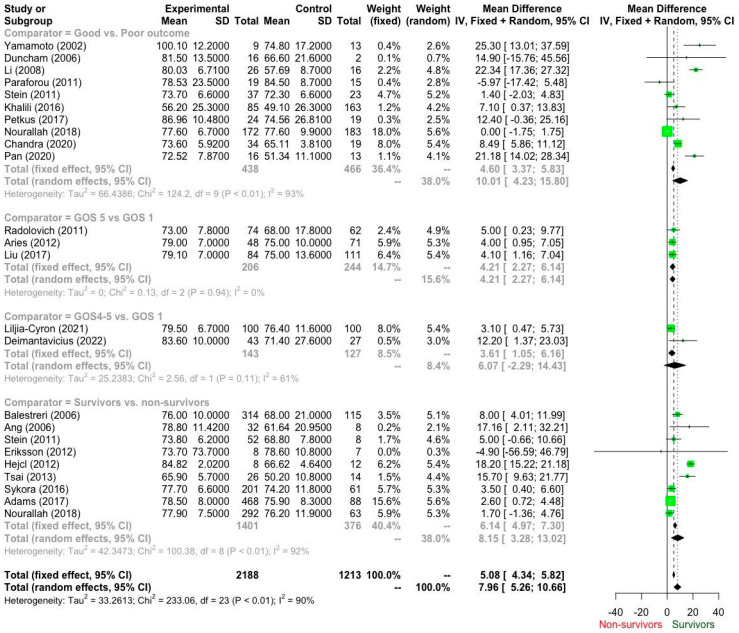 Figure 2
 Figure 3
Peer Reviews
No public reviews on file for this paper yet. If you reviewed it on a platform where reviews are public (OpenReview, ICLR, NeurIPS, ICML), you can paste yours below so the community can read it here.
Videos
No videos yet. Explain this paper in a talk, walkthrough, or lecture? Add one.
Taxonomy
TopicsTraumatic Brain Injury and Neurovascular Disturbances · S100 Proteins and Annexins · Traumatic Brain Injury Research