Modeling the Mutational Effects on Biochemical Phenotypes of SARS-CoV-2 Using Molecular Fields
Baifan Wang, Zhen Xi

TL;DR
This study uses a new method to predict how mutations in SARS-CoV-2 affect its ability to bind to human cells and evade antibodies, helping assess the threat of new variants.
Contribution
The study introduces the MB-QSAR framework for modeling mutational effects on SARS-CoV-2 biochemical phenotypes with high accuracy.
Findings
MB-QSAR models achieved r2 > 0.8 for hACE2 binding affinity and r2 > 0.7 for antibody neutralization escape.
The method generalizes well to multi-mutant variants and circulating SARS-CoV-2 lineages.
Model-derived interaction profiles provide insights into RBD–ACE2 and RBD–antibody interfaces.
Abstract
The ongoing evolution of SARS-CoV-2 has given rise to variants with enhanced transmissibility and pathogenicity, many of which harbor mutations in the receptor-binding domain (RBD) of the viral spike protein. These mutations often confer increased viral fitness and immune evasion by modulating interactions with the human ACE2 receptor (hACE2) and escaping neutralizing antibodies. Accurate prediction of the functional consequences of such mutations—particularly their effects on receptor binding and antibody escape—is critical for assessing the public health threat posed by emerging variants. In this study, we apply a Mutation-dependent Biomacromolecular Quantitative Structure–Activity Relationship (MB-QSAR) framework to quantitatively model the biochemical phenotypes of RBD variants. Trained on comprehensive deep mutational scanning (DMS) datasets, our models exhibit strong predictive…
Genes, proteins, chemicals, diseases, species, mutations and cell lines named across the full text — each resolved to its canonical identifier and authoritative record.
Click any figure to enlarge with its caption.
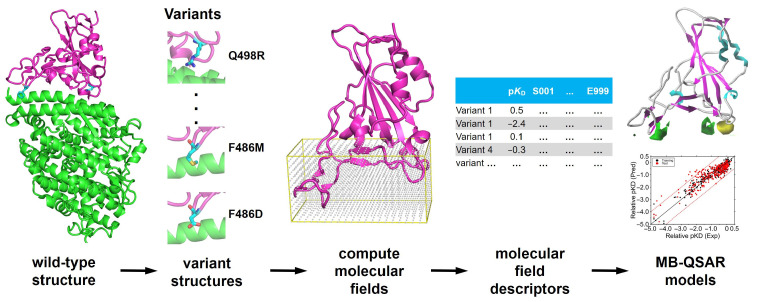 Figure 1
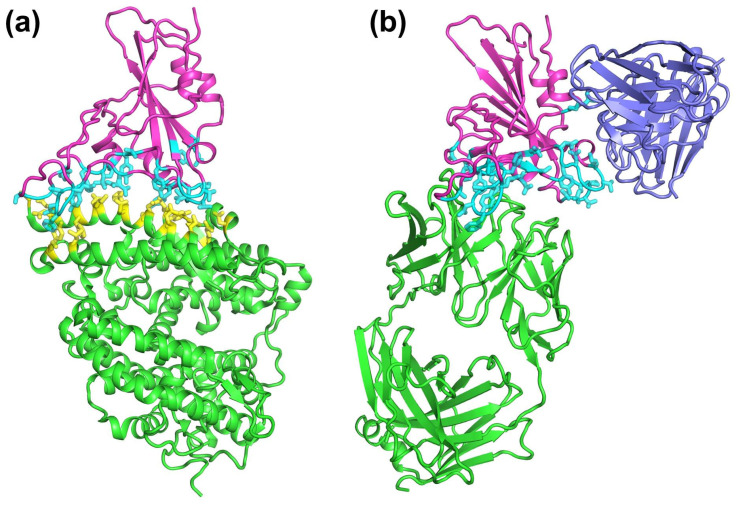 Figure 2
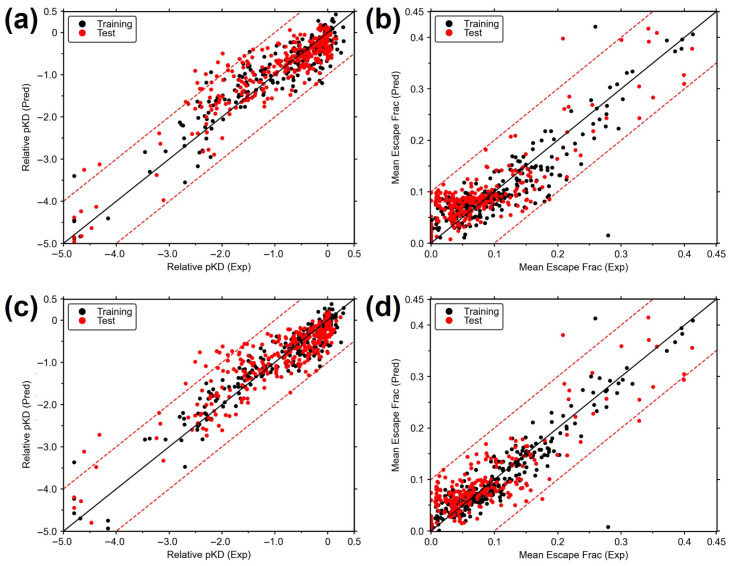 Figure 3
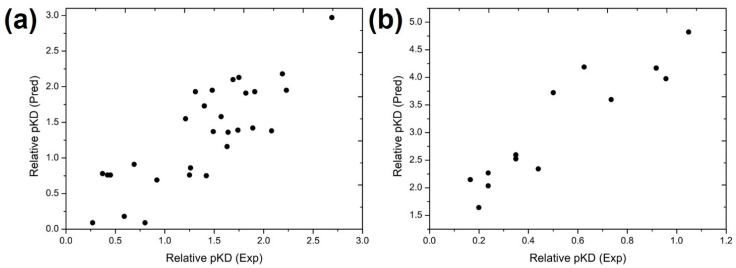 Figure 4
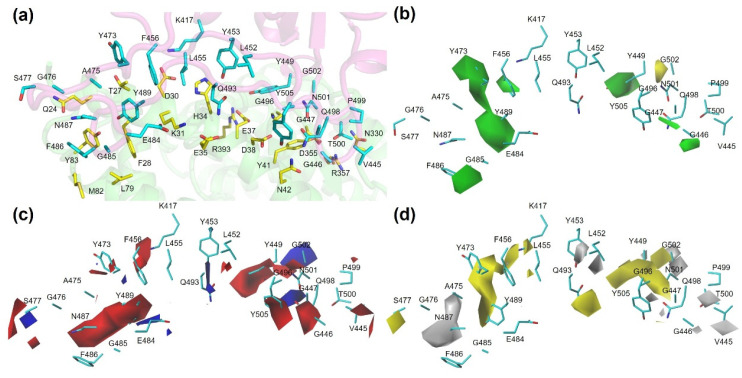 Figure 5
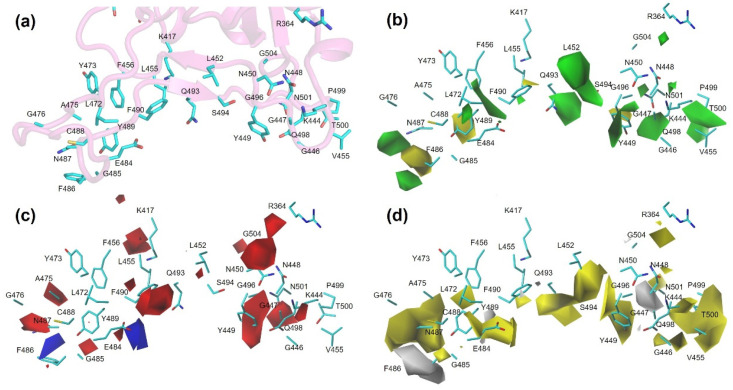 Figure 6
Peer Reviews
No public reviews on file for this paper yet. If you reviewed it on a platform where reviews are public (OpenReview, ICLR, NeurIPS, ICML), you can paste yours below so the community can read it here.
Videos
No videos yet. Explain this paper in a talk, walkthrough, or lecture? Add one.
Taxonomy
Topicsvaccines and immunoinformatics approaches · SARS-CoV-2 and COVID-19 Research · Computational Drug Discovery Methods