Physiological responses in sea trout to repeated salmon louse infections and freshwater
Per Gunnar Fjelldal, Sussie Dalvin, Christine Sørfonn, Bjørnar Skjold, Audun Østby Pedersen, Tom J Hansen, Ørjan Karlsen

TL;DR
This study shows how repeated salmon louse infections affect sea trout's physiology, including growth, osmoregulation, and acid-base balance in salt and freshwater.
Contribution
The study reveals the physiological impacts of repeated salmon louse infections and salinity changes on sea trout.
Findings
Salmon louse infection elevated hepatosomatic index but did not affect mortality or semen quality.
Infected fish showed altered plasma pH, ion levels, and osmolality in both seawater and freshwater.
Lice disrupted chloride regulation more than sodium, affecting osmoregulatory abilities in different salinities.
Abstract
Sea trout (Salmo trutta) migrate to the seawater (SW) for increased food availability. However, heavy infestations with salmon louse (Lepeophtheirus salmonis) can make them return to freshwater (FW). The aim of the present study was to map if and how reinfection with salmon louse and repeated FW exposure affects survival, growth rate, hepatosomatic index (HSI), acid base regulation (plasma pH, strong ion difference), osmoregulation (plasma ions, osmolality) and semen quality (fertilization rate, embryo/fry survival) in sea trout. Individually tagged sea trout (~100 g) were infected with louse copepodids in SW and then switched to FW at the louse pre-adult stage. Twelve days thereafter, FW was replaced with SW, and a second similar louse infection and salinity change were performed. Treatment groups were (i) uninfected control, and infected during the first (ii), second (iii) or both…
Genes, proteins, chemicals, diseases, species, mutations and cell lines named across the full text — each resolved to its canonical identifier and authoritative record.
Click any figure to enlarge with its caption.
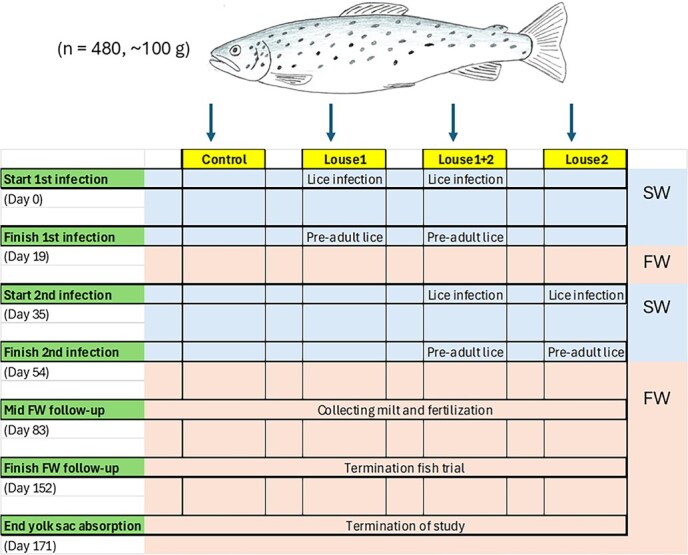 Figure 1
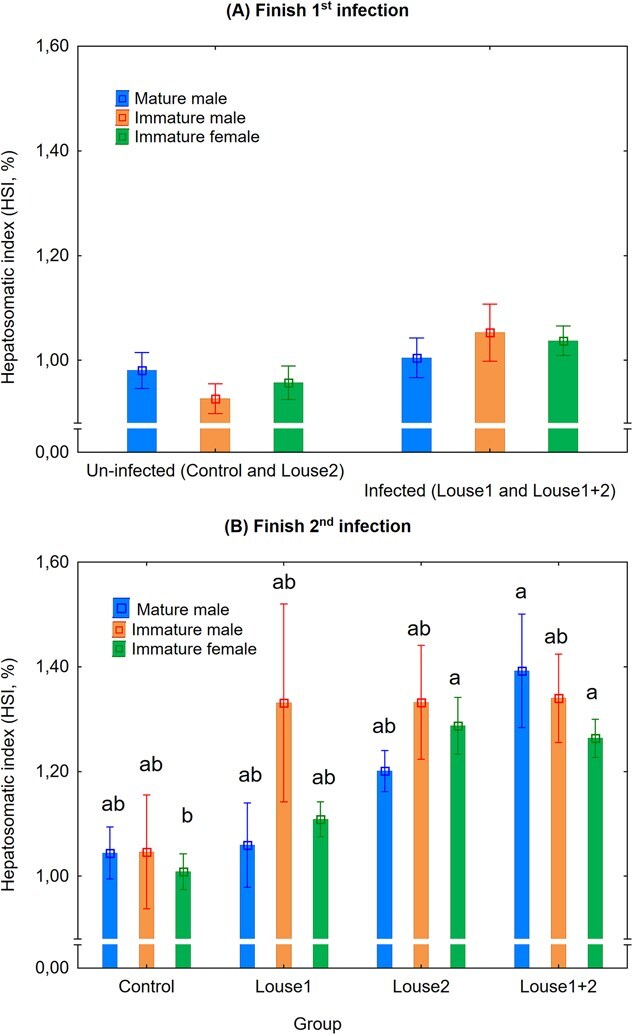 Figure 2
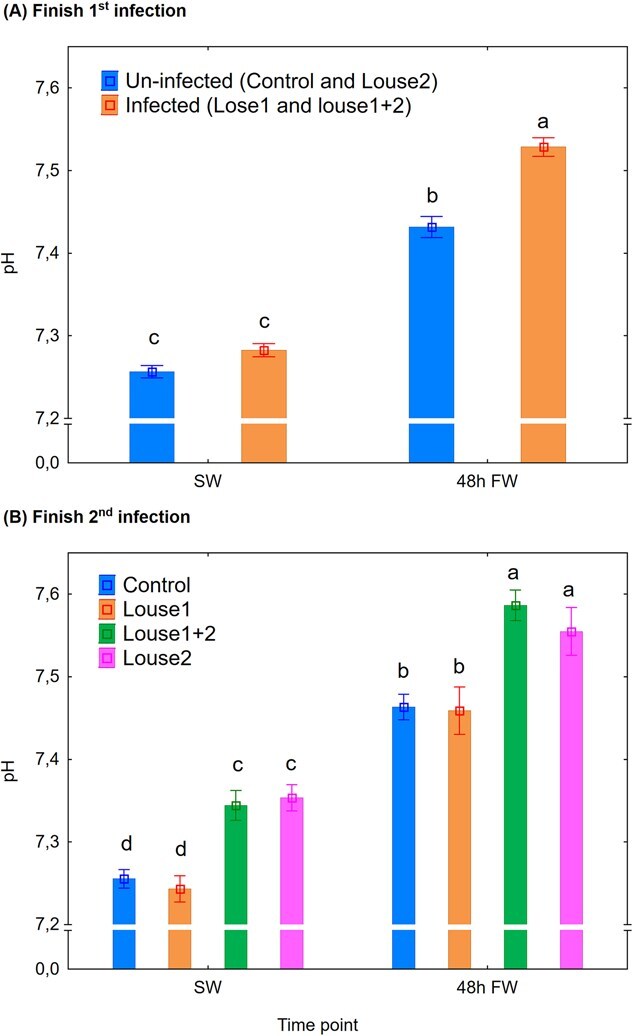 Figure 3
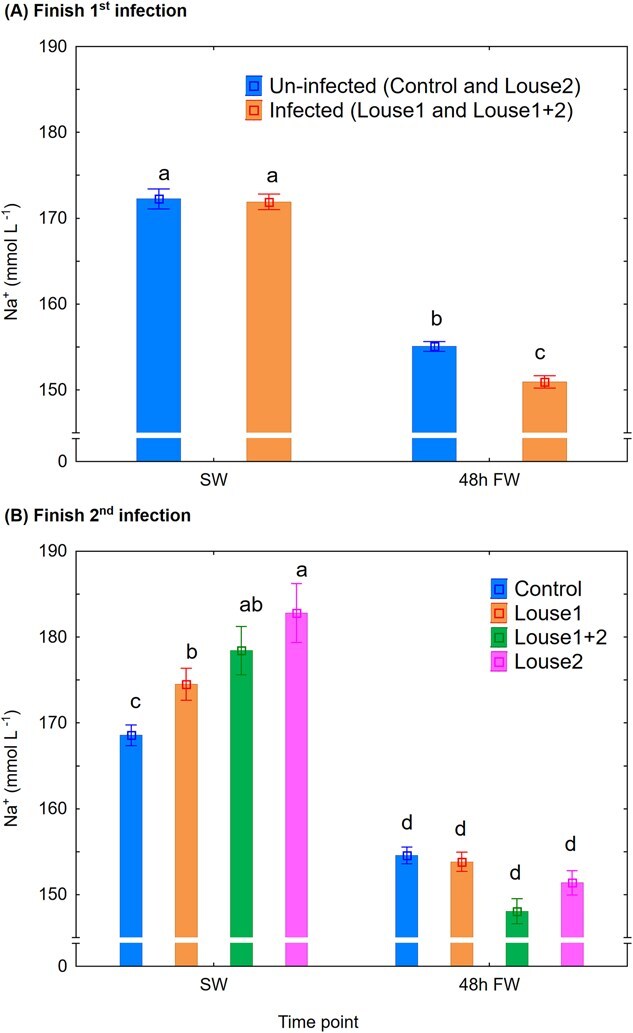 Figure 4
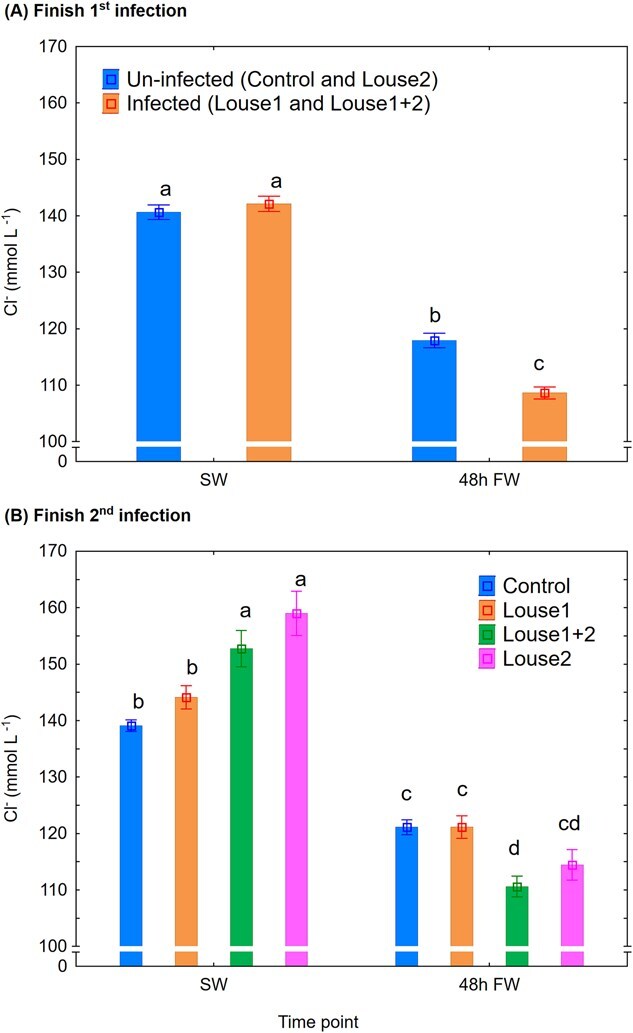 Figure 5
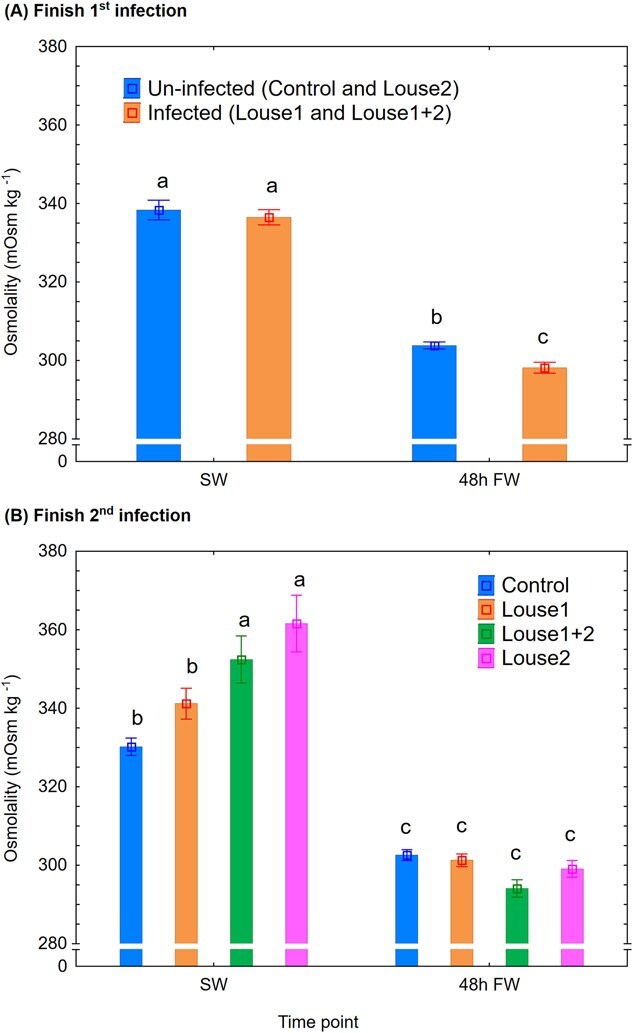 Figure 6
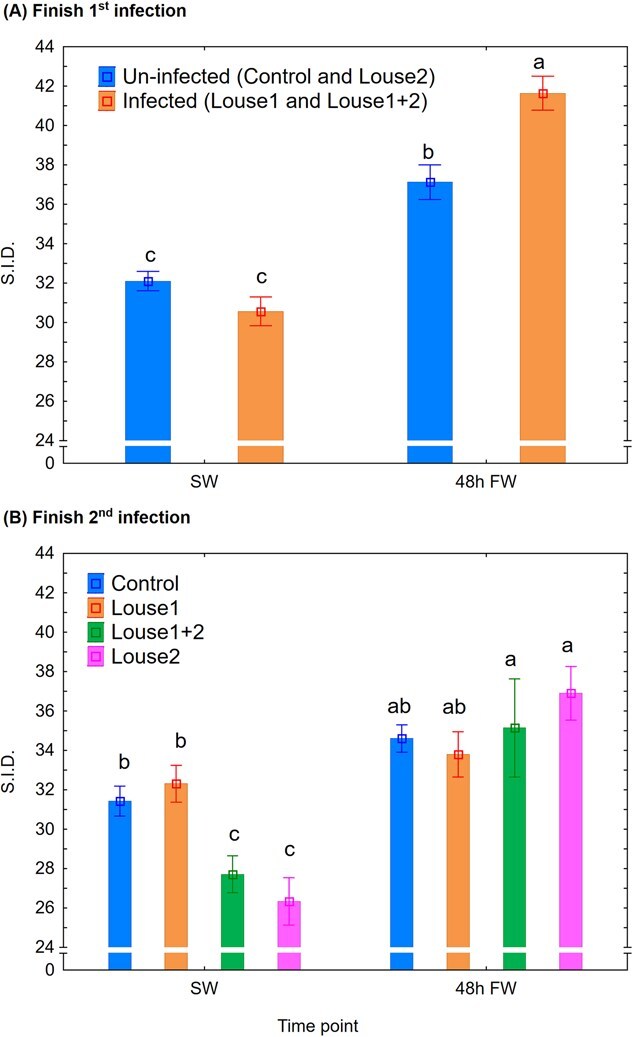 Figure 7
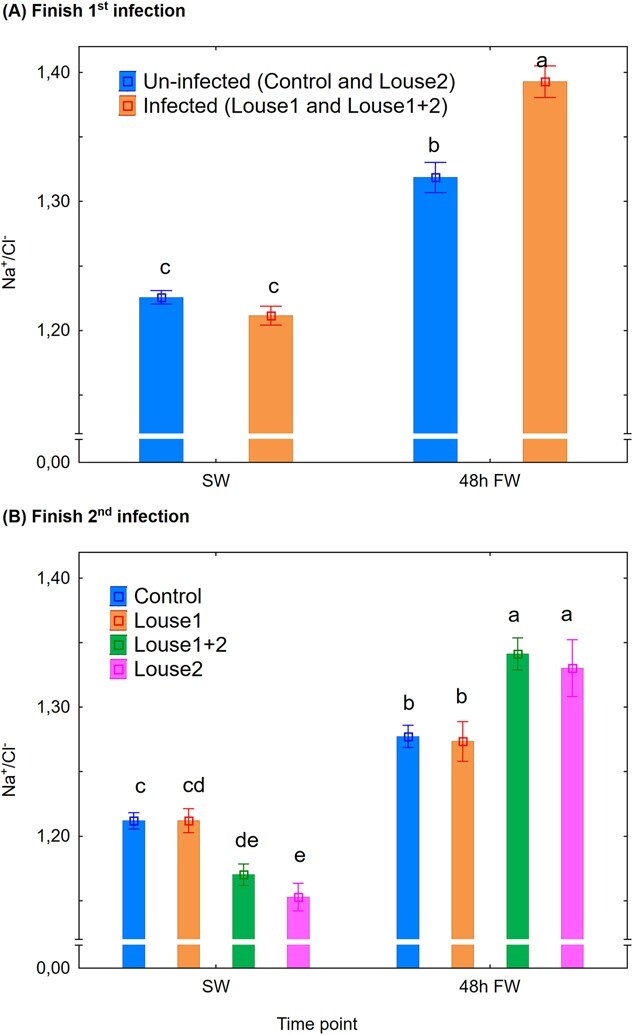 Figure 8
Peer Reviews
No public reviews on file for this paper yet. If you reviewed it on a platform where reviews are public (OpenReview, ICLR, NeurIPS, ICML), you can paste yours below so the community can read it here.
Videos
No videos yet. Explain this paper in a talk, walkthrough, or lecture? Add one.
Taxonomy
TopicsParasite Biology and Host Interactions · Aquaculture disease management and microbiota · Myxozoan Parasites in Aquatic Species