Self-Reported Dyslexia Traits as Positive Predictors of Self-Reported Cognitive Failures in the Workplace
James H. Smith-Spark, Madalyn Huang

TL;DR
This study finds that self-reported dyslexia traits are linked to more frequent cognitive failures at work, even after accounting for other factors like mental wellbeing and personality.
Contribution
The study provides novel empirical evidence linking self-reported dyslexia traits to workplace cognitive failures using a pre-registered survey design.
Findings
Dyslexia traits significantly predict overall frequency of workplace cognitive failures after controlling for other variables.
Dyslexia traits weakly predict memory, attention, and action-related cognitive failures.
The findings suggest potential for improved workplace support for neurodivergent employees.
Abstract
There is little direct empirical evidence indicating how dyslexia-related cognitive difficulties express themselves in employment settings, although employers may be legally required to support neurodivergent workers through targeted accommodations. The current pre-registered online survey investigated the relationship between dyslexia traits and the self-reported frequency of workplace cognitive failures. Four hundred native English speakers were recruited via Prolific. All respondents identified as being full- or part-time UK employees in a central place of work. The respondents completed a series of published self-report questionnaires on neurodivergent symptomatology, mental wellbeing, personality characteristics, and busyness and routine at work. Hierarchical multiple regression analyses were used to determine whether dyslexia traits were predictive of workplace cognitive failures.…
Genes, proteins, chemicals, diseases, species, mutations and cell lines named across the full text — each resolved to its canonical identifier and authoritative record.
Click any figure to enlarge with its caption.
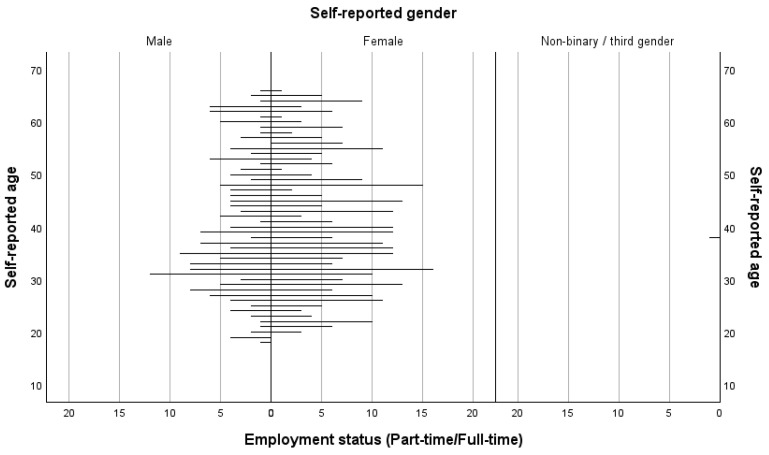 Figure 1
Peer Reviews
No public reviews on file for this paper yet. If you reviewed it on a platform where reviews are public (OpenReview, ICLR, NeurIPS, ICML), you can paste yours below so the community can read it here.
Videos
No videos yet. Explain this paper in a talk, walkthrough, or lecture? Add one.
Taxonomy
TopicsMind wandering and attention · Reading and Literacy Development · Sleep and Work-Related Fatigue